


Key Takeaways
- Italy has finalized a €1.4 billion deal to acquire six Airbus A330 MRTT aircraft, ending its 15-year reliance on Boeing tankers.
- The decision aligns with a broader trend in Europe towards increased military cooperation and reduced dependence on U.S. products.
- Italy’s shift to Airbus follows a suspension of plans to buy Boeing’s KC-46 tankers, citing changed defense needs.
Italy Strengthens Airbus Partnership with New Tanker Acquisition
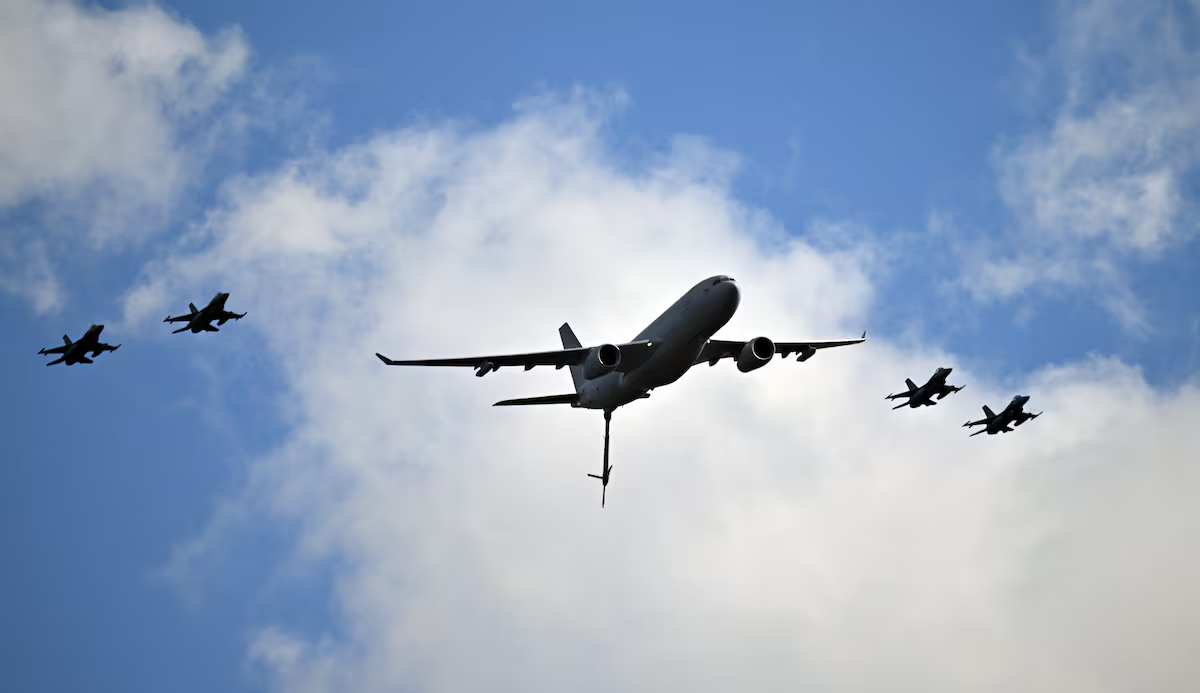
Italy is set to enhance its air refueling capabilities by purchasing six Airbus A330 MRTT multi-role tanker transport aircraft in a deal valued at €1.4 billion ($1.6 billion). This significant procurement, revealed through the European Union’s TED public procurement platform, marks a major shift for the Italian Air Force, which has been operating Boeing tankers for the last 15 years.
Previously, the Air Force relied on four Boeing 767-based tanker aircraft that have been in service since 2011. In 2021, there were plans to upgrade these B-767 tankers and acquire two additional units. However, by 2022, Italy revised its strategy, initially intending to purchase six KC-46 tankers instead. This proposal was shelved in 2024 due to “changed and unforeseen needs,” as stated by Italian authorities. The suspension reportedly stemmed from concerns over the costs and the delayed delivery timeline of the KC-46 models.
The transition to Airbus reflects a growing trend among European militaries to pursue greater integration and independence from American defense contracts. This shift comes amid a broader context of political dynamics, particularly since U.S. former President Donald Trump frequently critiqued the traditional U.S.-Europe trans-Atlantic alliance. Various European countries, including France, Spain, and the United Kingdom, are already utilizing the A330 MRTT, thus enhancing operational compatibility among allied forces within NATO frameworks.
In summary, this strategic acquisition not only enhances Italy’s aerial refueling capabilities but also signifies a pivotal moment in European defense cooperation, aligning with the continent’s evolving military strategies and priorities.
The content above is a summary. For more details, see the source article.









