Key Takeaways
- Volunteers are participating in a two-month extreme bed rest study to analyze the effects of microgravity on the human body.
- The study aims to develop countermeasures for astronauts to prevent muscle and bone loss during long space missions.
- Participants are divided into three groups, including one that simulates exercise and another that uses centrifuges for artificial gravity experience.
Extreme Bed Rest Study to Understand Space Travel Impacts
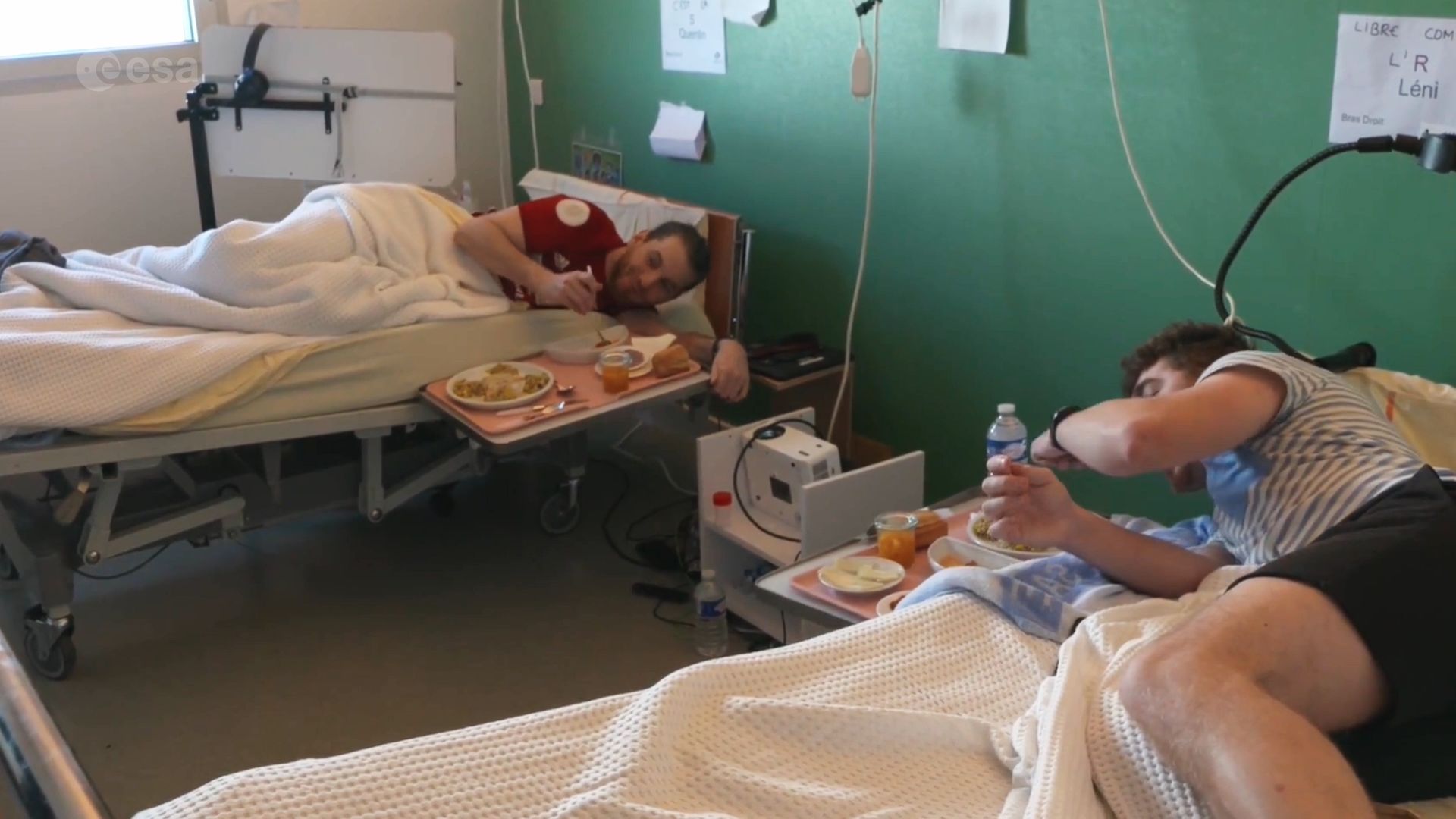
A unique study involving a group of volunteers is underway, where participants are confined to bed for two months while maintaining a specific body position. This extreme bed rest simulates the conditions that astronauts face in microgravity. The volunteers must keep their feet elevated at all times, with one shoulder in contact with the mattress whenever they eat, shower, or perform any bodily functions. The primary goal of this study is to provide critical insights into how space travel affects human physiology and to identify ways to maintain astronaut health during prolonged missions.
Research shows that living in microgravity leads to numerous physiological changes similar to the effects seen in bedridden patients on Earth. These changes can include significant muscle atrophy, bone density loss, and fluid redistribution within the body. By observing volunteers on Earth, researchers hope to form a better understanding of these changes, allowing them to create effective countermeasures to protect astronauts during extended periods in space.
The volunteers are divided into three distinct groups to gain comprehensive data. The first group will remain completely inactive, spending the entirety of the study in bed without any form of exercise. In contrast, the second group will engage in stationary cycling while lying down, which serves to replicate exercise routines that astronauts might perform in space. This exercise regimen is crucial for mitigating the negative consequences of prolonged inactivity.
The third group takes the study a step further by cycling while being spun in a centrifuge, which simulates the experience of artificial gravity. Scientists are particularly interested in this aspect, as artificial gravity could potentially play a significant role in counteracting the adverse effects of space travel. If proven effective, it may become a vital tool for supporting astronaut health on deep-space missions, reducing risks associated with muscle and bone deterioration.
In conclusion, this innovative study sheds light on the challenges of long-term space travel and the human body’s responses to microgravity. By understanding these responses here on Earth, researchers aim to enhance astronaut health and develop better medical treatments for conditions like osteoporosis, benefiting both space exploration and health care on Earth. The outcomes of this research could lead to groundbreaking advancements in space missions, making them safer and more sustainable for future astronauts.
The content above is a summary. For more details, see the source article.