Key Takeaways
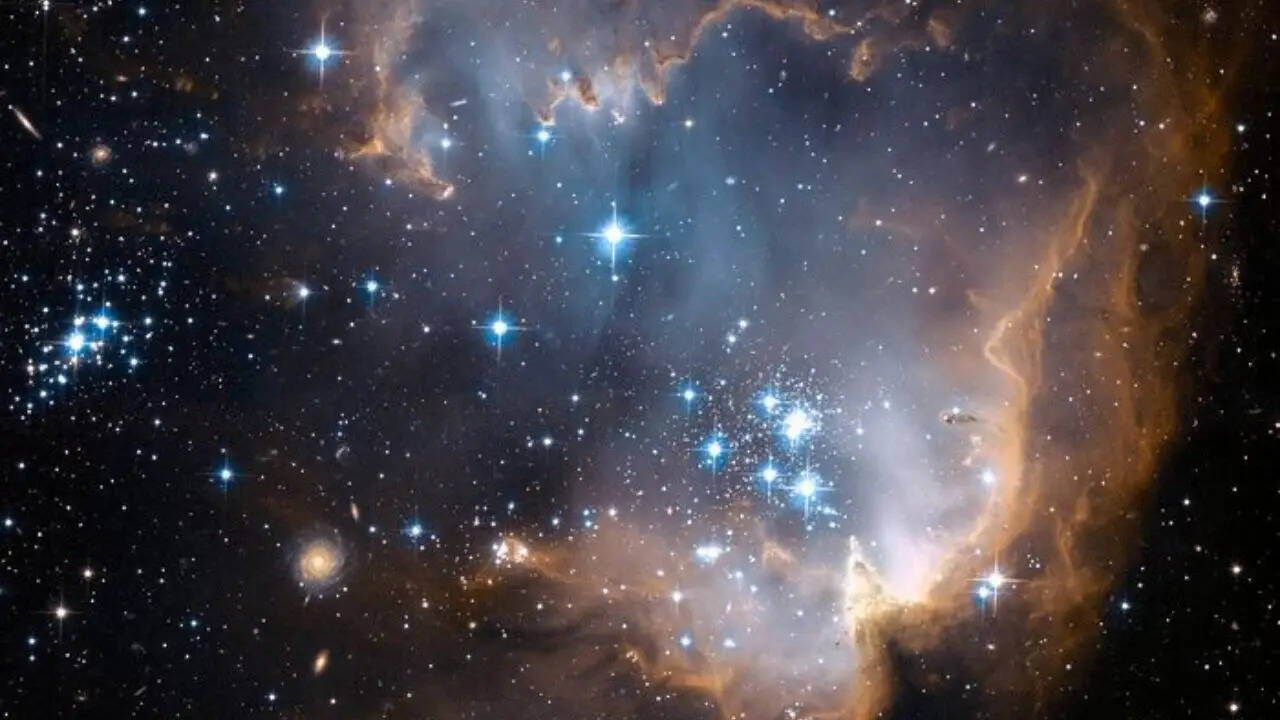
- NASA’s close-up image showcases the Tarantula Nebula, located in the Large Magellanic Cloud.
- The nebula is a vibrant star-forming region rich in ionized hydrogen gas.
- It is the most luminous nebula of its kind and contains extreme environments, including supernova remnants.
Tarantula Nebula: A Glimpse into Star Formation
NASA has released a breathtaking close-up of the Tarantula Nebula, a prominent star-forming region situated in the Large Magellanic Cloud, which is a satellite galaxy to the Milky Way. This nebula, renowned for its vivid display of ionized hydrogen gas, stands out as a crucial location for understanding star formation processes.
The Tarantula Nebula is not just visually striking; it is also scientifically significant. Known for its extreme conditions, including supernova remnants and the presence of the heaviest star ever discovered, it serves as a unique laboratory for astrophysicists studying stellar evolution. The nebula’s environment is home to powerful forces that can be examined to gain insights into the life cycles of stars, particularly those leading to supernova events.
As the most luminous nebula of its type within the local Universe, the Tarantula Nebula is a beacon for astronomers. Its luminosity enables detailed observation and analysis, making it easier to study the ongoing processes that contribute to star formation. This region contains dense clusters of young stars, providing a rare opportunity to observe the birth and growth stages of stars in a context rich with ionized gases and cosmic phenomena.
The release of this stunning image highlights not only the beauty of the Tarantula Nebula but also underscores its importance in cosmic studies. With its unique characteristics and prominent role in the Universe, the nebula continues to attract interest from both professional astronomers and astronomy enthusiasts alike.
In summary, the Tarantula Nebula serves as a vibrant example of stellar creation and offers an invaluable perspective on the dynamic processes that govern the life of stars, particularly in extreme environments. The imagery and findings related to this nebula will undoubtedly advance knowledge in the field of astrophysics.
The content above is a summary. For more details, see the source article.