Key Takeaways
- A Spanish team is developing a reactor that uses sunlight to convert carbon dioxide and greywater into methane for fuel on Mars.
- The system also detoxifies greywater, addressing waste recycling alongside carbon dioxide reduction.
- Research is ongoing, with the technology needing enhancements for efficiency and environmental impact, both for Mars and Earth applications.
Innovative Fuel Production for Mars Missions
Future human missions to Mars will require astronauts to utilize available resources effectively to ensure the production of essential supplies such as oxygen, water, and fuel. A collaborative effort between the Spanish technological center Tekniker and the University of Cantabria is underway to develop a groundbreaking system that leverages sunlight to transform carbon dioxide and wastewater into methane fuel.
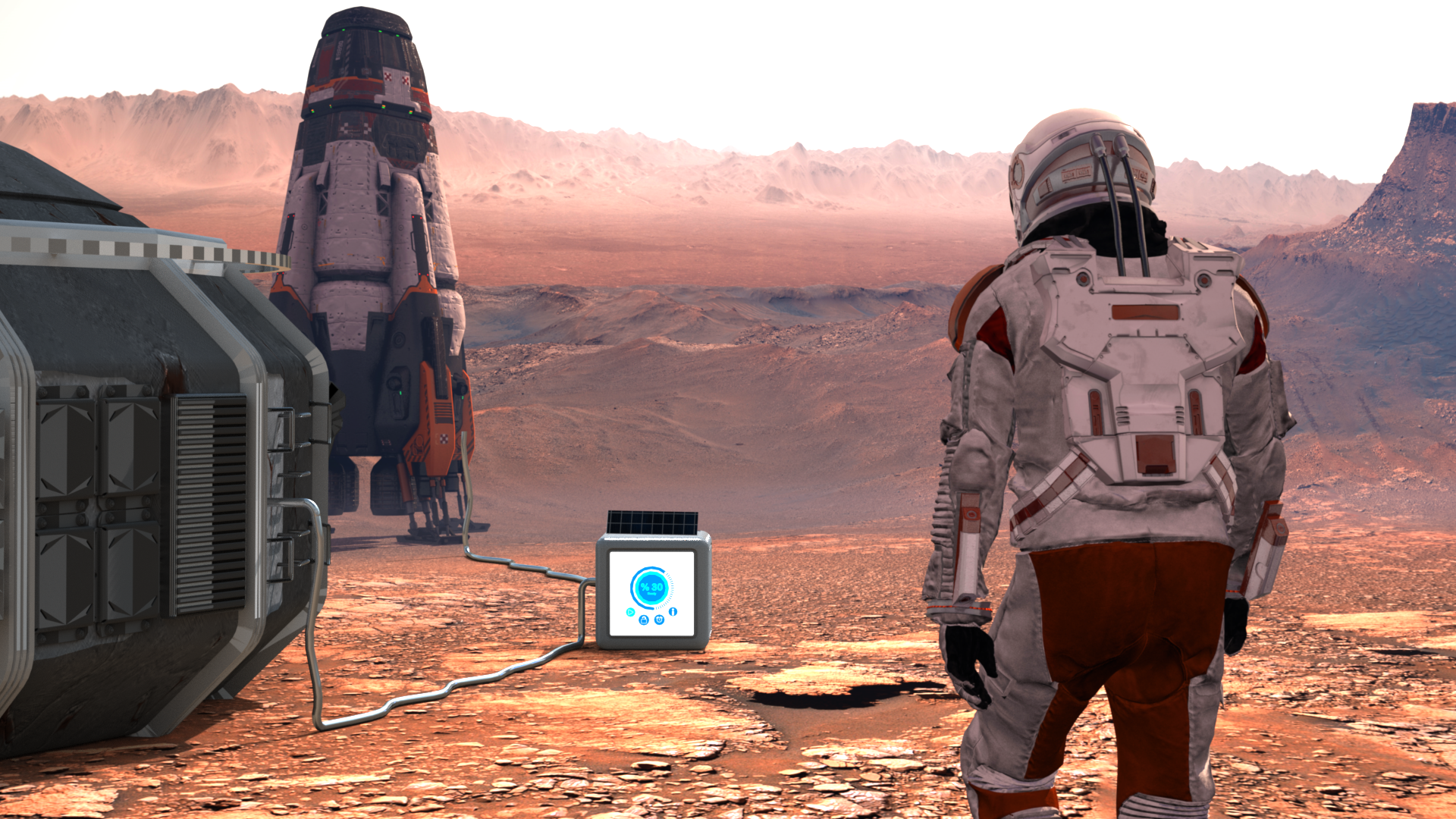
The primary objective of this project is to create a reactor capable of using Mars’ abundant carbon dioxide atmosphere—comprising approximately 95% of its air—to generate fuel. This novel reactor is powered by sunlight and incorporates greywater, which includes used water from activities such as washing hands or showering.
The mechanism, known as a ‘photoelectrochemical’ system, functions by splitting water molecules through sunlight exposure, producing both hydrogen and oxygen. The hydrogen then reacts with carbon dioxide to produce methane. A unique feature of this system is its dual functionality; as it generates fuel, it simultaneously detoxifies the greywater, facilitating waste recycling. This innovative approach represents a significant advancement in both space exploration and sustainable carbon dioxide conversion technologies, as noted by project lead Elena Garcia from Tekniker. She emphasized that their reactor simultaneously addresses both carbon dioxide reduction and greywater treatment, benefiting overall mission sustainability.
The project, entitled HISRU (Photoelectrochemical system for CO2 reduction to produce fuels and sewage treatment), was submitted via the Open Space Innovation Platform (OSIP) and is part of the European Space Agency’s (ESA) Basic Activities through the Discovery element.
However, creating suitable systems for Mars missions involves overcoming significant environmental challenges. Being farther from the Sun and having a dusty atmosphere means Mars receives less than half the sunlight that Earth receives. Consequently, any solar-powered technology must be tailored to adapt to these harsh conditions. Additionally, the Martian atmosphere is extremely thin, with air pressure less than 1% of Earth’s typical levels, necessitating extensive testing of the reactor prototype in simulated Martian environments.
The research team recently presented their findings at ESA’s ESTEC technical center in the Netherlands. Jean-Christophe Berton, the OSIP call initiator and ESA project lead, noted the HISRU technology’s potential to decrease carbon dioxide levels while producing necessary fuels and oxygen from greywater for both Martian and terrestrial applications.
However, researchers acknowledge that further enhancements are necessary to optimize energy efficiency and mitigate environmental impacts for applications on Earth. Although the technology shows promise for enhancing Mars exploration, it will need further refinement to meet the operational demands of extraterrestrial missions. Elena Garcia highlighted ESA Discovery’s crucial support and funding via OSIP, which has been instrumental in advancing the preliminary studies, manufacturing, assembly, and testing of this innovative technology.
The content above is a summary. For more details, see the source article.