

Key Takeaways
- Poland’s N7 Mobile transitioned from mobile software to developing space systems for ESA’s Proba-3 mission.
- Proba-3 consists of two spacecraft designed for in-depth solar corona studies, relying on N7 Space’s custom software.
- N7 Space’s collaboration with ESA has led to significant growth, with over 30 projects and a specialized team of 25 engineers.
Shifting from Apps to Space Systems
The European Space Agency (ESA) plays an influential role in expanding space capabilities by supporting new players in the industry. A notable example is N7 Mobile, a Polish software company traditionally known for developing smartphone applications. Recently, N7 Mobile ventured into the space sector and successfully designed the operating system for ASPIICS, the main instrument aboard the Proba-3 mission.
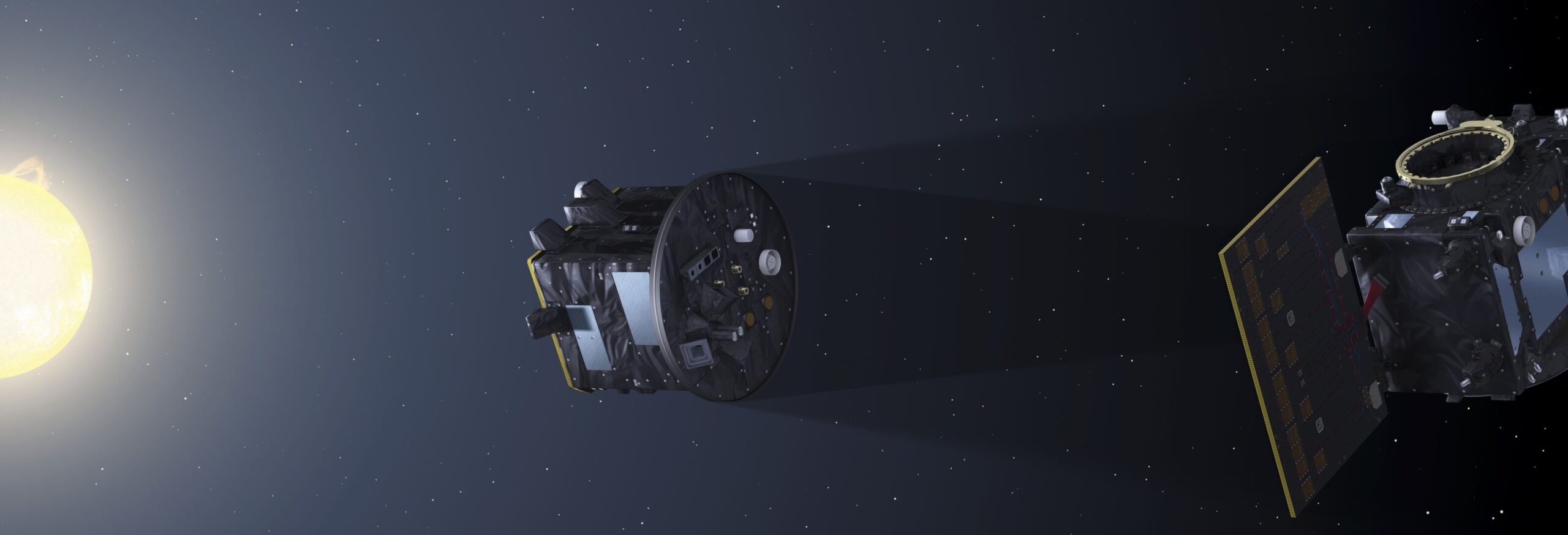
Launched on December 5, 2024, the Proba-3 mission comprises two spacecraft engineered to manipulate their positions to achieve an eclipse of the sun, facilitating sustained observation of the solar corona. Damian Galano, ESA’s Proba-3 project manager, emphasized the unique nature of this mission, which involves several newer ESA member states, including Poland, Romania, and the Czech Republic. He stated that the involvement of new companies not only brings fresh ideas but also enriches ESA’s overall strategy of fostering space expertise in Europe.
N7 Mobile’s Transition
N7 Mobile, founded as a mobile application developer, established a space division in the mid-2010s due to their growing interest in the cosmos. Michał Mosdorf from N7 Space highlighted that their initial experience with educational CubeSat projects, the first Polish satellite, and contributions to European missions such as SolarOrbiter provided them with foundational skills necessary for entering the space domain. This ultimately led them to join the ASPIICS consortium, which marked the beginning of a decade-long effort to develop the instrument.
N7 Space dedicated over 12,000 hours to crafting ASPIICS’ software, which involves overseeing its onboard computer amid complex operational demands. Mosdorf noted the significant differences between developing mobile software and space systems, emphasizing the rigorous protocols needed for space missions. Unlike software for mobile apps, where errors can be rectified promptly, spaceflight software requires meticulous development and pre-launch simulations due to the challenges of operating in space.
Adapting to Space Standards
The transition into space systems necessitated N7 Space’s adjustment to the sector’s specific standards and hardware. This included familiarization with ESA’s hardware ecosystem and compliance with the European Coordination for Space Standardization (ECSS), which dictates rigorous protocols for software engineering.
Working with ESA provided N7 Space access to advanced tools within the TASTE environment, fostering the development of embedded, real-time systems critical for space applications.
Growth and Future Prospects
Reflecting on the journey, Mosdorf stated that working on the ASPIICS project was challenging yet crucial for the evolution of N7 Space. The company has expanded significantly, currently managing over 30 projects and employing 25 specialized engineers.
N7 Space continues to forge partnerships within the industry, notably collaborating with the European Southern Observatory and contributing to ESA missions such as Hera and Comet Interceptor. Their efforts have garnered attention not just within ESA but also from global projects, thanks in part to funding from ESA’s General Support Technology Programme.
With the successful launch of Proba-3, N7 Space is now engaged in projects for future missions, including Ariel, maintaining close communication with ESA mission teams to provide ongoing support. This partnership illustrates the potential for innovative growth stemming from collaborative efforts in the burgeoning space industry.
The content above is a summary. For more details, see the source article.