Key Takeaways
- ESA’s Proba-3 mission successfully launched two satellites for precision formation flying.
- The satellites will simulate a total solar eclipse to study the Sun’s corona.
- The mission aims for millimeter-level accuracy in positioning, enhancing solar observations.
ESA’s Proba-3 Mission Launches into Space
The European Space Agency’s (ESA) Proba-3 mission, featuring a pair of satellites designed for high-precision formation flying, has successfully reached space. This marks a significant milestone as Proba-3 joins the ESA’s collection of in-orbit demonstration missions. ESA’s Director General, Josef Aschbacher, expressed his best wishes to the mission team as they embark on this innovative project.
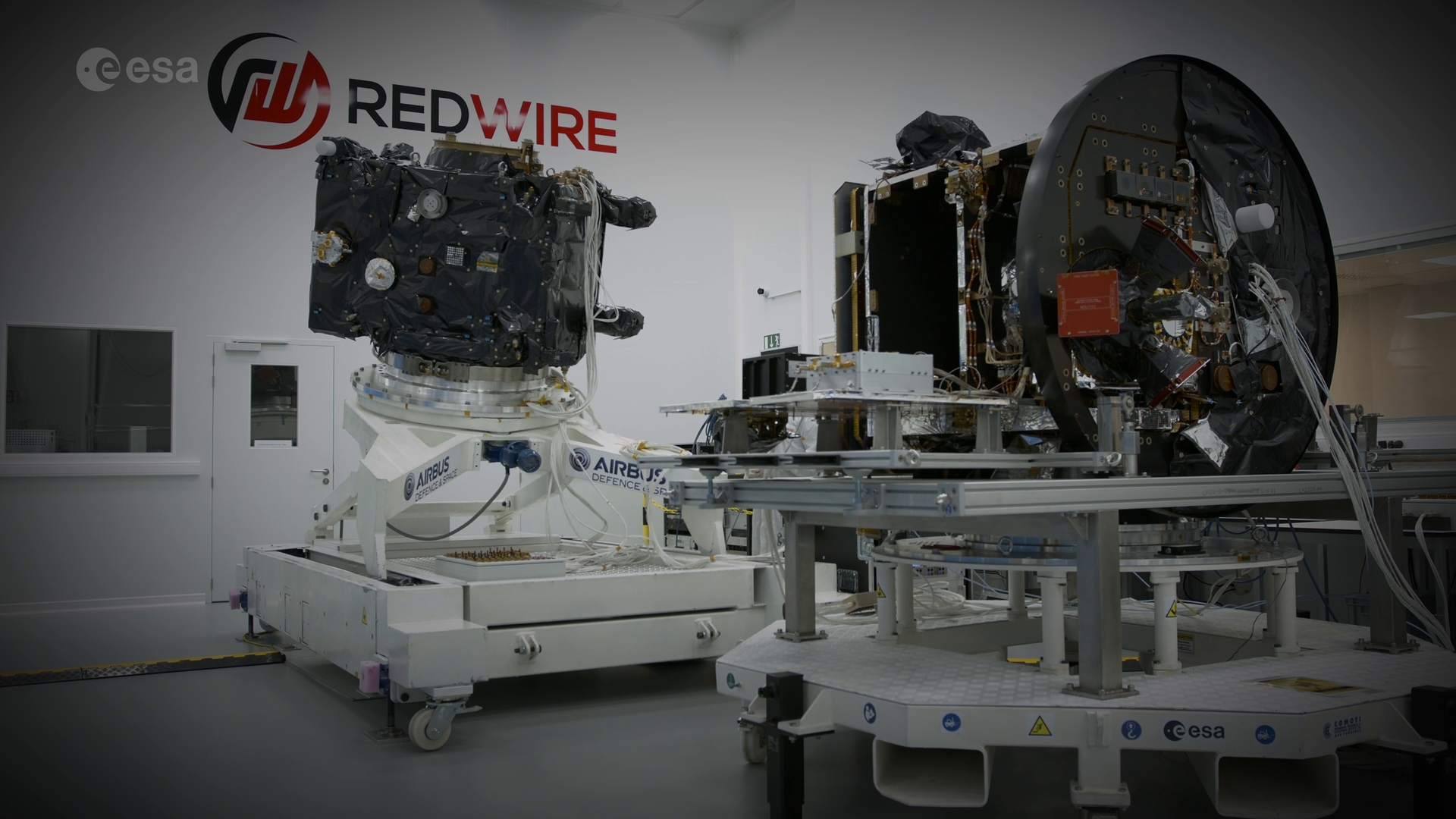
Proba-3 consists of two spacecraft, which will work in tandem to achieve unprecedented accuracy in their positioning, down to a single millimeter— roughly the thickness of a fingernail. The mission’s ambitious scientific objective involves meticulously aligning these two craft about 150 meters apart to create a controlled shadow. This configuration allows one satellite, known as the ‘Occulter,’ to block the Sun’s light while the other, the ‘Coronagraph,’ will observe the resultant solar corona.
The mission aims to mimic a terrestrial total solar eclipse, creating conditions that will expose the faint solar corona, which is a million times dimmer than the Sun itself. By successfully blocking out the sun’s radiant disc, Proba-3 enables enhanced observations of this elusive region of space, providing data critical to understanding solar dynamics and phenomena.
Through this mission, ESA hopes to advance solar science and explore new methodologies in observational astronomy. Proba-3 is positioned to contribute valuable insights that could influence multiple fields, including space weather forecasting and solar activity monitoring. The success of this mission could pave the way for future missions aimed at studying other celestial phenomena.
Proba-3’s innovative approach to formation flying and solar observation represents a leap forward in space exploration technology. The mission team, as they depart for this remarkable journey, embodies the spirit of scientific inquiry and dedication that drives ESA’s ongoing efforts to push the boundaries of what is possible in space research.
The content above is a summary. For more details, see the source article.