Key Takeaways
- The launch of Vietnam’s LOTUSat-1 satellite has been delayed after Japan’s Epsilon-S rocket failed during a test.
- Vietnam and Japan are collaborating on the project, focusing on technology transfer and capacity building for satellite operations.
Project Update on LOTUSat-1 Launch
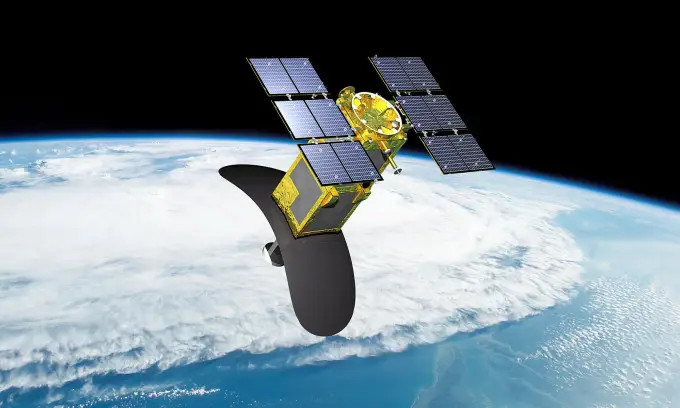
The LOTUSat-1 satellite launch, originally set for February 2025, has been postponed indefinitely due to the unsuccessful test of Japan’s Epsilon-S rocket on November 26, 2024. Pham Anh Tuan, General Director of the Vietnam National Space Center (VNSC), confirmed that discussions are ongoing with Japanese partners to determine a new launch date and ensure the satellite’s effective post-launch operations.
Amid these developments, Vietnamese Prime Minister Pham Minh Chinh met with Japanese business leaders on March 1, reinforcing the importance of ongoing cooperation in high-tech sectors, particularly in satellite technology. To facilitate this partnership, a team of Vietnamese engineers has been dispatched to Japan to oversee the satellite design, assembly, and simulated testing, emphasizing the importance of technology transfer for future capabilities.
The LOTUSat-1 project aligns with Vietnam’s broader Strategy for Space Science and Technology Development and Application until 2030. Establishing a solid ground system at the Hoa Lac Hi-Tech Park in Hanoi includes a significant 9.3-meter ground antenna, a satellite control center, and a data processing facility, all employing Japanese technology. The satellite is designed to provide critical information for government agencies focused on emergency response, socio-economic development, and national security.
Equipped with advanced radar technology, LOTUSat-1 will weigh approximately 600 kg and is capable of detecting small objects on the ground under various weather conditions. The high-resolution imaging will support efforts in disaster response, climate adaptation, natural resource management, and environmental monitoring.
Recent collaborations have further strengthened ties between Vietnam and Japan in space technology. In November 2023, agreements were signed between the Vietnam Academy of Science and Technology and the Japan Aerospace Exploration Agency (JAXA) to facilitate feasibility studies regarding space technology cooperation. This partnership aims to share operational expertise for LOTUSat-1 and establish enhanced management practices for the Vietnam Space Center.
Vietnam’s relationship with Japan in space technology has flourished since 2006, resulting in the successful development and launch of three domestically produced small satellites—PicoDragon, NanoDragon, and MicroDragon—with JAXA’s support. The ongoing developments in the LOTUSat-1 project reflect a commitment to advancing Vietnam’s self-sufficiency and expertise in the space sector.
The content above is a summary. For more details, see the source article.