

Key Takeaways
- Nasa’s ROLSES-1 is the first radio telescope successfully used on the moon, marking a significant advancement in lunar astronomy.
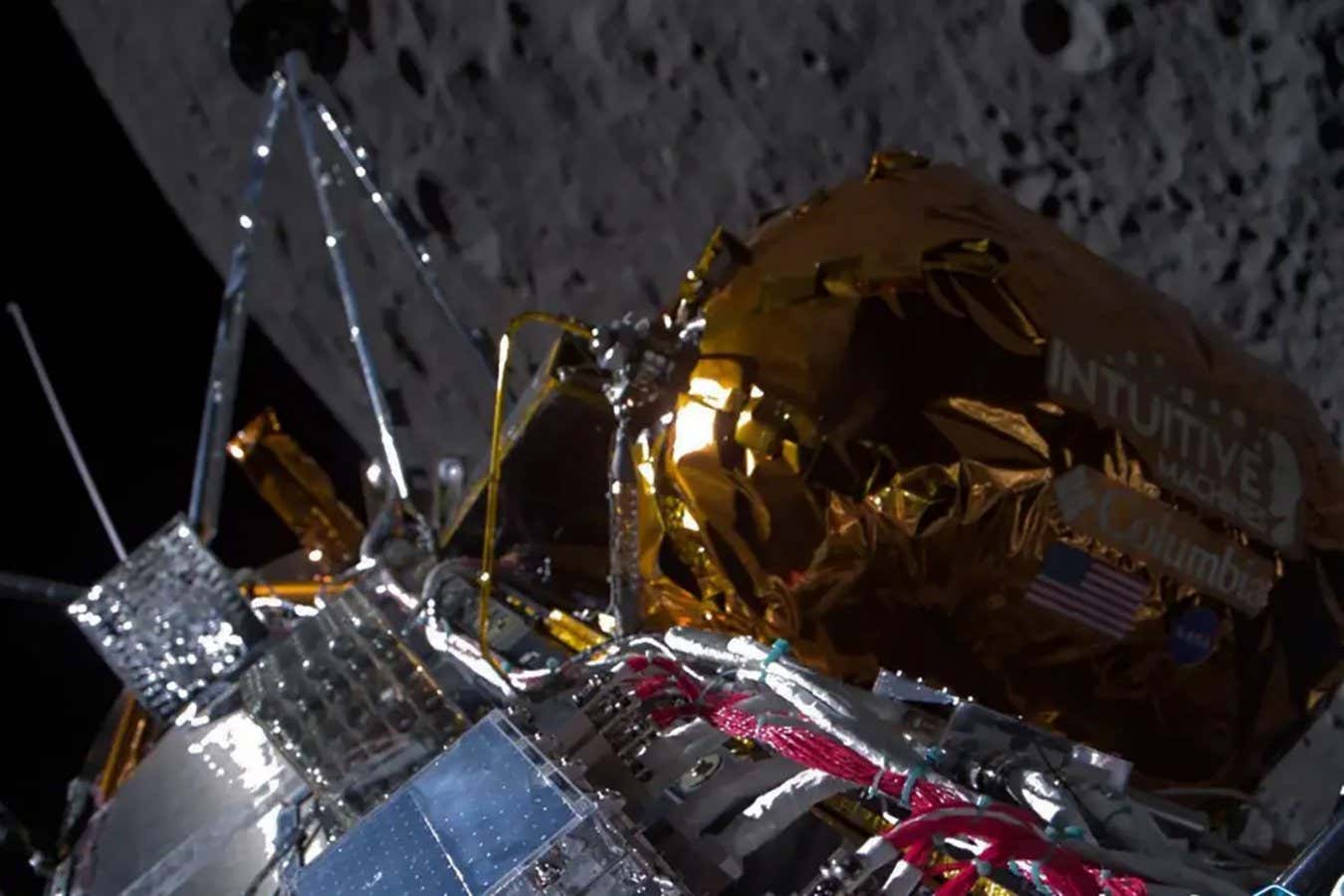
- The Odysseus lander, operated by Intuitive Machines, achieved the first private lunar landing despite a rough touchdown.
- This groundbreaking project aims to provide insights into the cosmic dark ages of the universe.
Breakthrough in Lunar Astronomy
NASA’s recent achievement with the ROLSES-1 (Radio wave Observations at the Lunar Surface of the photoElectron Sheath) telescope on the moon signals a new chapter in astronomical exploration. This telescope is the first of its kind to be successfully operated on the lunar surface, paving the way for a deeper understanding of the universe’s early, elusive phases, often referred to as the cosmic dark ages.
The ROLSES-1 is mounted on the Odysseus lander, which made history last year as the first private spacecraft to land on the moon. However, the mission faced challenges during the landing; Odysseus tipped onto its side. Despite this setback, the telescope emerged relatively unscathed and has begun operating, maintaining its ability to collect critical data from the lunar environment.
The ROLSES-1’s primary objective is to study the universe’s ancient history by monitoring low-frequency radio waves that can offer clues about the conditions that prevailed before the first stars and galaxies formed. This research is crucial, as it could assist scientists in piecing together the events that transpired during the period when the cosmos underwent significant changes.
Future missions may benefit from the findings of the ROLSES-1, as astronomers continue to seek additional ways to utilize the lunar surface as a platform for stellar research. The potential for conducting investigations in this unique environment is enormous, with the moon providing a stable platform away from Earth’s atmospheric interference, which often obscures radio signals.
Intuitive Machines has placed substantial emphasis on the operational integrity of its spacecraft. Although the Odysseus lander faced difficulties immediately after landing, the successful activation of ROLSES-1 showcases a notable achievement in the realm of private space exploration. This mission exemplifies how private entities can contribute significantly to scientific advancements, especially in areas traditionally dominated by government space agencies.
In conclusion, the successful deployment of the ROLSES-1 telescope on the moon not only represents a technical triumph but also opens the door to a wealth of scientific possibilities. By examining radio emissions from early cosmic epochs, this pioneering project may ultimately help to illuminate some of the darkest and most mysterious chapters of the universe’s history, contributing significantly to humanity’s understanding of its origins.
The content above is a summary. For more details, see the source article.