

Key Takeaways
- India plans to launch Chandrayaan-5 in collaboration with Japan.
- The country aims to establish its own space station by 2035.
- Amrita University honored 27 scientists recognized among the top 2% globally.
India’s Space Ambitions and Recognition of Excellence
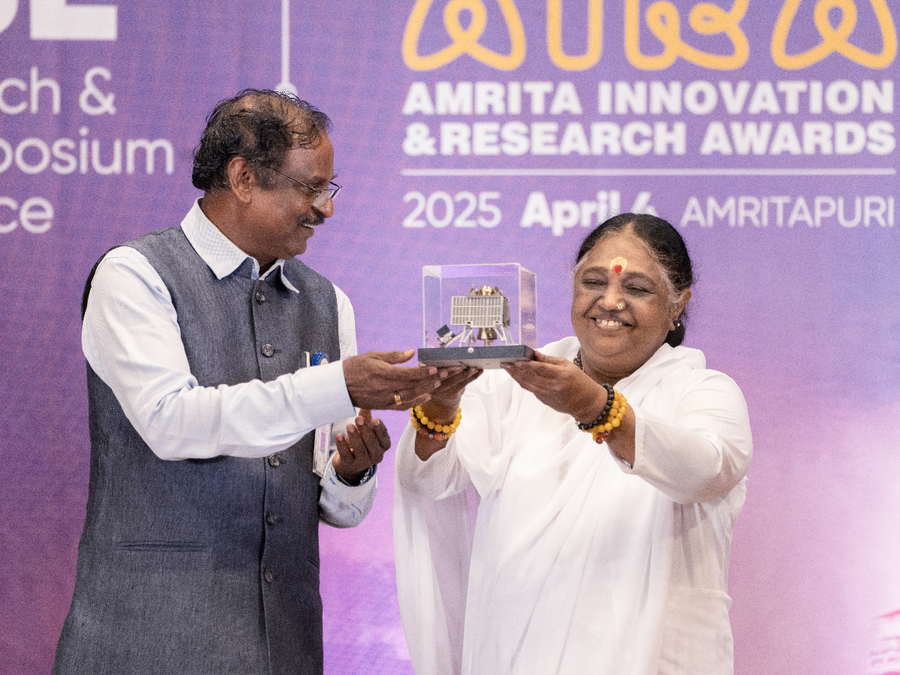
During the Amrita Innovation and Research Awards (AIRA) ceremony at the Amritapuri Ashram, Dr. V. Narayanan, Chairman of the Indian Space Research Organisation (ISRO) and Secretary of the Department of Space, delivered significant updates on India’s space initiatives. He announced plans to launch Chandrayaan-5 in collaboration with Japan, showcasing ongoing international partnerships in space exploration. Furthermore, he highlighted India’s goal to establish its own space station by 2035, marking a bold step in the nation’s space program.
Dr. Narayanan reflected on the impressive evolution of India’s space capabilities, stating how the country has transformed from transporting parts of space vehicles on bicycles and bullock carts to successfully launching over a hundred satellites in single missions. This transformation underscores India’s emerging status in global space technology.
The AIRA awards, organized by Amrita Vishwa Vidyapeetham as part of the five-day Amrita Research and Innovation Symposium for Excellence (ARISE 2025), celebrate remarkable research and innovation by the university’s faculty and scientists. This year, the awards featured nearly ₹8 crores in cash prizes along with commemorative plaques and certificates for outstanding achievements.
In a demonstration of Amrita University’s academic prowess, 27 scientists were honored for making it onto Stanford University’s global list of the top 2% of scientists, reflecting the institution’s commitment to research excellence and innovation. The ceremony was presided over by Sri Mata Amritanandamayi Devi (Amma), Chancellor of Amrita Vishwa Vidyapeetham, and included prominent university officials such as Swami Amritaswarupananda Puri, Dr. Venkat Rangan, and other esteemed deans and leaders.
Through this event and its announcements, India continues to solidify its place on the global space stage while simultaneously acknowledging the invaluable contributions of its academic community in advancing scientific research and development.
The content above is a summary. For more details, see the source article.