Key Takeaways
- A potential Saturn-sized gas giant has been detected orbiting Alpha Centauri A, our closest sun-like star.
- The James Webb Space Telescope captured direct light from the planet, challenging previous methods of planet detection.
- If confirmed, this discovery could reshape our understanding of planet formation in complex stellar environments.
Multiple Stars, New Discoveries
Alpha Centauri, located just four light years from Earth, is the nearest star system, consisting of three stars: Alpha Centauri A, Alpha Centauri B, and Proxima Centauri. For years, researchers have speculated about the presence of a planet within the “habitable zone” of Alpha Centauri, where conditions might allow for liquid water. However, confirming such a planet has been difficult due to the brightness and rapid movement of the stars, as noted by Charles Beichman from the California Institute of Technology.
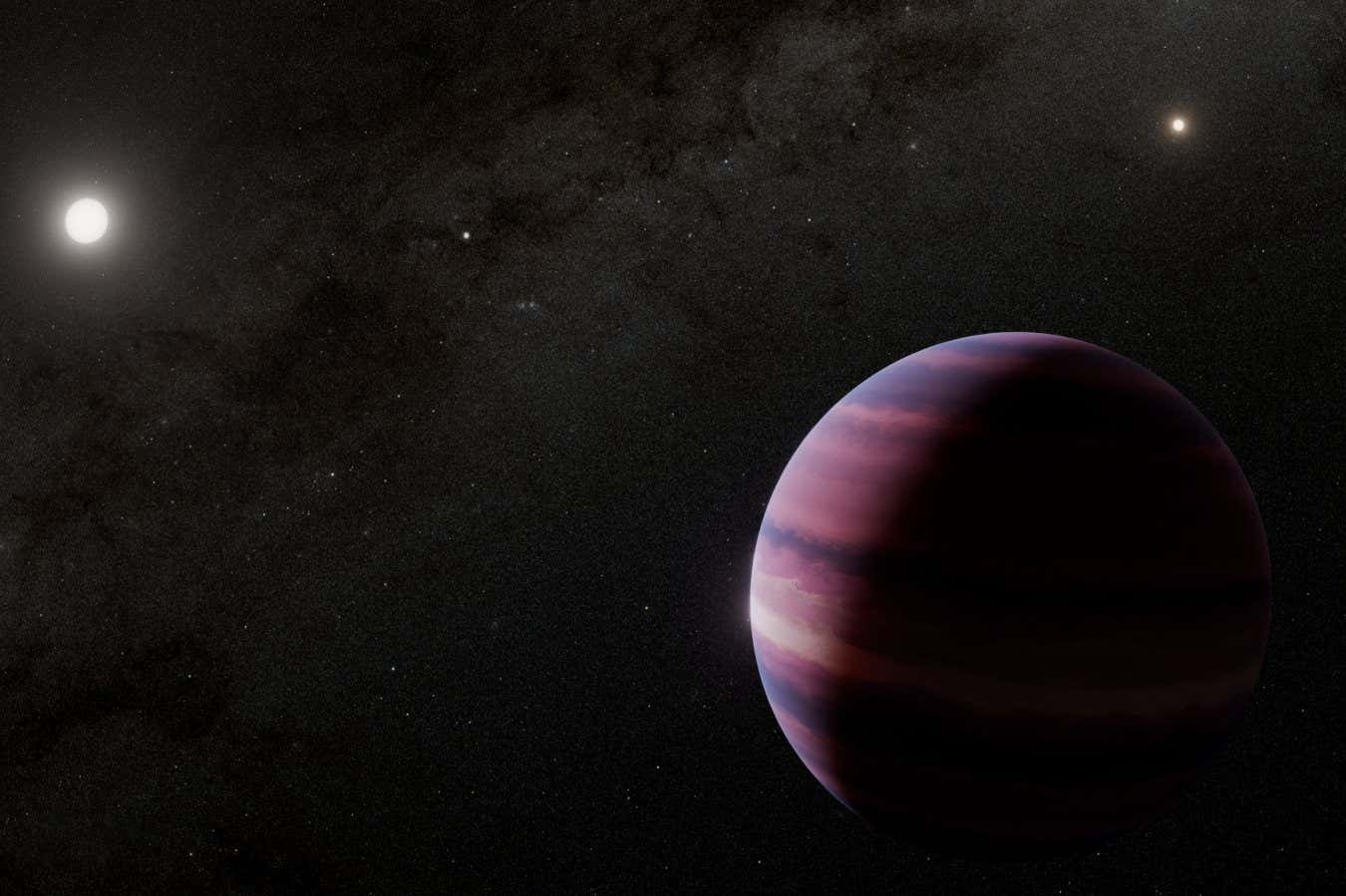
Recent data from the James Webb Space Telescope (JWST) suggests that a gas giant, potentially the size of Saturn, may be orbiting Alpha Centauri A. This finding surprised many in the scientific community, as JWST was primarily designed for deep-space observations, not for detecting exoplanets. Beichman emphasized that the discovery required careful planning and precise analyses, leading to what he described as a “spectacular” payoff.
While past detection methods relied mainly on indirect measurements, the JWST directly captured the light from the suspected planet. Alan Boss from Carnegie Science remarked that this innovative approach marked a significant step in exoplanet studies. However, subsequent observations did not detect the planet, leading researchers to consider the intriguing possibility of a “disappearing planet.”
Aniket Sanghi, also from Caltech, explained that simulations of millions of orbital paths indicated the planet might have moved too close to its star, rendering it invisible during later observation periods in 2025. This unexpected behavior raises questions about the stability and visibility of such planets in binary star systems.
This newly discovered gas giant may not support life, but its existence would have profound implications for understanding planet formation and survival in chaotic environments. Sanghi stated that this finding could challenge currently held beliefs about how planets evolve in systems with closely orbiting stars. Furthermore, its temperature and age are comparable to the giant planets in our solar system, making it a fascinating subject for further study.
The research supporting this discovery is documented in two papers that have been accepted for publication in The Astrophysical Journal Letters. As scientists continue to analyze and interpret these findings, they could pave the way for new insights into planetary systems both near and far.
The content above is a summary. For more details, see the source article.