Key Takeaways
- Luxembourg-based companies LMO and ClearSpace are testing autonomous satellite navigation technology using ESA’s GRALS facility.
- The focus is on developing a Vision-Based Navigation system to help satellites identify and approach debris and malfunctioning satellites in orbit.
- The DIOSSA initiative, funded by LuxIMPULSE, aims to enhance in-orbit servicing and improve satellite management as space becomes increasingly crowded.
Advancing Satellite Navigation Technology
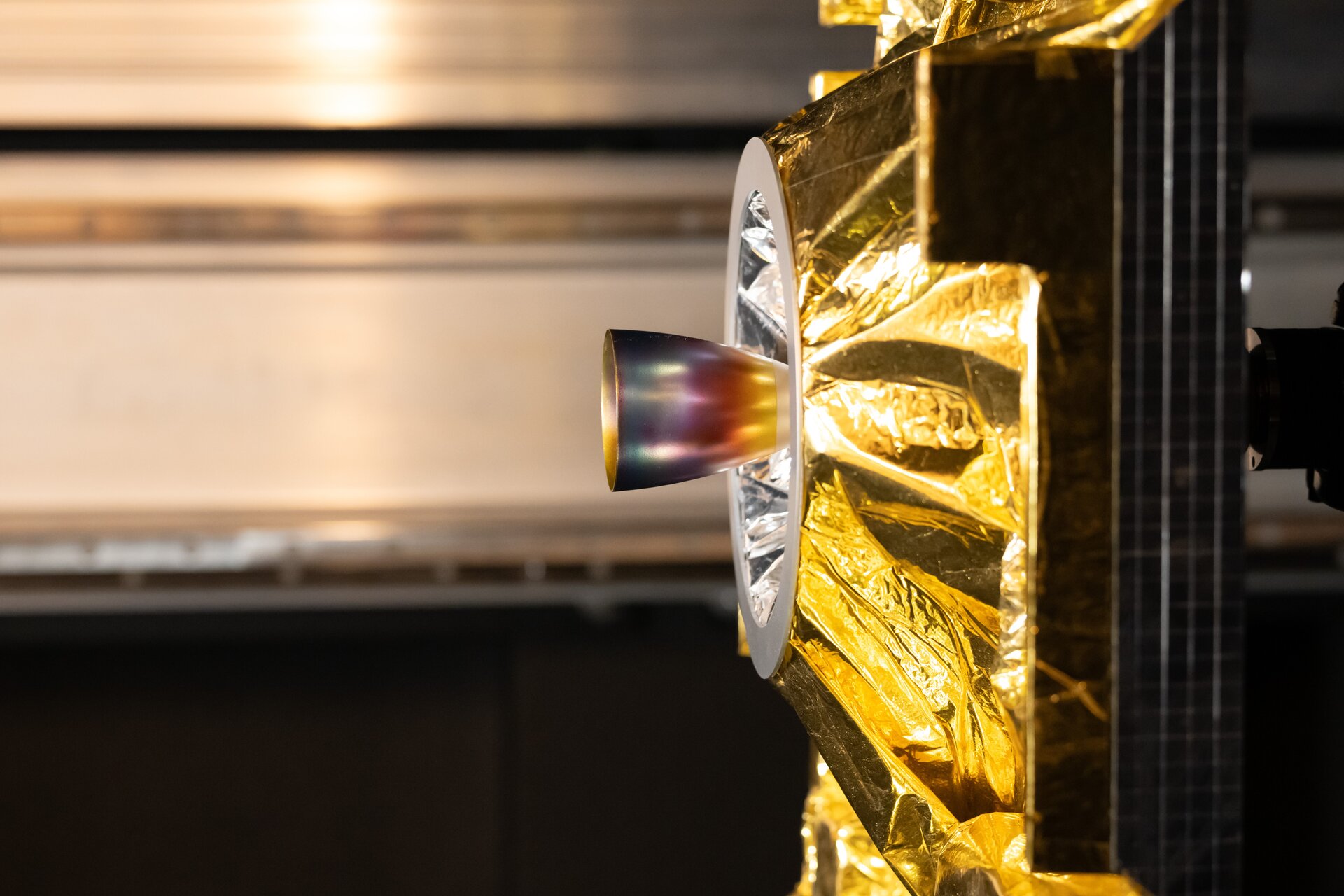
Two companies from Luxembourg, LMO and ClearSpace, are collaborating on a project utilizing the European Space Agency’s (ESA) Guidance, Navigation and Control Rendezvous, Approach and Landing Simulator (GRALS) to enhance autonomous satellite navigation technology. The facility, located at the ESA’s technical center (ESTEC) in the Netherlands, is equipped with dual robotic arms that simulate rendezvous scenarios in space by manipulating a satellite model and a navigation unit.
The Development of In-Orbit Servicing Space Situational Awareness Payloads (DIOSSA) activity is key to addressing the increasing problem of uncooperative human-made objects in Earth’s orbit. According to ClearSpace’s Sabrina Andiappane, the growing number of malfunctioning satellites poses challenges for refueling, repairs, or deorbiting efforts. LMO’s Alexander Finch emphasizes the difficulty in determining a satellite’s location in relation to another, comparing it to navigating to a friend’s house and needing to see where one is going.
To tackle these challenges, the companies are developing a Vision-Based Navigation (VBN) system, which employs artificial intelligence to guide satellites in identifying, approaching, or avoiding other objects in space, similar to how self-driving cars operate. The satellite model used in the simulation features dimensions that mimic real satellites, supporting the validation of their navigation technology.
ClearSpace’s larger satellite model, utilized in later stages of the rendezvous simulation, helps ensure robustness and reliability of the autonomous servicing technologies in real-world conditions. This testing phase complements the computer-generated imagery previously used to train their AI systems.
ESA’s GNC system engineer, Joris Belhadj, notes that while GRALS enables realistic hardware testing in simulated environments, the facility will evolve to include more complex scenarios to meet the demands of the European space industry. The project’s future enhancements will bring the simulation closer to actual conditions encountered in space.
The DIOSSA initiative is backed by LuxIMPULSE, Luxembourg’s national research and development program, and aims to improve in-orbit servicing capabilities and ensure the sustainability of space operations as orbital congestion increases.
The content above is a summary. For more details, see the source article.