Key Takeaways
- NASA’s SPHEREx observatory has successfully mapped the entire sky, aiding research on cosmic origins.
- The mission aims to explore galaxy evolution and the distribution of essential life elements over 13.8 billion years.
- SPHEREx completes nearly 15 Earth orbits daily, capturing a wealth of data for future investigations.
Mapping the Cosmos
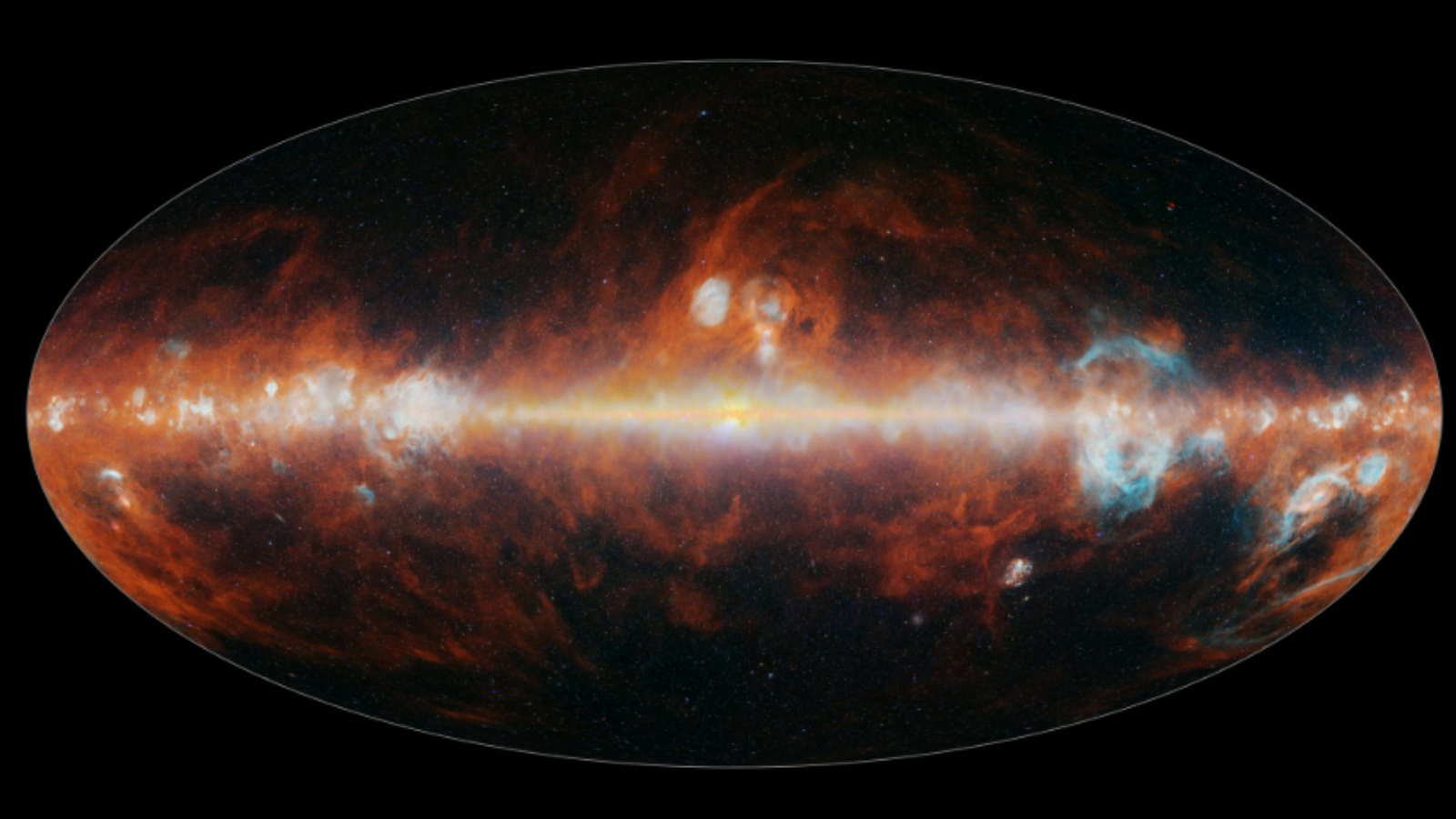
NASA’s SPHEREx observatory has made significant strides in astrophysics, completing its first comprehensive map of the sky just six months after its launch in March. This remarkable achievement not only offers aesthetic value but also serves critical scientific purposes. The data collected will help astronomers tackle fundamental questions regarding the universe’s origins, particularly concerning the events that transpired in the first billionth of a trillionth of a trillionth of a second post-Big Bang. Insights gained will also examine the 3D distribution of hundreds of millions of galaxies.
The SPHEREx data promises to shed light on the evolution of galaxies throughout the universe’s 13.8 billion-year history, focusing on how key life-sustaining elements were dispersed across space. “It’s incredible how much information SPHEREx has collected in just six months—information that will be especially valuable when used alongside our other missions’ data,” remarked Shawn Domagal-Goldman, the director of NASA’s Astrophysics Division. He emphasized the significance of the 102 new maps created, each capturing unique details across different wavelengths.
The full name of SPHEREx is the “Spectro-Photometer for the History of the Universe, Epoch of Reionization, and Ices Explorer.” The spacecraft orbits Earth approximately 15 times daily, spanning from the North Pole to the South Pole. During each orbit, it captures 3,600 images, and as Earth orbits the sun, this provides SPHEREx with a constantly shifting perspective. Officially beginning its operations in May, the observatory took until this month to finalize its initial sky map. During its two-year primary mission, SPHEREx is expected to complete three additional all-sky scans. Data from these future scans will enhance the existing map, yielding an even more comprehensive view of the universe.
“It’s a phenomenal example of how we turn bold ideas into reality, unlocking enormous potential for discovery,” stated Dave Gallagher, director of JPL. The mission exemplifies how mid-sized efforts can lead to groundbreaking findings in astrophysics.
As research continues, expectations are high for the insights that SPHEREx will provide, not just enriching scientific knowledge but also helping humanity understand its place in the cosmos.
The content above is a summary. For more details, see the source article.