Key Takeaways
- New images from the Euclid space telescope reveal the barred spiral galaxy NGC 646, located 392 million light-years away.
- NGC 646, discovered in 1834 by John Herschel, is observed moving away from Earth at 8145 km per second.
- The Euclid mission will produce extensive astronomical observations, enhancing understanding of galaxy formation and evolution by 2026.
NGC 646 and the Euclid Mission
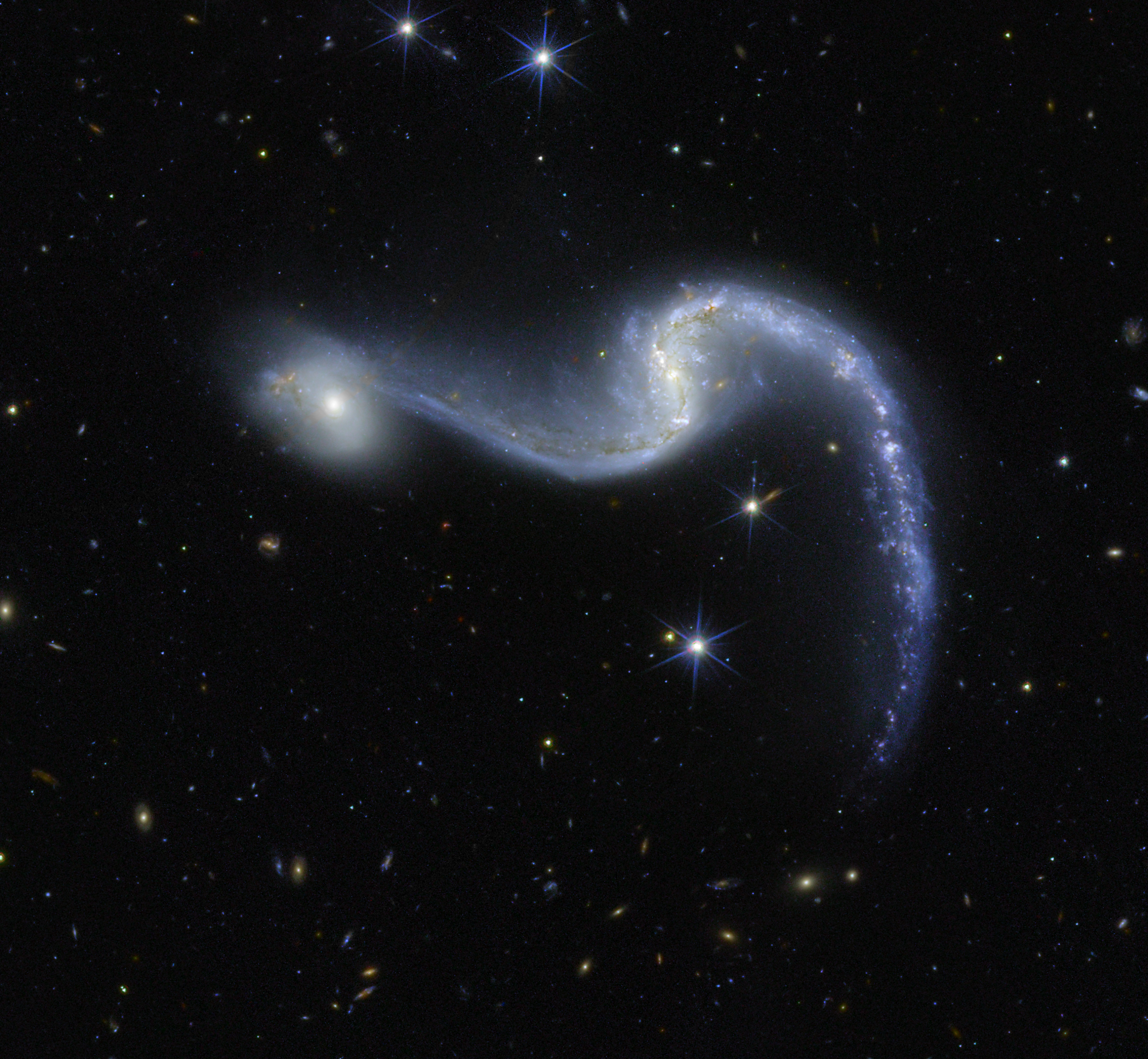
The recent images captured by the European Space Agency’s (ESA) Euclid space telescope showcase the large barred spiral galaxy NGC 646, resembling a cosmic holiday garland. Discovered in 1834 by British astronomer John Herschel, NGC 646 is situated in the Hydrus constellation and is currently moving away from Earth at an impressive speed of 8145 kilometers per second. With a distance of approximately 392 million light-years, its light takes hundreds of millions of years to reach us, though it is relatively close compared to the vast number of galaxies set to be observed by Euclid over its six-year mission.
By 2026, the ESA, along with the Euclid Consortium, will release the first year’s worth of observations covering about 1900 square degrees of the sky—about 14% of the planned survey area. This initiative aims to provide detailed images revealing hundreds of thousands of galaxies, which may offer crucial insights into the processes behind galaxy formation and evolution. A key focus is understanding why barred galaxies like NGC 646 are becoming increasingly prevalent as the Universe ages.
In the stunning image of NGC 646, a smaller galaxy known as PGC 6014 can be seen to the left. Although they appear close neighbors, they are actually separated by about 45 million light-years, with PGC 6014 located at a distance of 347 million light-years from Earth. Any gravitational interactions between these two galaxies, if they exist at all, would be minimal and brief.
This mission not only enhances the knowledge of individual galaxies but also contributes to broader astronomical research, potentially shaping future studies on the underlying mechanics of the cosmos. As the Euclid telescope continues its groundbreaking work, it promises to advance the understanding of how galaxies have formed and will continue to evolve over time.
The content above is a summary. For more details, see the source article.