Key Takeaways
- Iran successfully launched three remote-sensing satellites, Paya, Zafar-2, and Kowsar, into orbit via a Russian Soyuz rocket.
- The satellites provide varying accuracy Earth observation data and will work together to enhance data access efficiency.
- Iran’s space program emphasizes technological self-reliance, aiming to develop and potentially export its own space technology.
Significant Progress for Iran’s Space Program
On December 28, 2025, Iran launched three domestically developed satellites—Paya, Zafar-2, and Kowsar—aboard a Russian Soyuz rocket from the Vostochny Space Center. This launch is viewed as a notable advancement in Iran’s space industry, with the satellites designed to provide Earth observation data at accuracies ranging from under five to 15 meters.
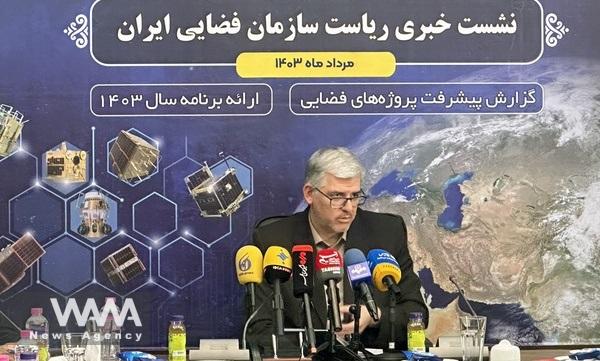
During a public live event in Tehran, Hassan Salarieh, head of the Iranian Space Organization, celebrated the launch’s significance and discussed the challenges and innovations in Iran’s space sector. He acknowledged that international sanctions have limited access to necessary equipment but have simultaneously encouraged Iran to focus on developing its own technology.
Salarieh explained that although domestic technology development takes longer than acquiring off-the-shelf solutions, it grants Iran complete control over its technological advancements, enabling the country to cater to its own needs and setting the stage for potential technology exports in the future. This localization strategy is seen as crucial for the growth of Iran’s space industry.
Looking ahead, Salarieh described Iran’s space industry as strategically vital and highly competitive, with the Ministry of Communications prioritizing space technology. Collaboration among the Iranian Space Organization, academic institutions, and technology companies is intended to propel advancements in the sector.
He emphasized the importance of space technology in enhancing productivity and efficiently managing terrestrial resources. Unlike many countries that primarily consume space technology, Iran aspires to be a self-sufficient developer and acquirer of its own technologies.
The launch signifies both a technical milestone and a broader diplomatic intent for Iran, with Salarieh noting that the satellites are designed to function effectively in tandem, significantly reducing the time required for obtaining updated Earth observation data. Alongside meeting domestic needs through indigenous advancements, Iran aims to foster technological diplomacy and collaboration with nations interested in developing their space capabilities.
This mission demonstrates Iran’s resolute commitment to progressing its space program, despite external pressures, positioning space technology as a strategic national asset and a platform for future international partnerships.
The content above is a summary. For more details, see the source article.