Key Takeaways
- SpaceX’s Starlink performed approximately 300,000 collision-avoidance maneuvers in 2025, significantly up from 200,000 in 2024.
- Starlink satellites are operating in congested orbits, with over 1,000 close approaches reported with a single Chinese satellite.
- A recent satellite explosion has raised concerns about space debris, prompting SpaceX to enhance safety measures.
Collision Avoidance and Growing Risks
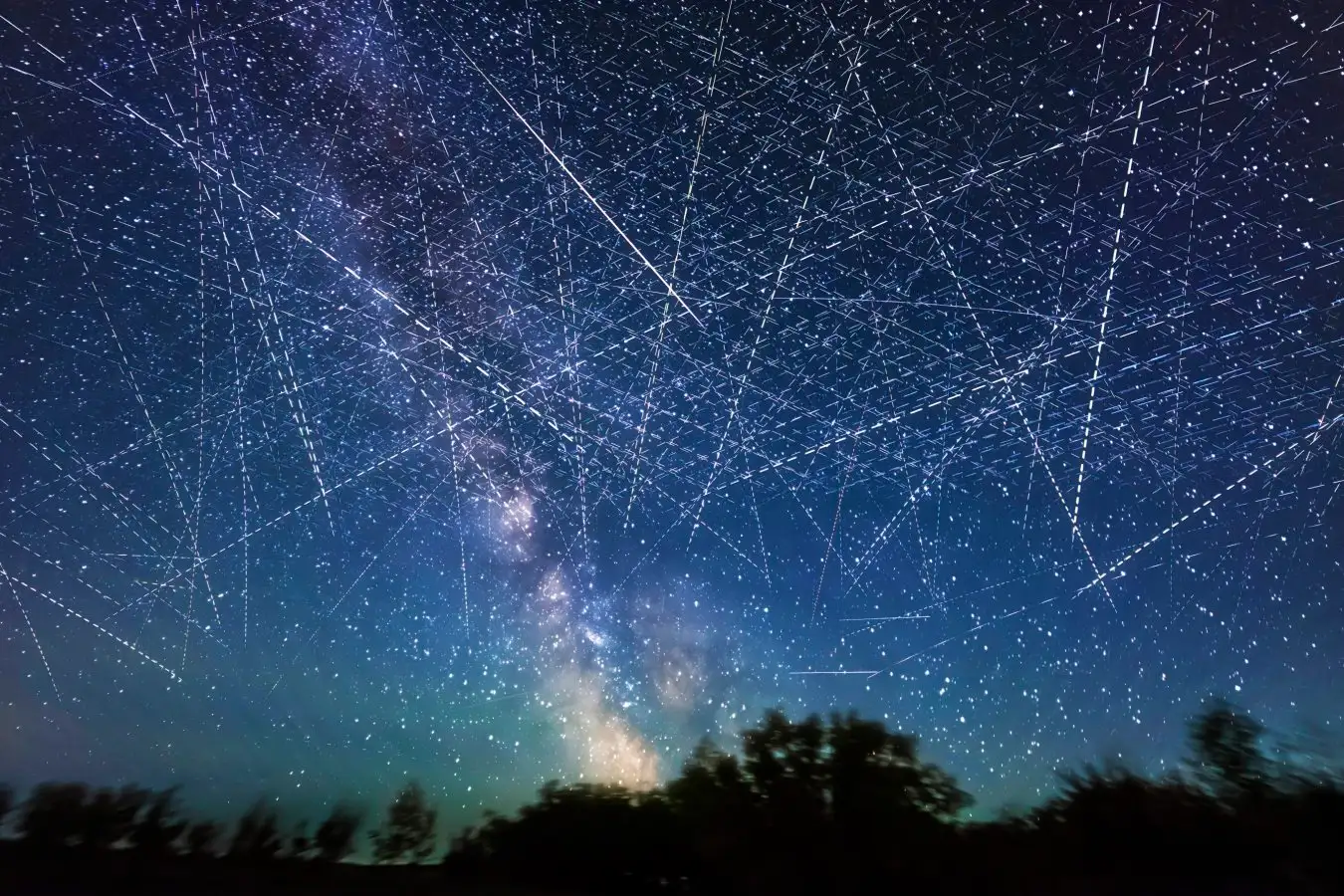
SpaceX’s report to the FCC reveals that its Starlink constellation executed around 300,000 collision-avoidance maneuvers in 2025, marking a 50% increase over the previous year. Since its launch in 2019, Starlink has deployed around 9,400 satellites, comprising 65% of all active satellites currently in orbit. The FCC mandates these biannual updates to assess the safety of satellite operations, highlighting the risks associated with potential collisions in space.
From June to November 2025, Starlink conducted approximately 149,000 maneuvers, a significant amount compared to typical satellite operations, where only a few maneuvers would usually occur yearly. Starlink maneuvers at a risk threshold of 3 in 10 million, far more conservative than the industry standard of 1 in 10,000, which demonstrates their proactive approach to collision prevention.
Experts like Hugh Lewis from the University of Birmingham have noted the dramatic increase in Starlink’s maneuvers, which could lead to upwards of 1 million maneuvers annually by 2027 due to the growing number of satellites deployed globally. This surge raises concerns about sustainability in Earth’s orbit. Lewis cautions that the high volume of satellite operations is setting the stage for potential collision scenarios, which could have dire implications for future space activities.
The report also addresses encounters with other satellites, emphasizing that a Chinese satellite, Honghu-2, came within proximity of Starlink satellites more than 1,000 times. This proximity reflects the congested nature of shared orbital spaces, leading to concerns about SpaceX effectively “occupying” critical orbits contrary to principles outlined in the Outer Space Treaty.
Furthermore, SpaceX disclosed a December incident involving a Starlink satellite exploding and scattering debris due to a “suspected hardware failure.” The company has since adjusted its designs to mitigate future hardware issues. The ongoing challenges of managing collision risks are complicated by a specific incident involving a Japanese spacecraft, Astroscale, which SpaceX claims performed an unannounced maneuver, heightening the collision risk. Astroscale refutes this, asserting compliance with on-orbit servicing protocols and sharing maneuver plans publicly.
Despite an autonomous collision-avoidance system that Starlink employs, the increasing number of maneuvers presents a systemic risk if mistakes were to occur. While experts commend SpaceX’s effective handling of maneuvers thus far, the long-term sustainability of satellite operations in orbit remains a pressing concern as the sector expands rapidly.
The content above is a summary. For more details, see the source article.