Key Takeaways
- Africa has 19 countries with a total of 68 satellites launched by 2025, focusing on agriculture, weather, and communications.
- North Africa leads with 28 satellites, while the African Space Agency aims to launch over 120 satellites by 2030.
- Satellites enhance local challenges, contributing significantly to the global space economy and technological advancement.
A Growing Space Industry in Africa
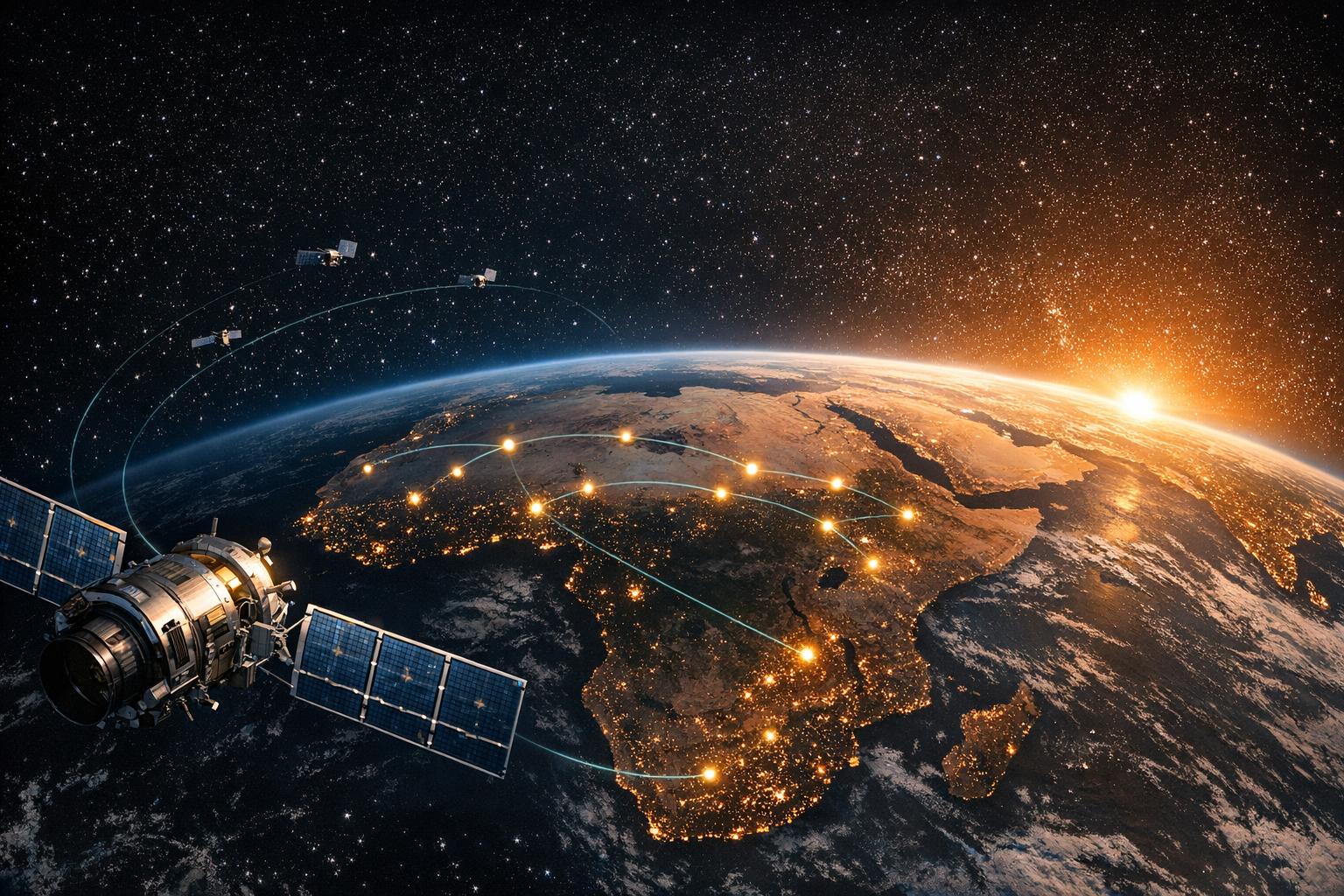
By the end of 2025, 19 African countries will have launched a total of 68 satellites, significantly contributing to various sectors such as agriculture, communications, weather monitoring, and disaster management. Egypt and South Africa are at the forefront, with 15 and 13 satellites respectively, while Nigeria, Algeria, and Morocco follow closely. Smaller nations like Kenya and Zimbabwe have joined by employing cost-effective nanosatellites, marking a notable increase in African engagement in space exploration.
North Africa stands out as the most active region, accounting for 28 satellites launched by Algeria, Egypt, Morocco, Sudan, and Tunisia. The African Space Agency (AfSA), officially established in April 2025, is central to coordinating these efforts and aims to increase the continent’s satellite count significantly by launching over 120 satellites by 2030. Investments in space technology have exceeded $4.7 billion, showing a growing commitment to addressing local challenges while also participating in the global space economy.
The individual capabilities of various nations are highlighted through their satellite programs. South Africa’s National Space Agency oversees satellites used for Earth observation and national security, while Egypt continues to lead with its innovative domestic satellite projects, including the newly launched SPNEX. Nigeria’s satellite initiatives include communications and disaster management tools, although planning for future launches has faced funding issues. Algeria has integrated satellites into environmental monitoring and security strategies.
Satellite applications in Africa are diverse. They offer essential data for agricultural monitoring, enhance communication networks, and provide critical information for climate forecasting and national security. For example, Egypt’s MISRSAT-2 helps assess crop growth, while Algeria’s Alcomsat-1 enhances internet access in underserved areas.
The establishment of AfSA aims to unify the continent’s space efforts and enhance collaborative projects. With ambitions to work with international partners like the European Space Agency, AfSA’s initiatives cover essential areas such as Earth observation and satellite connectivity. The agency is also actively involved in local capacity building through educational institutions, preparing the next generation of space experts.
Future endeavors promise continued expansion, with nearly 80 satellites in development as of late 2024. While challenges such as funding and technical expertise remain, the potential for Africa to play a critical role in global technology and scientific discoveries is rapidly increasing. Thus, the continent’s advancements in space exploration and satellite technology signify a crucial step toward solving pressing local issues and engaging more actively in the global space economy.
The content above is a summary. For more details, see the source article.