Key Takeaways
- A historic winter storm impacted all 100 counties in North Carolina, marking the first statewide measurable snowfall in over a decade.
- Snowfall exceeded a foot in mountainous regions, with Charlotte receiving nearly a foot, and Greenville, SC, reporting significant accumulation as well.
- The storm caused hazardous road conditions and coastal flooding, leading to traffic disruptions and property damage, particularly on Hatteras Island.
Widespread Snowfall Across North Carolina
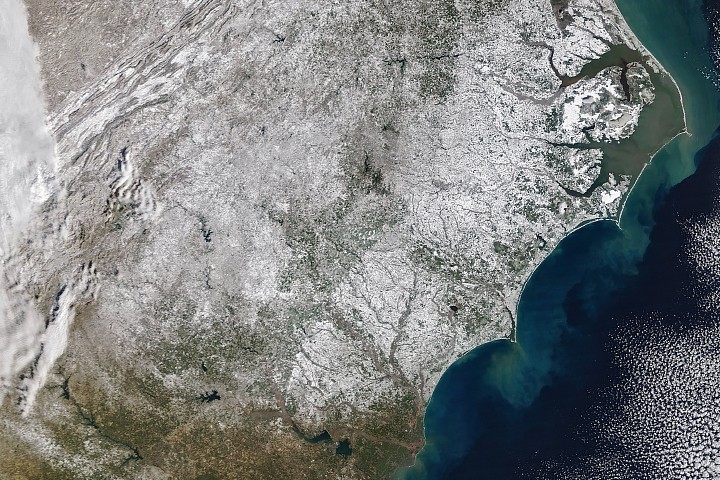
In late January 2026, a powerful winter storm swept through North Carolina, resulting in extensive snow coverage across the state. Virtually all counties registered measurable snowfall for the first time in over ten years. Images from NASA’s Terra satellite captured the snow’s reach, stretching from the mountains to the coast.
The storm originated from cold Arctic air that lingered in the region, combined with moisture from a low-pressure system approaching the coast. This combination triggered a widespread snowfall event, with totals surpassing a foot in some western mountainous areas. Although some cities like Asheville recorded lower amounts, others, including Charlotte, experienced significant accumulations—nearly a foot of snow, the heaviest since 2004. Raleigh reported a lighter total of 2.8 inches.
Even coastal regions, typically known for their sandy beaches, received substantial snowfall. In Carteret County, more than a foot of snow blanketed the area, and Beaufort, situated in the southern Outer Banks, saw severe conditions with heavy blowing snow. Greenville, located further inland, recorded 14 inches, an accumulation reminiscent of major storms from decades past.
Despite the picturesque appearance from space, the storm brought serious challenges on the ground. Dangerous driving conditions triggered numerous accidents, with more than 100 vehicles reported stuck on I-85 north of Charlotte. Coastal communities faced high winds and turbulent waves, leading to overwash on Highway 12, where sections became coated in water and sand. Additionally, several homes along Hatteras Island suffered damage as they collapsed into the sea.
Emergency services and local authorities responded to the chaos, prioritizing public safety amid treacherous conditions. The incident has drawn comparisons to historic winter storms, highlighting the unusual nature of such widespread snow in North Carolina’s climate.
Images and reports from NASA and monitored by various local sources provide a comprehensive view of the storm’s impact, emphasizing its severity and the challenges faced by residents and motorists during this historic weather event.
The content above is a summary. For more details, see the source article.