Key Takeaways
- The SpaceX Dragon Freedom capsule successfully docked with the ISS on February 14, marking the start of ESA’s εpsilon mission.
- The mission features a crew of four, including ESA astronaut Sophie Adenot, and is scheduled to last up to nine months.
- Adenot will oversee up to 36 scientific experiments during her time aboard the ISS, contributing to various fields of research.
Successful Docking with the ISS
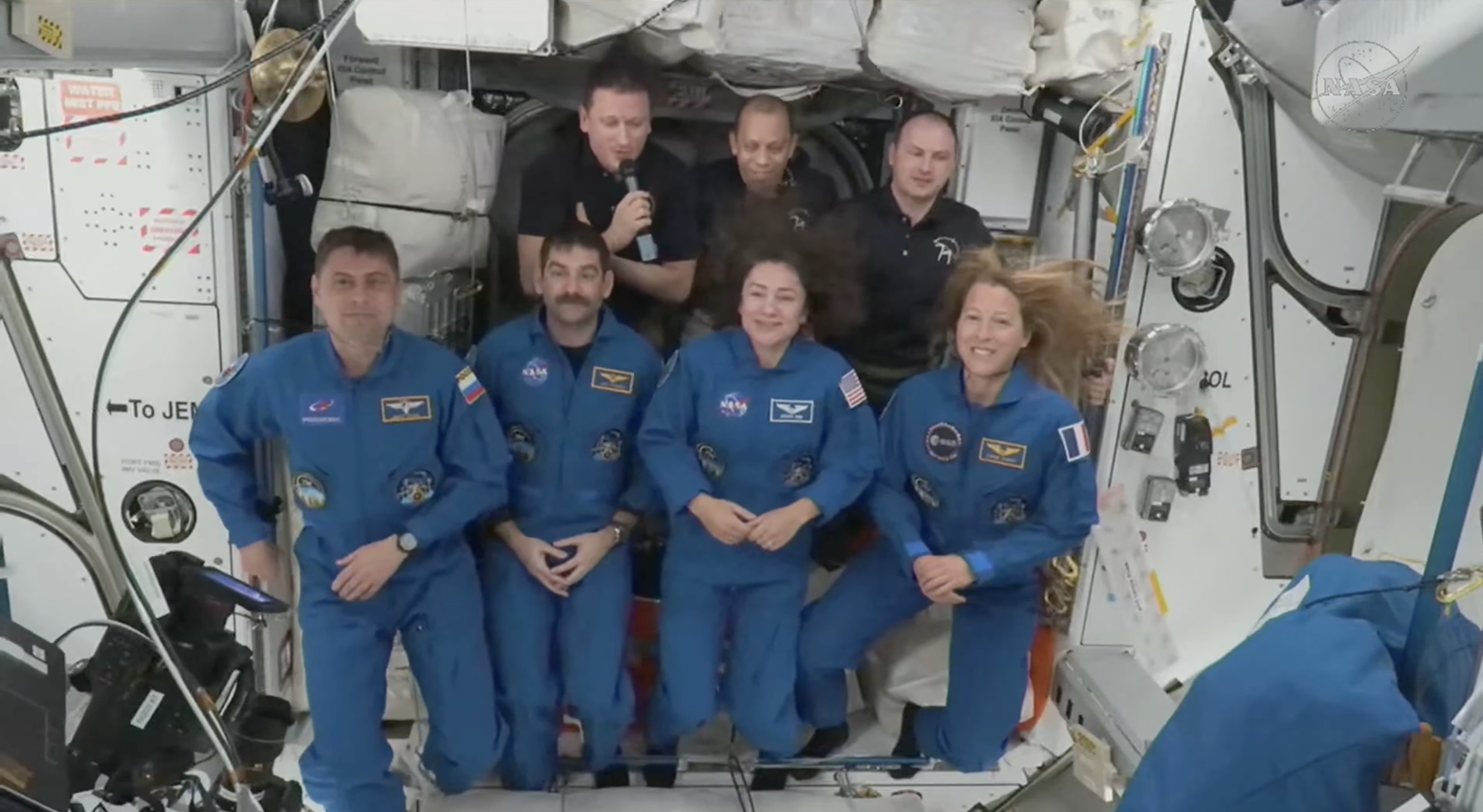
On February 14, 2026, the SpaceX Dragon Freedom capsule successfully docked with the International Space Station (ISS) at 20:15 GMT, signaling the official commencement of the European Space Agency’s (ESA) εpsilon mission. The spacecraft carried a diverse crew comprised of ESA astronaut Sophie Adenot, NASA astronauts Jessica Meir and Jack Hathaway, and Russian cosmonaut Andrei Fedyaev.
The crew launched aboard a Falcon 9 rocket from NASA’s Kennedy Space Center in Florida on February 13 at 10:15 GMT. After a 34-hour journey orbiting Earth, they prepared to dock with the ISS. Both Adenot and Hathaway, making their first journey into space, took this opportunity to acclimate to the environment of microgravity.
Warm Welcome at the ISS
Upon docking, the new crew members were greeted by NASA astronaut Christopher Williams and Roscosmos cosmonauts Sergei Kud-Sverchkov and Sergei Mikayev, who had been aboard since November 2025. During a brief ceremony, Adenot and Hathaway were awarded their astronaut wings by Station Commander Kud-Sverchkov. The crew expressed gratitude to the support teams at NASA and SpaceX for a seamless flight.
Focus on Scientific Research
The εpsilon mission is anticipated to endure up to nine months, setting a record for ESA’s longest astronaut mission. During her tenure aboard the ISS, Sophie Adenot will assume the role of crew specialist for both the European Columbus laboratory and the Japanese Kibo module. She aims to conduct up to 36 scientific experiments, with a selection of seven specifically developed by the French space agency CNES for this mission. The experiments will span multiple scientific disciplines, addressing human physiology, climate research, and technology demonstrations, all contributing to advancements that could enhance life on Earth and facilitate future space explorations.
ESA’s Director of Human and Robotic Exploration, Daniel Neuenschwander, noted, “The εpsilon mission highlights ESA’s commitment to maintaining a continuous human presence in low-Earth orbit, beginning with science.” He praised Sophie Adenot’s exceptional performance, highlighting her efficient transition from basic training to mission-specific preparations.
Engagement with the Public
Sophie Adenot intends to share her experiences and the ongoing research from space through her social media channels, including Instagram, X, Facebook, and LinkedIn. Further information regarding her activities and the scientific endeavors taking place under the εpsilon mission can be found on ESA’s dedicated website.
The content above is a summary. For more details, see the source article.