Key Takeaways
- NASA’s Curiosity rover has been studying unique boxwork formations on Mars, suggesting ancient groundwater existed longer than previously believed.
- These geological structures provide insights into the planet’s past climate and potential for microbial life.
- Curiosity continues to collect samples to analyze organic compounds and further investigate Mars’ ancient environments.
Exploration of Martian Boxwork Formations
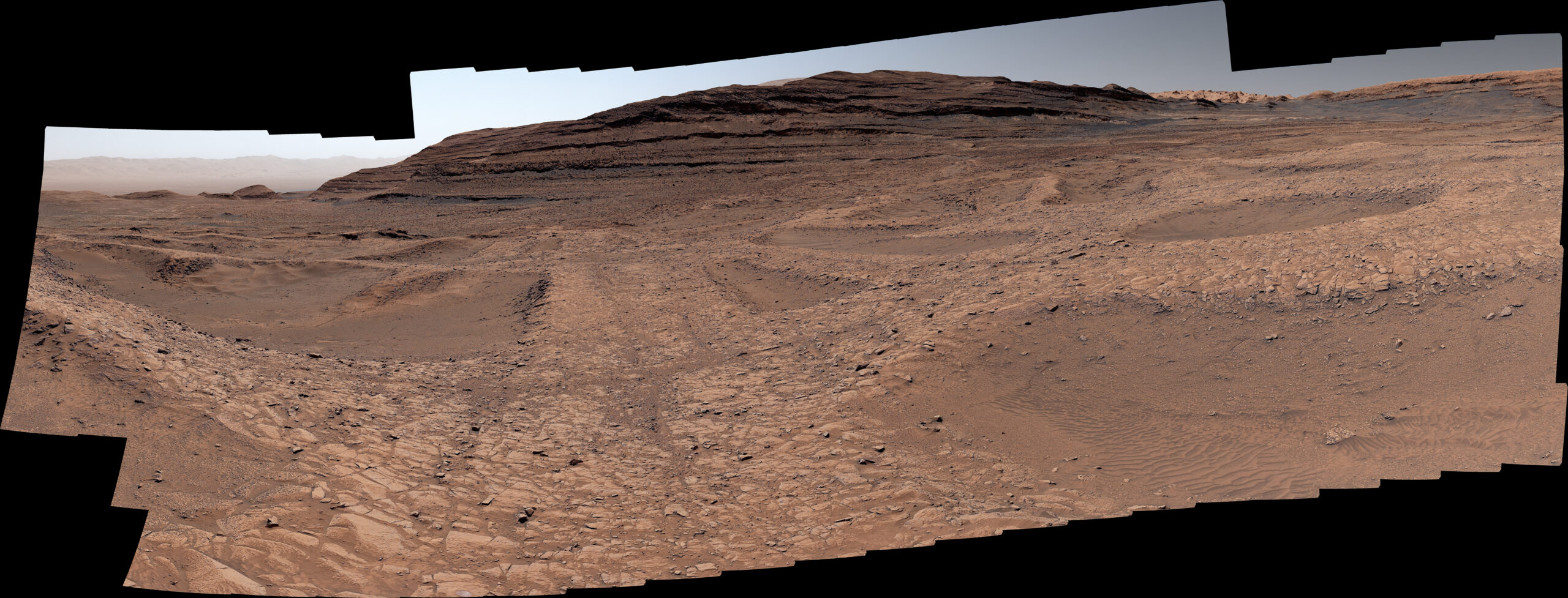
For the past six months, NASA’s Curiosity rover has been investigating boxwork formations on Mars. These unique geological features, characterized by low ridges and sandy hollows, indicate that ancient groundwater may have persisted on the planet longer than scientists had anticipated. This discovery raises intriguing questions about the potential for microbial life on Mars billions of years ago, before it transformed into an arid desert.
The formations resemble giant spiderwebs when viewed from space. Scientists believe that groundwater flowed through fractures in the bedrock, depositing minerals that reinforced some areas, creating ridges while wind eroded others. Prior to Curiosity’s mission, little was known about these structures up close or how they formed.
While Earth has similar boxwork formations, they are typically much smaller and found in caves or dry regions. The Curiosity team faced challenges in navigating the narrow ridges and ensuring the rover’s safety while exploring this Martian terrain. “It almost feels like a highway we can drive on… but we have to go down into the hollows,” noted Ashley Stroupe, an operations systems engineer at NASA’s Jet Propulsion Laboratory.
Scientists are working to understand the widespread existence of boxwork on Mount Sharp, a 3-mile-tall mountain the rover has been ascending. Preliminary observations show that as Curiosity climbs, the landscape indicates a history of drying water with occasional wet periods. According to mission scientist Tina Seeger, the presence of these formations suggests a higher groundwater table, implying that water necessary for sustaining life could have remained longer than previously believed.
Curiosity’s findings include evidence confirming that the dark lines seen in earlier orbital images are indeed fractures, providing validation to prior hypotheses. The rover also discovered nodules—indicators of past groundwater—that were located unexpectedly along ridge walls and between hollows rather than near central fractures. This finding has led to further questions about their formation.
A key aspect of Curiosity’s mission involves collecting rock samples using its drill. The rover has analyzed samples from various locations within the boxwork region, revealing clay minerals in ridge tops and carbonate minerals in the hollows through X-ray and high-temperature analyses. Recently, another sample was processed using a technique called wet chemistry to help identify organic compounds, critical to understanding ancient life on Mars.
As Curiosity prepares to move away from the boxwork region in March, its focus will shift toward a sulfate-rich layer that marks Mars’ drying climate. The rover’s team plans extensive exploration of this layer over the coming year, aiming to deepen understanding of Mars’ climatic evolution billions of years ago.
Curiosity, constructed by NASA’s Jet Propulsion Laboratory, is a central part of NASA’s Mars Exploration Program, which aims to uncover the history and potential for life on the Red Planet.
The content above is a summary. For more details, see the source article.