Key Takeaways
- Russia plans to launch the Venera-D mission to Venus in 2036, involving a lander, balloon, and orbiter.
- This mission aims to search for microbial life in Venus’ clouds, building on prior Soviet successes in the 1970s.
- Russia’s efforts come amidst a global resurgence of interest in Venus exploration, with NASA and ESA also developing missions.
Russia’s Venera-D Mission to Venus
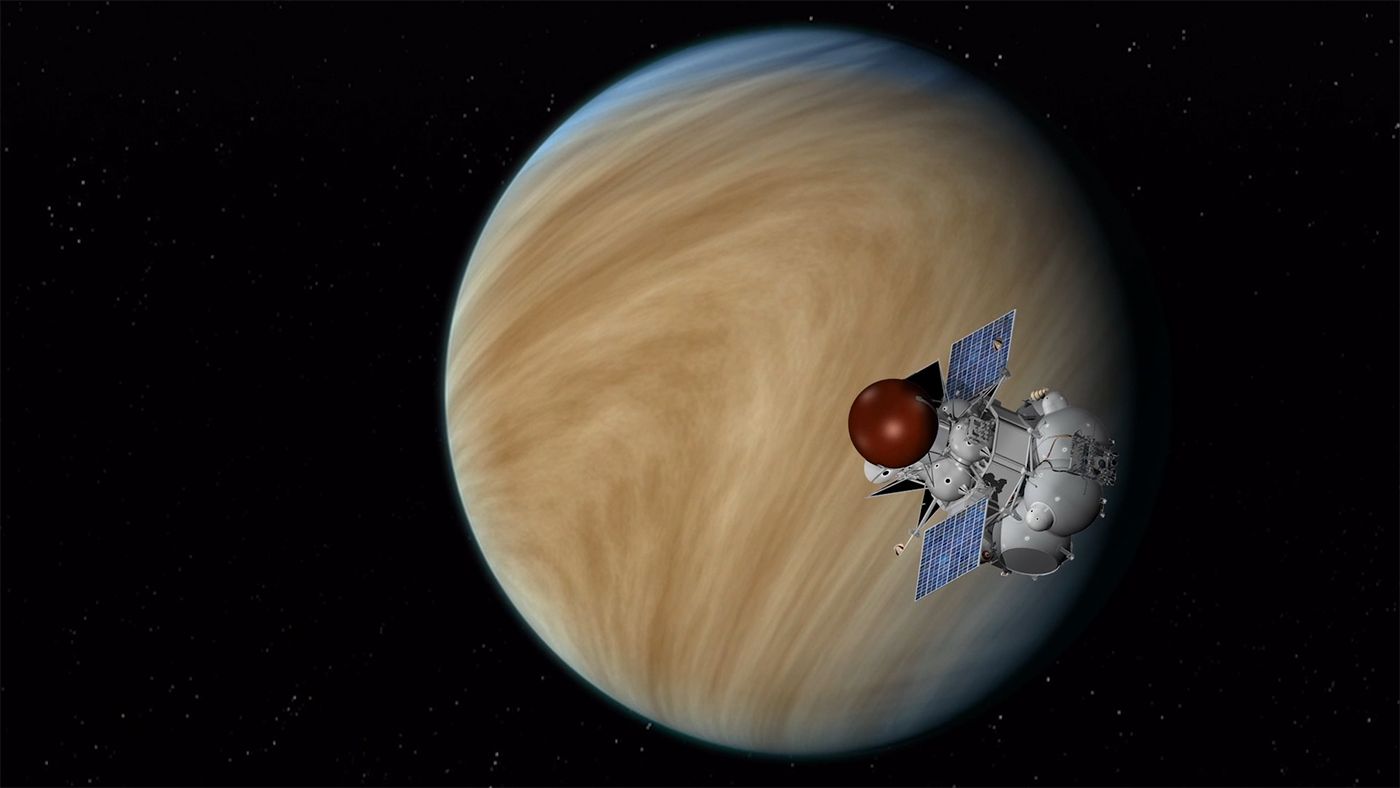
Russia is preparing to launch the Venera-D mission, slated for 2036, which aims to explore Venus with a combination of a lander, balloon, and orbiter. The initiative, reported by Russian state media, has been under development since 2003. Initially, it was considered a collaborative project with NASA; however, after geopolitical tensions, that collaboration has ceased.
Despite the lack of NASA involvement, Russia’s space agency, Roscosmos, is advancing Venera-D as part of a broader strategy to enhance its space exploration capabilities, which includes upcoming lunar missions. According to First Deputy Prime Minister Denis Manturov, Venus is crucial to these ambitions.
This new mission would build on the legacy of past Venera missions, which successfully landed on Venus during the 1960s to 1980s. The Soviet Union was the only nation to achieve such feats, with Venera 7 being the first spacecraft to transmit data and images from the planet’s surface in 1970. Manturov emphasized this achievement, noting the challenging conditions on Venus, which include temperatures around 900 degrees Fahrenheit (480 degrees Celsius) and immense atmospheric pressure.
During its investigation, Venera-D will focus on potential microbial life in Venus’ atmosphere, particularly following recent controversial findings of phosphine and ammonia, which could indicate biological activity. The mission aims to expand our understanding of Venus, a planet long shrouded in mystery.
Historically, the Soviet Union conducted over a dozen Venera missions over 22 years. While early attempts like Venera 1 and 2 were unsuccessful, subsequent missions became significant in gathering data about the area. The last successful mission, Venera 16, took place in 1983, marking a high point in Soviet space exploration.
As interest in Venus wanes, Russia is not alone in its pursuit of knowledge from this planet. NASA and the European Space Agency (ESA) are also engaged in Venus exploration, with NASA’s VERITAS and DAVINCI missions facing recent budgetary threats. Additionally, India has plans to launch its own mission to Venus around 2028, while private entities like Rocket Lab and MIT are looking to deploy the Venus Life Finder spacecraft as early as this year.
In summary, the Venera-D mission represents a significant step in Russia’s renewed interest in planetary exploration, as well as part of a broader international effort to unlock the secrets of Venus.
The content above is a summary. For more details, see the source article.