Key Takeaways
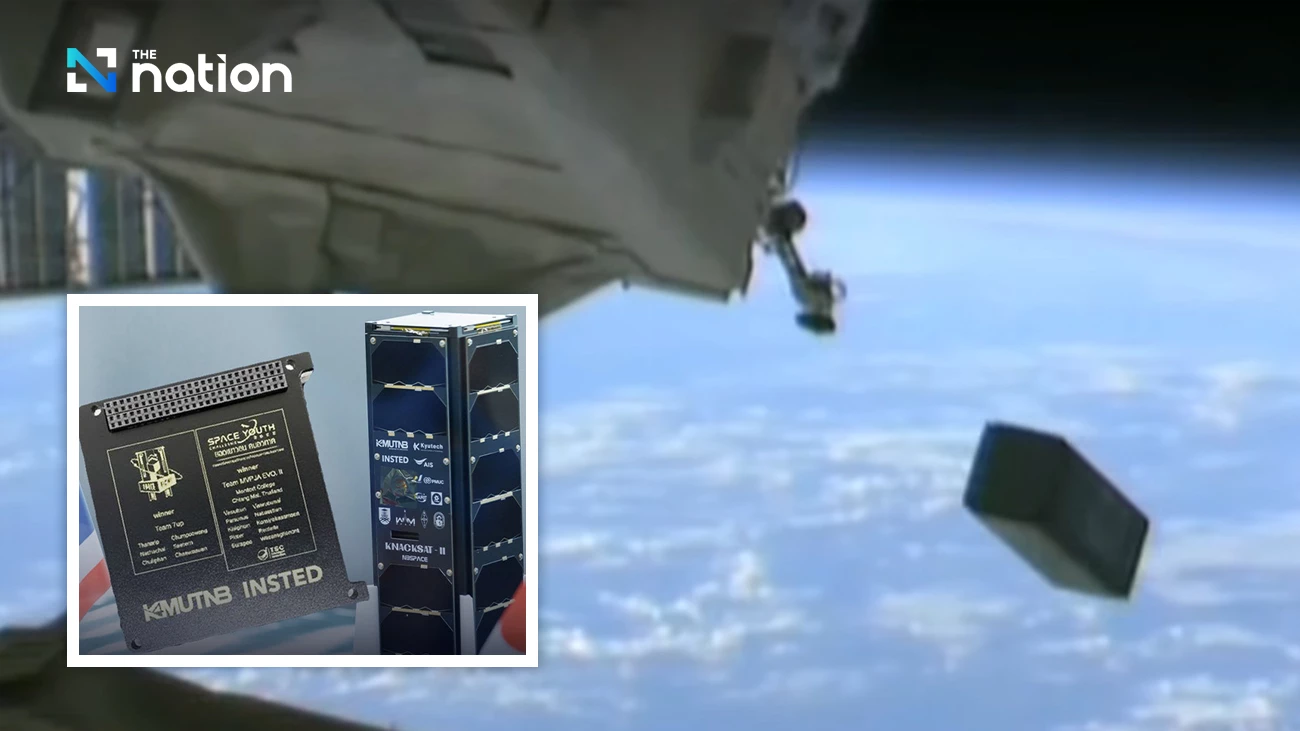
- Thailand’s space industry achieves a milestone with the successful launch of the KNACKSAT-2 satellite, showcasing local IoT technology.
- The Program Management Unit for Competitiveness (PMUC) and Advanced Info Service (AIS) co-funded a space-based IoT project to enhance connectivity in remote areas.
- The country plans to deploy 16 more satellites in the next seven years and explore the development of a national spaceport to boost the aerospace sector.
Thailand’s Growing Space Industry
Thailand’s space industry is gaining momentum, marked by the successful deployment of the KNACKSAT-2 satellite. The Program Management Unit for Competitiveness (PMUC) played a vital role by funding research and development for a space-based IoT device, developed in collaboration with Advanced Info Service (AIS). This initiative aims to improve connectivity in remote regions, addressing a significant national challenge regarding communication signals.
Ganda Boonsothonsatit, PMUC’s Director, emphasized that the successful launch of KNACKSAT-2 showcases the capabilities of Thai researchers. The project focuses on implementing an IoT payload using Long Range Wide Area Network (LoRaWAN) technology, known for its low power consumption and extended range. This device will function as a satellite-mounted gateway, capable of addressing connectivity gaps where mobile towers cannot reach, aiding in various applications such as maritime tracking, weather monitoring in forests, and agricultural support.
PMUC’s research funding strategy prioritizes projects with commercial scalability. The collaboration with AIS reflects real market demand, with both entities sharing the financial burden equally, which strengthens the applicability of the technology in real-world scenarios. This initiative is a model for how collaboration across public and private sectors can unlock economic potential while addressing national challenges.
In addition to satellite projects, Thailand’s space economy is on a steady rise. During the Thailand Space Expo 2025, Sompong Klaynongsruang, director of the Thailand Science Research and Innovation (TSRI), highlighted the country’s evolving space strategy, aimed at national development and technological advancement. Key initiatives, such as the Thailand Liquid Crystals in Space (TLC) experiment with NASA, represent significant contributions to global technology, focusing on liquid crystals in microgravity environments.
As of 2019, the direct economic impact of Thailand’s space industry was estimated at around 30 billion baht, rising to about 500 billion baht when considering broader space-related economic activities. The sector supports over 530,000 jobs, indicating that while the industry is still developing, its potential impact on the national economy is substantial.
Looking ahead, Thailand plans to deploy 16 additional satellites over the next seven years and is conducting feasibility studies for a national spaceport. This facility could serve as a cornerstone for establishing an aerospace cluster in Southeast Asia, further enhancing Thailand’s position in the global space supply chain. With a focus on innovation and collaboration, the future looks promising for Thailand’s burgeoning space industry.
The content above is a summary. For more details, see the source article.