Key Takeaways
- The Lyrid meteor shower peaks on the evening of April 22 and is visible until April 25.
- Meteors are visible due to space debris burning up in Earth’s atmosphere.
- In the northern hemisphere, the constellation Lyra, home to the bright star Vega, is key for viewing the meteors.
The Lyrid Meteor Shower
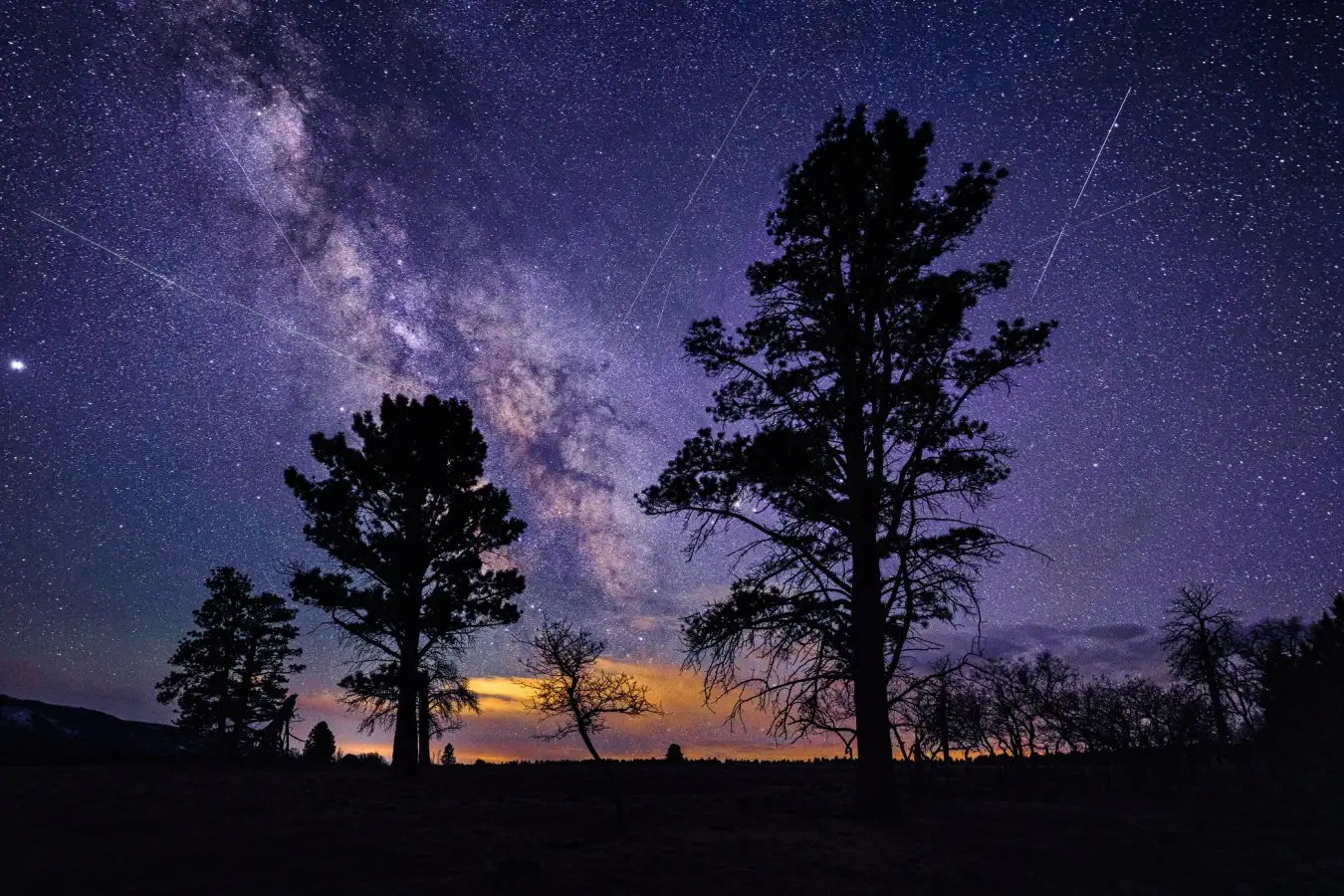
The Lyrid meteor shower, a prominent astronomical event, is set to reach its peak on the evening of April 22, continuing through the early hours of April 23. Stargazers can also catch glimpses of the meteors from April 16 to April 25. As a guide, New Scientist offers a podcast episode detailing what to expect during this celestial display.
Meteors occur when high-speed debris from space enters Earth’s atmosphere, creating a flash as friction ignites the material. This phenomenon is particularly heightened when Earth travels through clouds of dust and debris left by comets and asteroids, leading to annual meteor showers at the same times each year.
The Lyrids originate from the long-period comet C/1861 G1, commonly known as Thatcher, which was discovered in 1861 and takes 415 years to orbit the sun. This comet is not expected to return to the inner solar system until around 2278.
For optimal viewing in the northern hemisphere, observers should look towards the constellation Lyra, which holds the bright star Vega. Although Lyra is not visible from the southern hemisphere, meteors can still appear in various directions, including the east.
When examining the sky, Lyra will be prominent in the east shortly after sunset, moving higher as the night progresses. However, it’s important to note that the best viewing conditions occur just before dawn when the sky darkens, although brightness increases as sunrise approaches.
To easily locate Lyra, look for the Summer Triangle—a formation of three bright stars forming a triangular shape. By late April, this pattern will be visible in the eastern sky around midnight, with Vega being the highest star and a central focus for meteor viewing.
Expect to see between 10 and 18 meteors per hour, provided the skies are clear and dark during the peak viewing times. With the right conditions, the Lyrid meteor shower offers an exciting opportunity for both casual observers and dedicated stargazers to connect with the wonders of the universe.
The content above is a summary. For more details, see the source article.