Key Takeaways
- Adaptronics is testing a new electrostatic adhesive device designed for space that can attach to targets without mechanical force.
- The device is energy-efficient, requiring only 1 watt of power for activation, and can operate in microgravity conditions.
- Successful tests at ESA’s ORBIT facility demonstrate the technology’s potential for in-orbit servicing and debris removal.
Innovative Adhesive Technology Tested for Space Applications
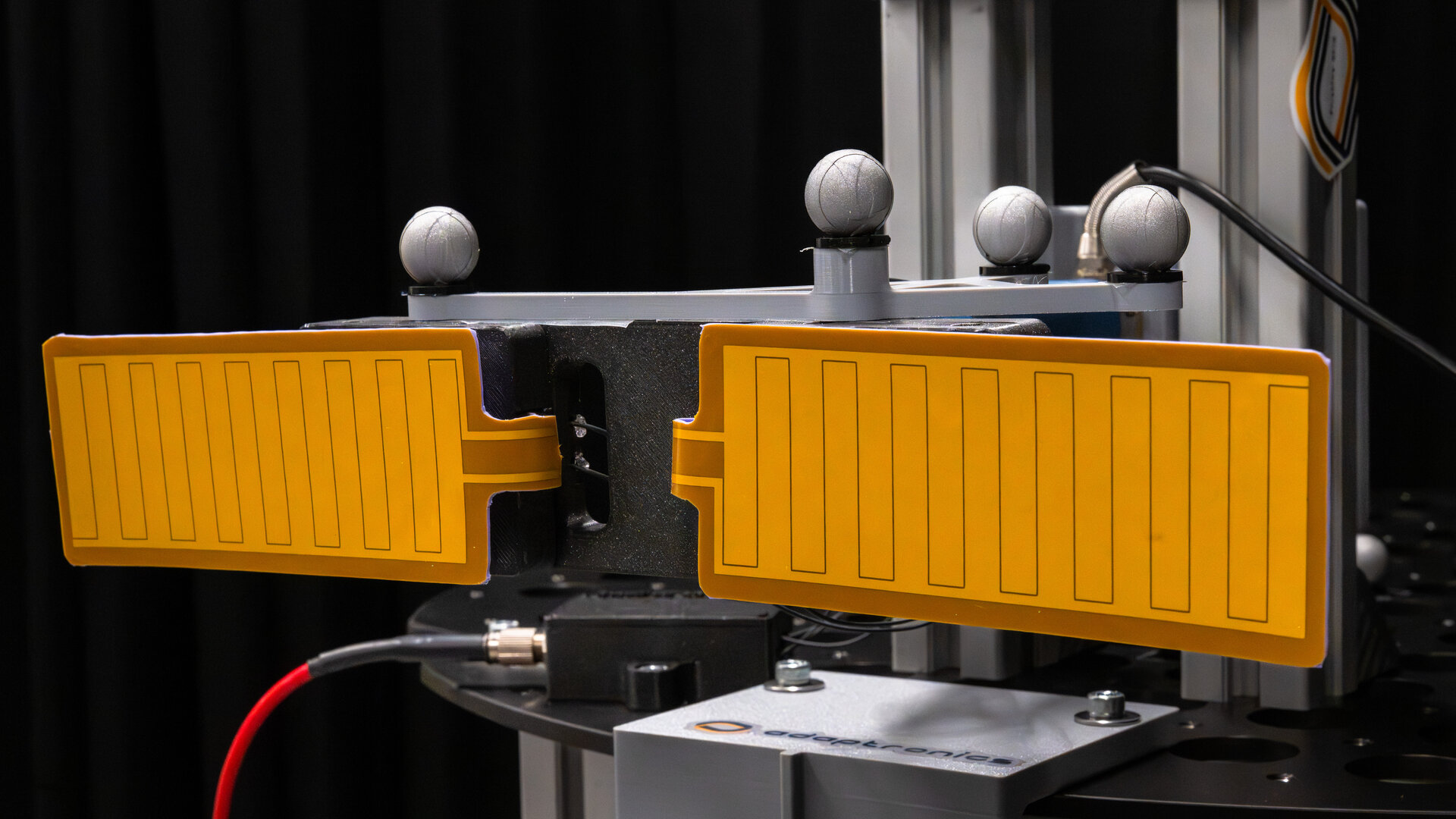
The European Space Agency (ESA) is evaluating a groundbreaking device developed by the Italian startup Adaptronics, which utilizes Electro Active Adhesive Layers (EAAL) for non-mechanical attachment to objects in space. Riccardo Mazzotti, a PhD candidate at the University of Bologna, spearheads the testing of this technology at ESA’s Orbital Robotics Laboratory.
The EAAL technology relies on electrostatic forces, similar to the interaction between a charged balloon and hair. Two layers, each about the size of credit cards, generate adhesion without the use of conventional methods like glue or suction. When the device is activated, it requires just 1 watt of energy—far less than typical appliances—and operates efficiently under simulated microgravity conditions.
Mazzotti explained the dual-functionality of the device: it can sense proximity with minimal power consumption in its sensing mode and generate a strong electrostatic grip in its active adhesion mode. This flexibility allows for safe interaction with both cooperative and non-cooperative satellites, crucial for tasks such as repair, refueling, or debris removal in orbit.
Jules Noirant, an automation and robotics engineer at ESA, emphasized the importance of this technology in managing the increasing number of satellites in space, pointing out the growing need for effective servicing and removal strategies.
To assess the device’s functionality, Mazzotti utilized ESA’s ORBIT facility, which simulates zero-gravity conditions. The facility features a nearly frictionless environment, akin to an air hockey table, allowing the device to perform in realistic scenarios. Initial tests showcased the EAAL’s capability to lift and maneuver objects exceeding 200 kg, highlighting its potential for large-scale space operations.
The successful outcomes from the testing phase validate EAAL’s robustness and versatility for future in-orbit applications. This development represents a significant advancement in the field of space robotics and adhesion technologies.
Adaptronics, which benefited from ESA’s Business Incubation Centre network, is positioned at the forefront of innovative solutions for space challenges. Mazzotti noted that the experience at ESA’s facility not only contributed to technology validation but also provided invaluable hands-on training in a highly sophisticated setting, underscoring the collaborative efforts in advancing space technologies across Europe.
The content above is a summary. For more details, see the source article.