Key Takeaways
- Hanwha Qcells will supply next-generation perovskite-based tandem solar cells for a lunar power demonstration project.
- The project, SSTEF-1, is supported by NASA and aims to evaluate solar cell performance in space.
- Commercialization of terrestrial tandem products is targeted by Hanwha Qcells by 2029, with plans to expand into space applications.
Advancing Solar Technology in Space
Hanwha Solutions’ Qcells division is set to provide its innovative perovskite-based tandem solar cells for a lunar solar power demonstration project. This initiative aligns with advancements in space technology and is backed by the U.S. space industry. The company announced its involvement in the Space Science and Technology Evaluation Facility-1 (SSTEF-1) project, which also includes collaboration with the Georgia Institute of Technology as a research partner.
The tandem cells will be developed at Hanwha Qcells’ research and development center located in Thalheim, Germany. SSTEF-1 is a NASA-funded initiative managed by Aegis Aerospace, and its primary aim is to assess the performance of solar cells under space conditions. Georgia Tech Research Institute selected Hanwha Qcells’ tandem cells for this mission, which involves installing the cells on the surface of a lunar spacecraft. Performance data will be gathered to evaluate the technology’s stability and reliability in the space environment.
Hanwha Qcells emphasized that the data collected from this project will influence future research and development, focusing on creating dependable space-based solar power technology. The company targets 2029 for the commercialization of terrestrial tandem solar products and is eager to extend this promising technology into the space solar power sector.
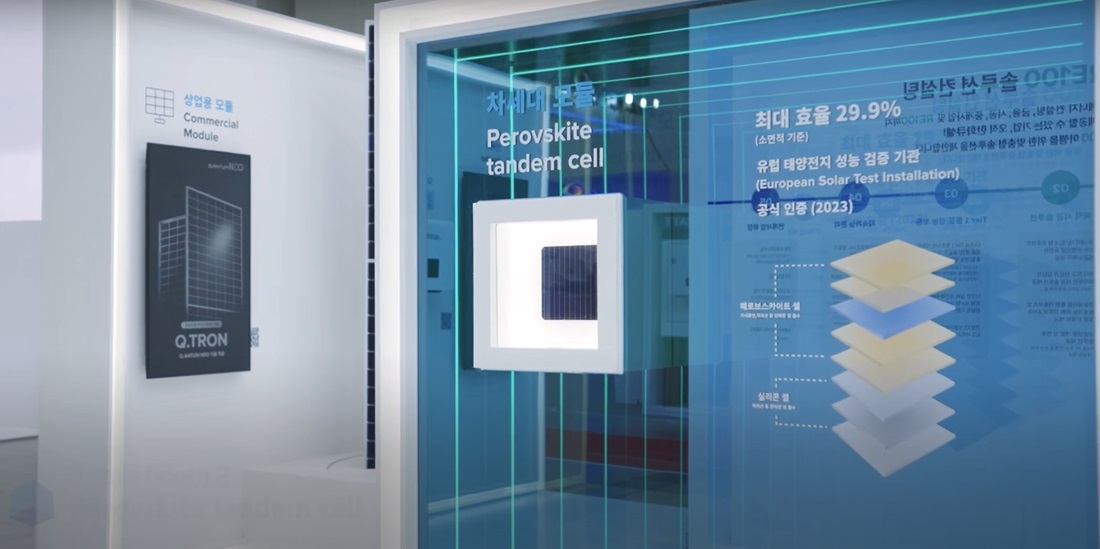
Tandem solar technology is recognized as one of the most advanced photovoltaic solutions available today. Recently, Hanwha Qcells achieved a significant milestone by becoming the first company worldwide to receive certification from the International Electrotechnical Commission for its perovskite-based tandem solar module, which was developed and manufactured in-house. In addition, the company is undertaking outdoor performance tests to evaluate the tandem modules in real-world conditions.
As the project unfolds, the collaboration between Hanwha Qcells and various institutions signals a pivotal move towards integrating advanced solar technology into the space industry, potentially transforming energy generation for lunar and other celestial applications.
The content above is a summary. For more details, see the source article.