Key Takeaways
- Astrobotic’s Griffin lander will support NASA’s Moon Base II mission, launching late 2026.
- The mission includes multiple payloads, such as the FLIP rover and technology demos from various nations.
- Griffin is significantly larger than Astrobotic’s previous lander, Peregrine, with a payload capacity of 1,377 pounds.
Astrobotic Reveals Griffin Lander for Upcoming Moon Mission
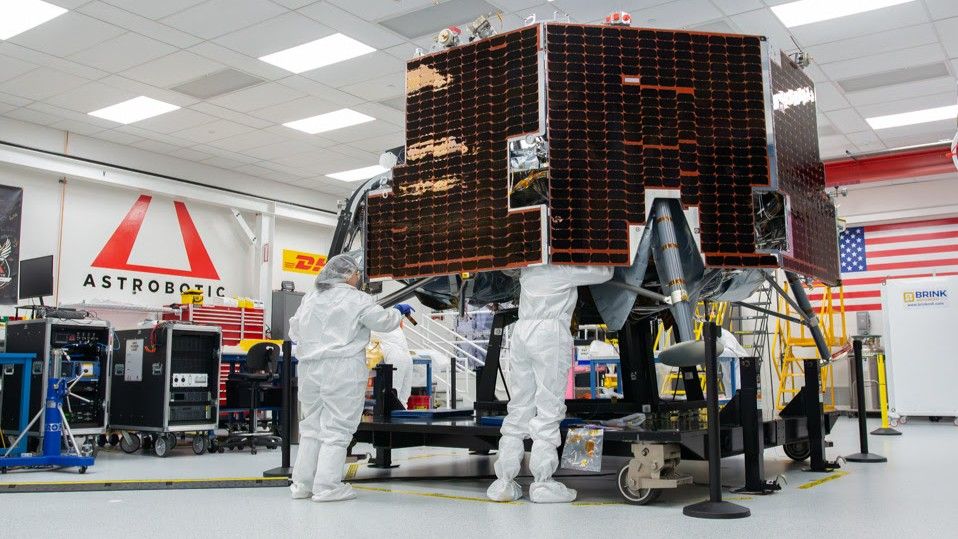
On June 15, Astrobotic, a Pittsburgh-based company, unveiled its Griffin lander, selected by NASA for the Moon Base II mission. This mission is a key step in establishing a permanent lunar outpost and is part of NASA’s Commercial Lunar Payload Services (CLPS) initiative. The Griffin Mission One (Griffin-1) is set to launch in late 2026 aboard a SpaceX Falcon Heavy rocket.
Astrobotic’s CEO, John Thornton, expressed enthusiasm about the Griffin lander being “the first infrastructure-class lander going to the surface of the moon,” marking an essential milestone in lunar exploration. Currently, integration of payloads is occurring at Astrobotic’s headquarters, with plans to finalize assembly this week. Payloads already integrated include Astrobotic’s BEACON CubeRover and the European Space Agency’s LandCam-X. The latter is aimed at improving lunar landing precision and reliability for future missions.
Following its assembly, Griffin-1 will be sent to NASA’s Jet Propulsion Laboratory (JPL) in California for environmental testing before its eventual delivery to Florida. Here, the FLIP rover will be incorporated into the lander ahead of the launch.
Griffin-1 represents Astrobotic’s second attempt to reach the moon, following the smaller Peregrine lander. Although Peregrine was the first NASA CLPS flight, it suffered from a propellant leak shortly after launch and failed to reach the lunar surface. Griffin, however, is significantly larger; while both landers stand about 6 feet tall, Griffin’s width measures nearly 15 feet, doubling its predecessors’ dimensions.
Astrobotic boasts that the Griffin lander has a payload capacity of 1,377 pounds (625 kilograms), with a launch cost of $544,000 per pound ($1.2 million per kilogram). The mission will carry a total of 10 payloads from six nations, including four additional NASA payloads aboard the FLIP rover. Notable smaller payloads include messages from children in Japan, a micro-archive of literature and art, and a MoonBox capsule containing various items submitted globally on micro SD cards.
Thornton noted, “This is going to be chock full of interesting science and data that’s going to be coming back from the moon,” indicating expectations for high-quality imagery and groundbreaking scientific data to emerge from the mission. As the countdown to launch continues, the excitement surrounding Griffin-1 builds, reflecting the growing aspirations of lunar exploration and the collaborative nature of international partnerships in space technology.
The content above is a summary. For more details, see the source article.