Key Takeaways
- The Neil Gehrels Swift Observatory’s orbit will be raised via a robotic satellite called LINK, set to launch from Kwajalein Atoll.
- This mission aims to extend Swift’s operational life rather than allowing it to re-enter Earth’s atmosphere.
- NASA’s collaboration with Katalyst Space marks a significant step in advancing the commercial satellite servicing industry.
Mission Overview
NASA is gearing up to elevate the orbit of its Neil Gehrels Swift Observatory. The mission is scheduled for launch no earlier than June 30 at 6:23 a.m. EDT from Kwajalein Atoll in the Republic of the Marshall Islands. The launch will utilize a Northrop Grumman Pegasus XL rocket, carrying a robotic servicing satellite named LINK, which is developed by Katalyst Space.
LINK’s main task will be to rendezvous with Swift, grapple it, and gradually raise its altitude over the coming months. This mission is vital for Swift, which has been crucial for NASA’s astronomical research since its launch in November 2004. The observatory serves as a ‘multitool’ that observes various cosmic phenomena and alerts other instruments for more detailed follow-up studies.
Swift’s orbit has been compromised due to the drag effects of Earth’s atmosphere, intensified by recent solar activity. Unlike typical missions that may allow spacecraft to re-enter the atmosphere after completing their objectives, NASA is leveraging this opportunity to enhance the U.S. satellite servicing sector.
In September, Katalyst was contracted to design and deploy a satellite capable of boosting Swift’s altitude, a complex task given that Swift was not designed for servicing. Ghonhee Lee, CEO of Katalyst, emphasized that this mission demonstrates a new approach to extending the operational life of spacecraft not initially intended for on-orbit maintenance.
The LINK spacecraft weighs around 880 pounds and features nearly 20 feet of solar panels that will power three ion thrusters and robotic arms. Prior to its launch, LINK underwent rigorous environmental testing and assessments to ensure its systems function properly in space.
To prepare Swift for the servicing mission, its operational team at Penn State has altered its management strategies. By carefully selecting observation targets, they aim to streamline Swift’s profile in the atmosphere. They’ve also minimized power consumption to maintain optimal aerodynamics, a move that has led to updated predictions keeping Swift above critical altitude until the fall.
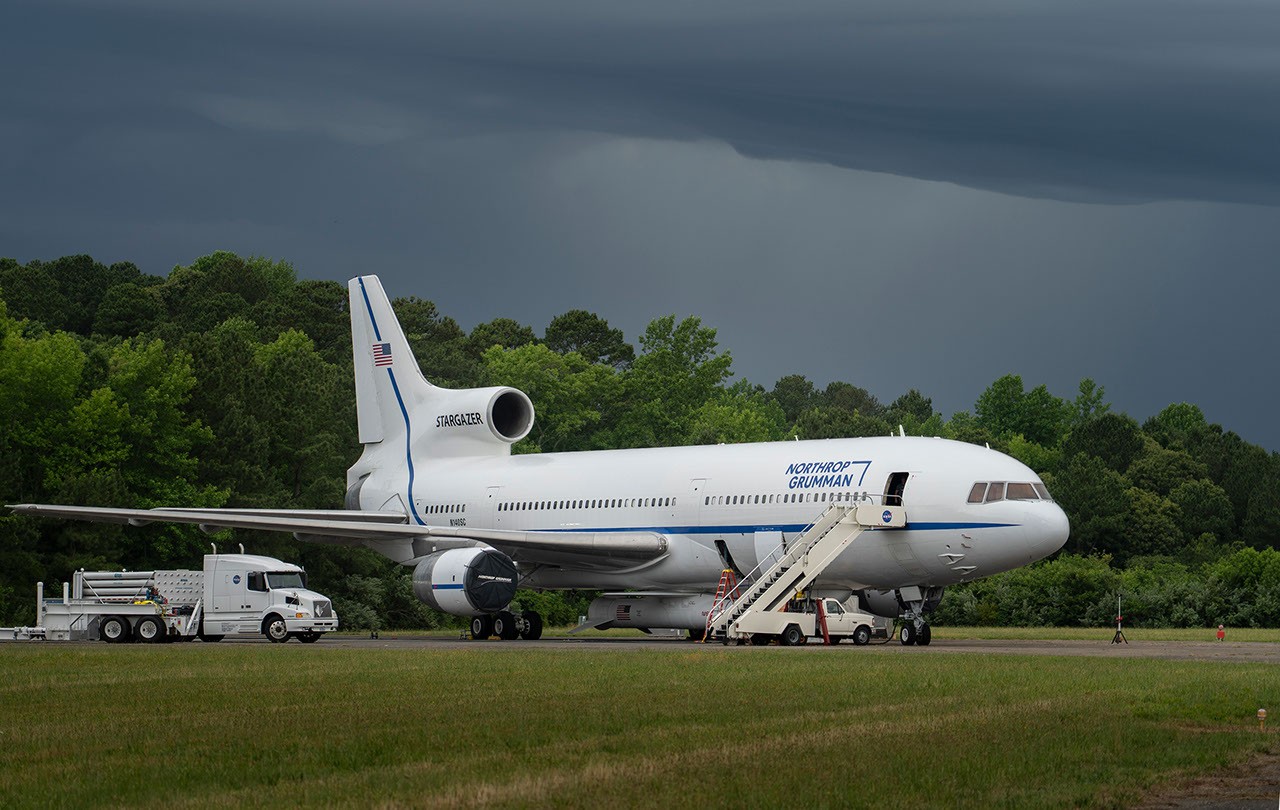
The Pegasus XL rocket can be deployed from various global locations using the Stargazer aircraft, enhancing the flexibility of the mission. According to Northrop Grumman’s Wes Collier, this approach allows LINK to reach Swift efficiently, providing the necessary time to complete the altitude boost.
Following the launch, LINK will face a commissioning phase lasting several weeks to verify its systems before it proceeds to grab Swift with its robotic arms and elevate its orbit to nearly 370 miles. Shawn Domagal-Goldman, division director at NASA, described the mission as high-risk yet high-reward, underscoring Swift’s importance to NASA’s fleet.
This endeavor not only aims to maintain Swift’s scientific capabilities but also paves the way for future advancements in satellite servicing technology, benefiting both NASA and the broader commercial sector.
The content above is a summary. For more details, see the source article.