Key Takeaways
- The CAPSTONE 02 mission aims to enhance cislunar navigation and communication by launching in 2027 with two spacecraft.
- This mission builds on the success of the original CAPSTONE, focusing on advanced relative navigation techniques for lunar missions.
- Successful implementation could pave the way for improved lunar infrastructure supporting NASA’s Artemis program and future deep space exploration.
Advancing Cislunar Capabilities
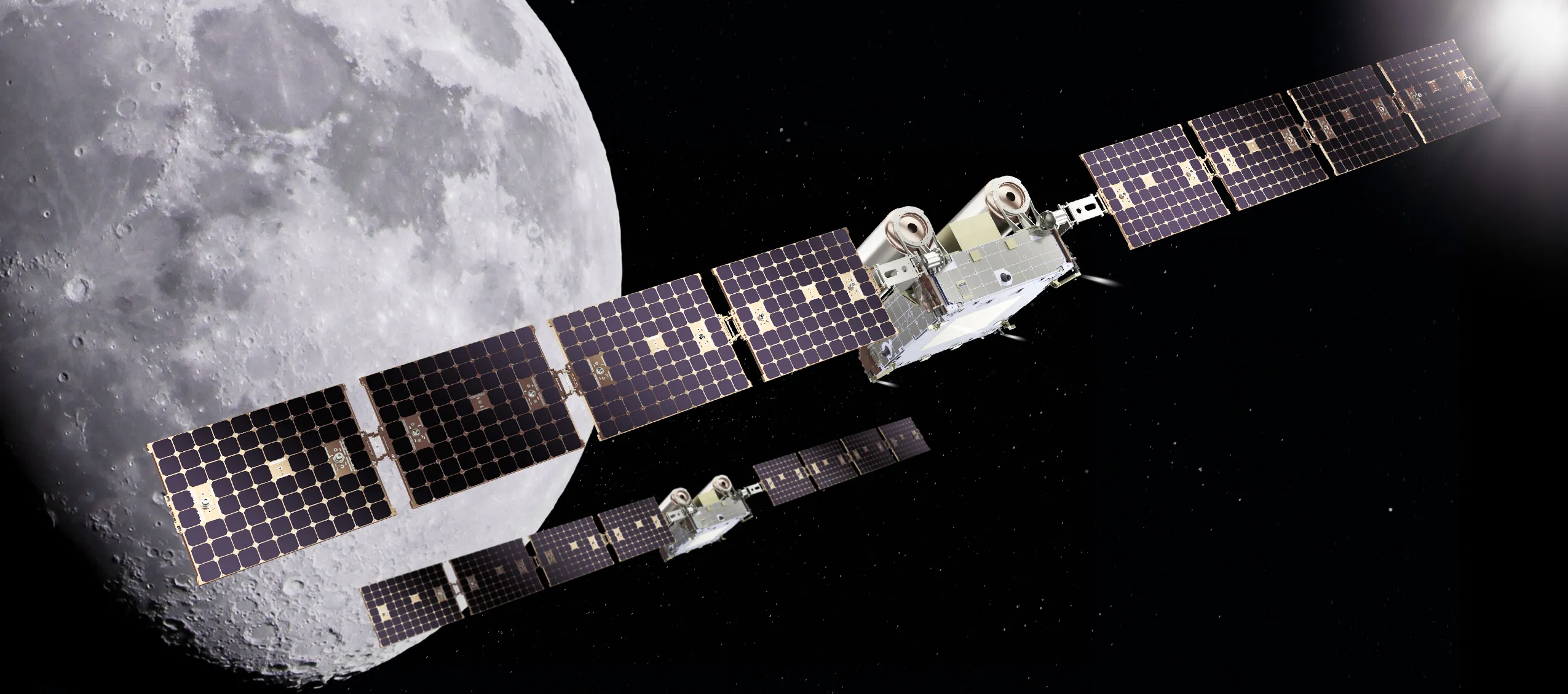
NASA is collaborating with private industry to advance cislunar infrastructure as part of its Artemis program and the Moon Base initiative. The CAPSTONE 02 mission has been awarded to Advanced Space and is slated for launch in 2027. Its primary objectives include demonstrating rendezvous and proximity operations, as well as autonomous navigation and cislunar communication capabilities. Additionally, it will continue to assess the radiation environment around the Moon.
This mission will involve two spacecraft operating in lunar orbit, each weighing approximately 400 kilograms (882 pounds), provided by Terran Orbital Systems, Inc. The goal is to gather data on their trajectories influenced by both Earth’s and Moon’s gravitational forces, which is important for future lunar exploration.
The initial CAPSTONE mission, designed to test the Cislunar Autonomous Positioning System Technology Operations and Navigation Experiment, was successful in establishing the first U.S. commercial mission to the Moon. This mission verified communication, networking, and navigation capabilities in a near rectilinear halo orbit. The second phase aims to build upon these achievements, moving from orbit validation to practical demonstrations that will shape the future of lunar exploration.
Technological Innovations
CAPSTONE 02 will utilize advanced technologies for navigation that exceed those used in low Earth orbit. These innovations are essential for guiding astronauts as they dock with lunar landers, ensuring safe crew transfers to and from the Moon’s surface. The mission will involve conducting various rendezvous and loitering maneuvers to analyze the spacecraft’s trajectories in the complex gravitational environment of cislunar space, often referred to as three-body orbits.
Employing ground tracking, optical sensors, and celestial observations, the mission aims to enhance the ability of one spacecraft to locate and approach another. This approach mimics planned techniques for Orion’s lunar lander rendezvous, which is crucial for future explorations.
The two spacecraft will alternate roles as ‘chaser’ and ‘target,’ enabling the exploration of diverse operational scenarios under different environmental conditions. Testing these navigation systems in the actual space environment is vital, as replicating such conditions on Earth is not feasible.
Operational Testing and Future Implications
CAPSTONE 02 will serve as an operational testbed for three NASA-developed navigation software suites, gathering critical data during its trajectory from Earth to lunar orbit. An optical imaging payload from Lawrence Livermore National Laboratory will support navigation validation and capture images of the Moon.
The suite of technologies to be tested aims to automate routine navigation tasks, lower reliance on Earth-based data, and stimulate innovative mission concepts through enhanced inter-satellite coordination.
Sean Fuller, the Moon Base CAPSTONE manager, emphasized that this mission is pivotal in developing cislunar capabilities. By applying lessons learned from the initial CAPSTONE mission, CAPSTONE 02 lays the groundwork for future lunar infrastructure and commercial opportunities that align with the broader objectives of the Artemis program and future deep space missions.
Funding for CAPSTONE 02 comes from NASA’s Human Spaceflight Mission Directorate, with additional support from the Research and Technology Mission Directorate. The Small Spacecraft & Distributed Systems team at NASA’s Ames Research Center manages the mission.
The content above is a summary. For more details, see the source article.