Key Takeaways
- ExoMars landing platform legs have been successfully tested, essential for the 2030 mission.
- Deployment occurs automatically in pairs using non-explosive actuators within a second.
- Collaboration involves Thales Alenia Space, Airbus, and Sener, with a full-scale model used in testing.
Test Results for ExoMars Landing Module
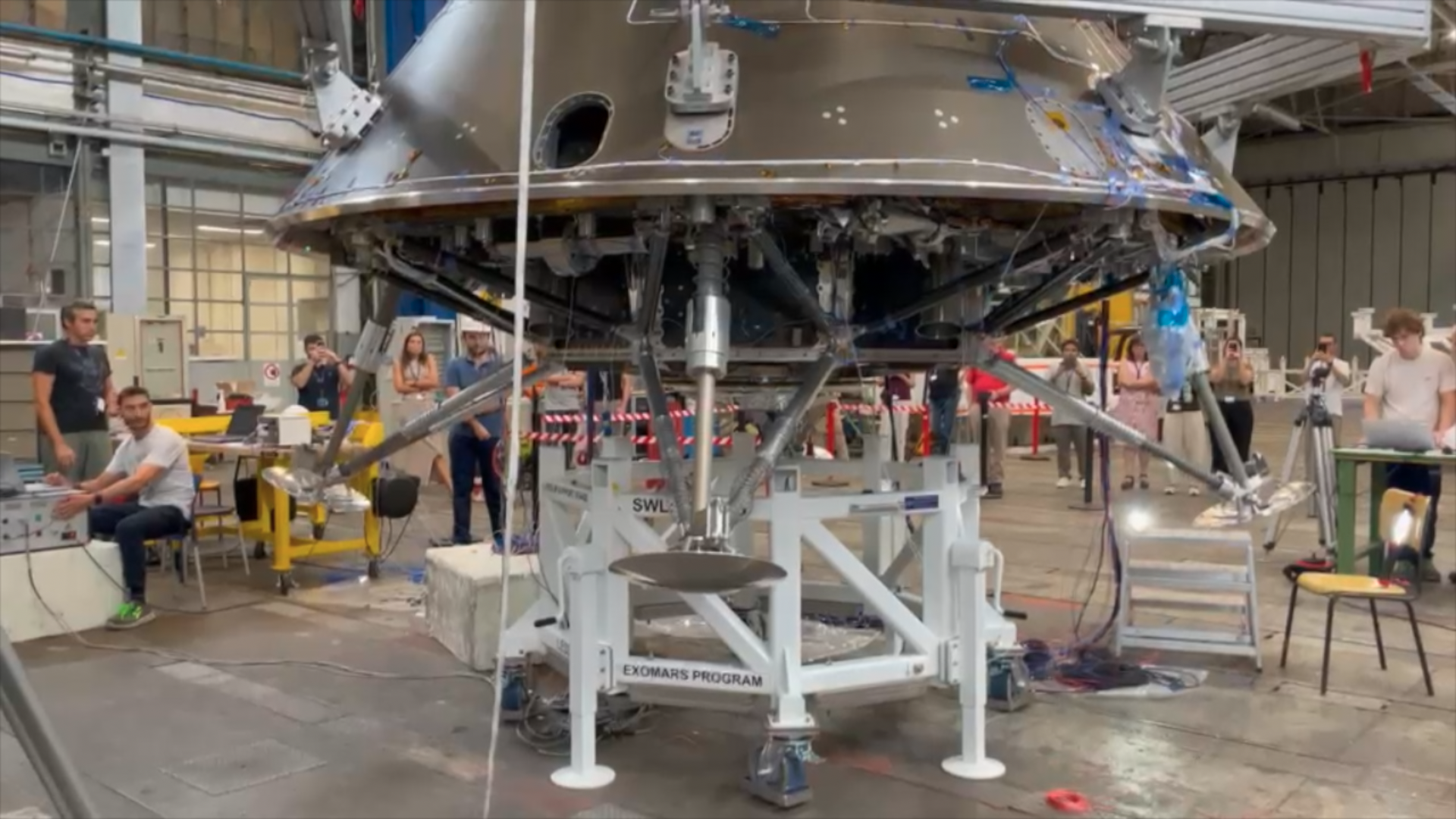
Footage has emerged showcasing the successful simultaneous deployment of two landing legs from the ExoMars landing platform. This test involved a full-scale model at Thales Alenia facilities in Turin, Italy, demonstrating how the legs deploy automatically in pairs using non-explosive actuators, completing the action in less than one second. This deployment occurs immediately after the front shield is jettisoned and is a critical phase in preparing the landing module for its touchdown on Mars.
The four landing legs replicate the actual structure and dimensions that will be used in the upcoming mission. These legs are vital for ensuring a safe landing of the European Space Agency’s (ESA) ExoMars Rosalind Franklin rover, scheduled for 2030. In addition to the legs, the spacecraft relies on parachutes and engines to slow its descent onto the Martian surface.
The ExoMars project showcases a collaborative effort in the aerospace community. Thales Alenia Space serves as the industrial lead for the mission, while Airbus is responsible for providing the landing platform. Design and construction of the landing legs were facilitated by the Sener company from Spain, highlighting the international cooperation involved in this ambitious space exploration endeavor.
The content above is a summary. For more details, see the source article.