Key Takeaways
- The European Space Agency (ESA) is developing technologies for modular, sustainable space logistics to enable satellite servicing in orbit.
- Recent tests at ESA’s facilities demonstrated successful rendezvous and docking procedures between spacecraft models.
- ESA’s initiatives aim to extend the operational life of satellites while addressing space debris management and orbital sustainability.
Advancements in Space Logistics
The European Space Agency (ESA) is spearheading efforts to transform current space missions into a sustainable model where satellites and spacecraft can be serviced continuously, similar to logistics hubs on Earth. The primary goal is to establish standards for an interoperable and modular system that allows for docking, refueling, and maintenance of spacecraft, extending their operational life significantly.
The agency collaborated with various industry partners, including The Exploration Company, Sener, GMV, Almatech, Thales Alenia Space, and CDS, to develop interfaces and technologies crucial for these advancements. Recent testing at ESA’s technical center, ESTEC, focused on simulating the critical procedures required for in-space logistics, including rendezvous and docking capabilities.
Rendezvous Tests
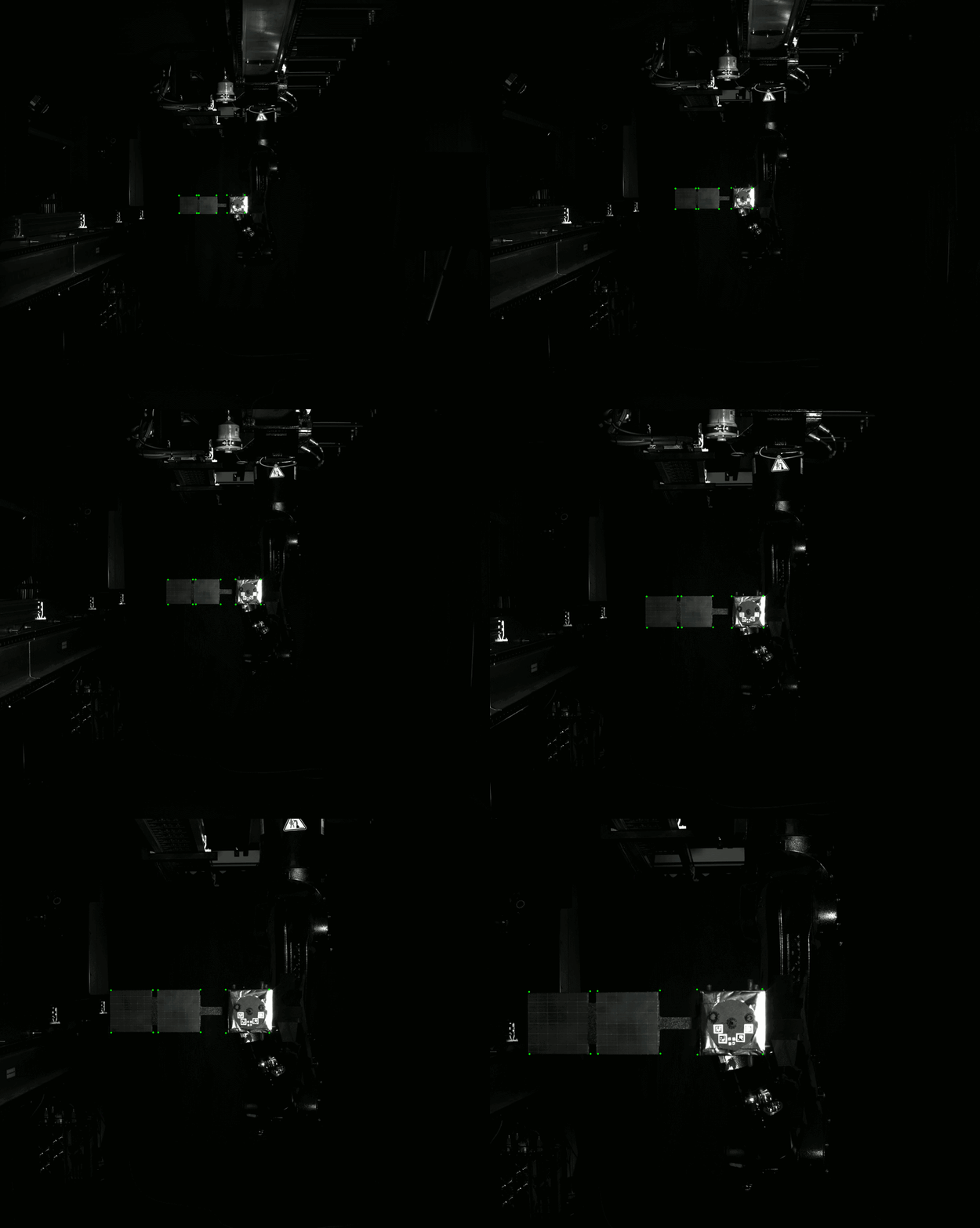
Lorenzo Pasqualetto-Cassinis, an ESA engineer, described the process of rendezvous, where a servicing spacecraft maneuvers to align with a client spacecraft in need of assistance. These tests utilized advanced camera systems to allow spacecraft to come within centimeters of one another. The testing took place in ESA’s Guidance, Navigation, and Control Laboratory, where robotic arms simulated the approach and alignment of a service vehicle and its target.
In the laboratory, the maneuvering systems were evaluated using a setup that mimicked real-world conditions. Black-and-white markers resembling QR codes were used to help the navigation system identify and lock onto its target’s position, vital for accurate docking procedures.
Docking Procedures
The docking aspect of the tests, conducted in ESA’s Orbital Robotics Laboratory, simulated zero-gravity conditions necessary for successful coupling of spacecraft. Platforms floated using air bearings, allowing for frictionless movement. The servicer spacecraft model was programmed to lock onto a passive capture interface on the client model, illustrating how spacecraft can connect for refueling, data transfer, and other servicing tasks.
These simulations started at a distance of four centimeters, with the systems demonstrating robust performance even under potential challenges like varying light conditions or differential speeds between spacecraft. Olivier Faure from The Exploration Company remarked on the importance of these tests in validating their systems’ reliability before actual space deployment.
Sustainable Use of Space
As the number of defunct satellites orbiting Earth increases, ESA is advocating for dual approaches to manage space sustainability. Expanding the lifespan of satellites through servicing missions is vital, alongside efforts to remove space debris. Upcoming launches will be equipped with compatible interfaces to facilitate these servicing missions.
ESA’s initiatives, including the In-Space Proof of Concept (InSPoC) project, aim to lay the groundwork for an open infrastructure in space, allowing European entities to participate actively in the burgeoning orbital economy. These projects will help address both the servicing needs of existing satellites and the growing challenge of orbital debris management, ultimately leading to a more sustainable future in space exploration.
The content above is a summary. For more details, see the source article.