Key Takeaways
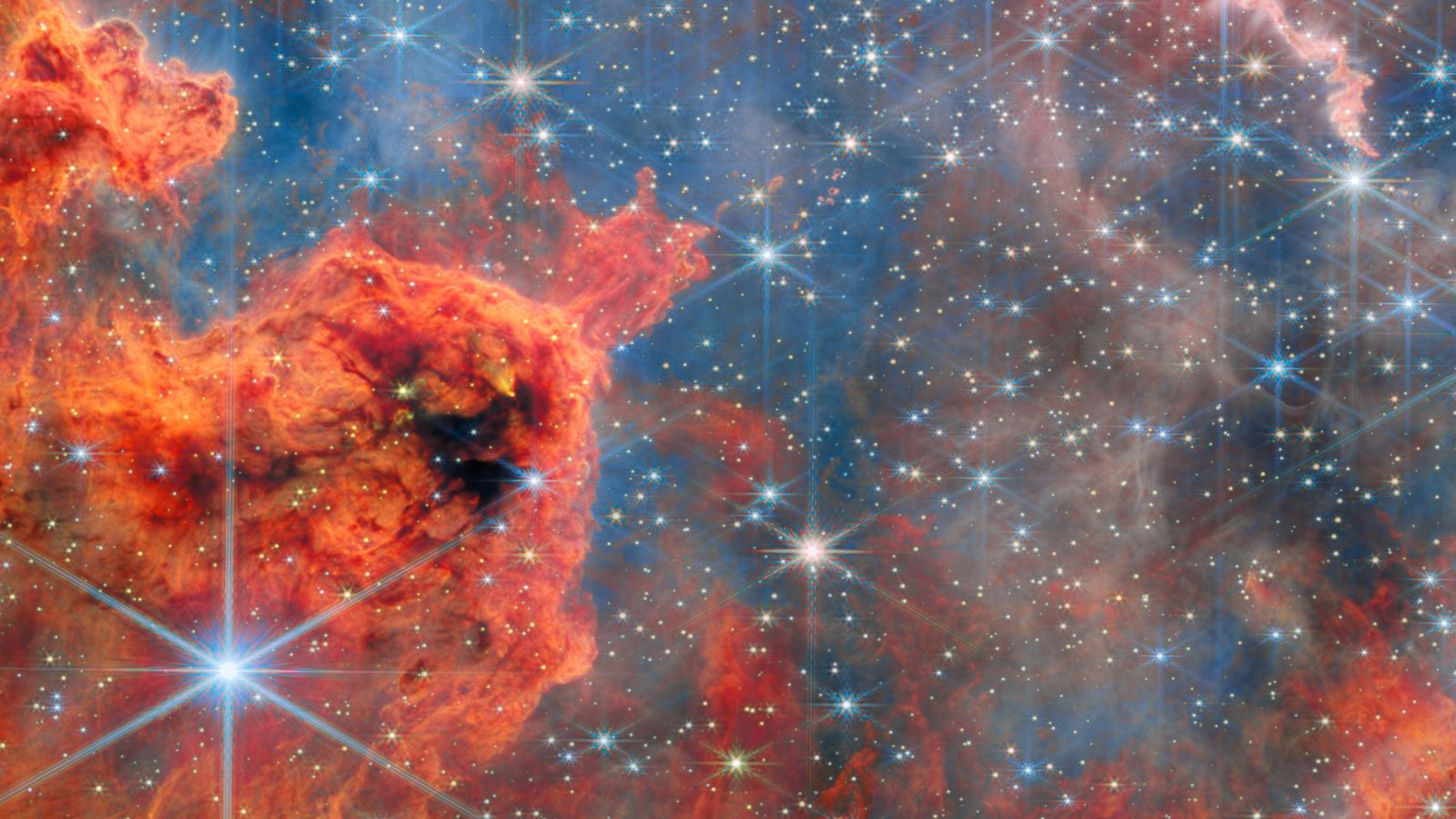
- The James Webb Space Telescope captured a detailed image of the Westerlund 2 star cluster within the Carina Nebula.
- JWST revealed the cluster’s faintest members, including brown dwarfs, for the first time.
- Understanding the formation of these low-mass objects helps scientists study star formation in intense radiation environments.
New Insights from JWST
The James Webb Space Telescope (JWST) has provided a groundbreaking view of the star cluster Westerlund 2, situated in the Carina Nebula, approximately 20,000 light-years from Earth. This cluster spans between 6 and 13 light-years and is home to some of the hottest and largest stars in the Milky Way.
While the Hubble Space Telescope showcased Westerlund 2 in a high-profile image during its 25th anniversary in 2015, JWST’s recent observations have uncovered more intricate details. JWST has successfully identified the cluster’s faintest members, an achievement that previous telescopes struggled to accomplish.
A significant discovery made by JWST is its identification of the full population of brown dwarfs within the cluster. Brown dwarfs, star-like objects that can form from collapsing gas clouds, differ from true stars because they lack sufficient mass to maintain long-term hydrogen fusion. This unique characteristic compels astronomers to understand the processes behind their formation, especially in a dynamic and highly luminous environment like that of Westerlund 2.
The implications of finding brown dwarfs in such a bright stellar nursery are vital. It enables researchers to address a crucial question regarding the efficiency of low-mass object formation under intense radiation. The ability to carry out a complete census of stars in the area allows scientists to compare Westerlund 2 with quieter star-forming regions, providing insight into how extreme conditions might influence the types of celestial objects that are ultimately formed.
This research is crucial as it lays the groundwork for understanding star formation processes across various environments. The discoveries made by JWST are set to enhance knowledge about the universe and continue inspiring interest in astronomical studies.
For those eager to delve deeper into the findings from the James Webb Space Telescope and learn more about star formation, further resources are readily available. This pioneering research stands as a testament to the power of advanced telescopes in expanding our understanding of the cosmos.
The content above is a summary. For more details, see the source article.