Key Takeaways
- Galactic Energy’s Ceres-1 rocket successfully launched five satellites on January 20, 2025.
- The company plans to launch its first liquid propellant vehicle, Pallas-1, later this year.
- Ceres-1 marks the fourth orbital launch by China in 2025, contributing to a strong commercial space sector.
Successful Launch by Galactic Energy
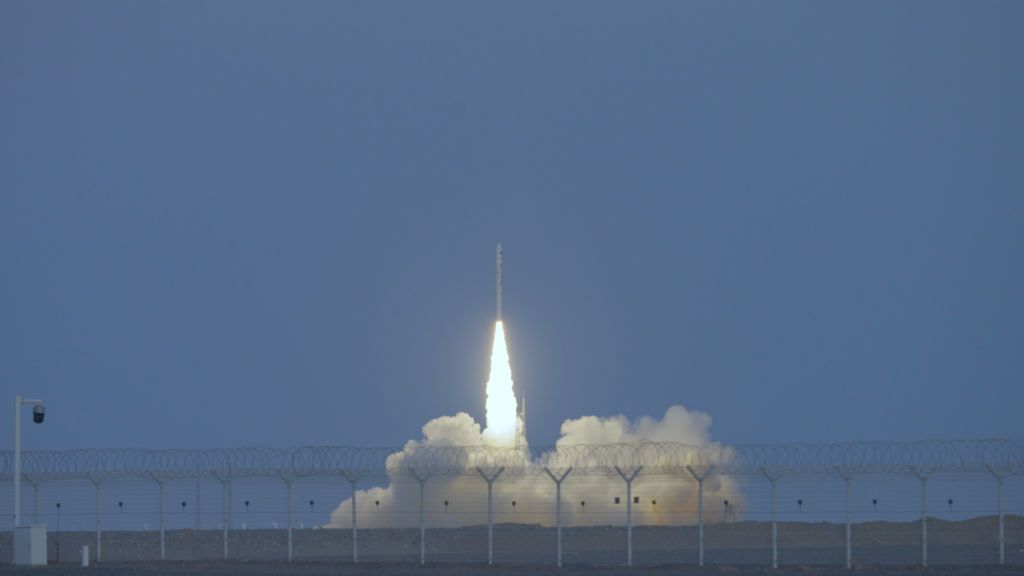
On January 20, 2025, at 5:11 a.m. EST, Galactic Energy’s Ceres-1 rocket launched from the Jiuquan Satellite Launch Center in northwest China. This successful mission placed five satellites into their designated orbits. The payload included four Yunyao-1 satellites, which are equipped with Global Navigation Satellite System (GNSS) occultation payloads designed to collect weather data by analyzing GPS and Beidou satellite signals as they traverse the atmosphere. Accompanying these was the Jitianxing A-05 satellite from K-Space Aerospace Technology, which features a hyperspectral camera for remote sensing of the Earth.
Galactic Energy’s achievements highlight the rapid advancements in China’s commercial space industry. The company has completed 17 launch attempts since its establishment, boasting a remarkable success rate of 16 launches. Its ongoing success positions Galactic Energy as a leader in the burgeoning sector.
Looking ahead, the company has ambitious plans for 2025. It intends to launch its first complex liquid propellant rocket, named Pallas-1, which is designed to utilize a kerosene-liquid oxygen mix. Unlike the Ceres-1, which stands 62 feet tall and can transport about 880 pounds to low Earth orbit (LEO), the upcoming Pallas-1 will be significantly larger at 138 feet and has the capability to carry up to 17,630 pounds (8,000 kg) to LEO. Plans are also in place to implement a strategy for recovering and reusing the Pallas-1’s first stage, aligning with global trends towards sustainable space exploration.
The Ceres-1 launch represents the fourth successful orbital mission for China in 2025, part of a series of recent launches that also include the deployment of a satellite refueling test spacecraft, a navigation-enhancement satellite, and an Earth observation satellite for Pakistan. These missions illustrate China’s commitment to expanding its capabilities in space technology and commercial ventures.
As interest in space exploration and satellite technology grows, the launch of the Ceres-1 rocket and the forthcoming Pallas-1 signify significant steps for both Galactic Energy and the broader Chinese space industry, which is gaining momentum in the competitive global landscape.
The content above is a summary. For more details, see the source article.