Key Takeaways
- China successfully launched the 14th group of low-orbit internet satellites using a Long March 8A rocket.
- The satellite network aims to create a global internet system, comparable to SpaceX’s Starlink, with about 13,000 satellites planned.
- The launch marked the 80th space mission for China and the 612th flight of the Long March rocket series.
Launch Details and Objectives
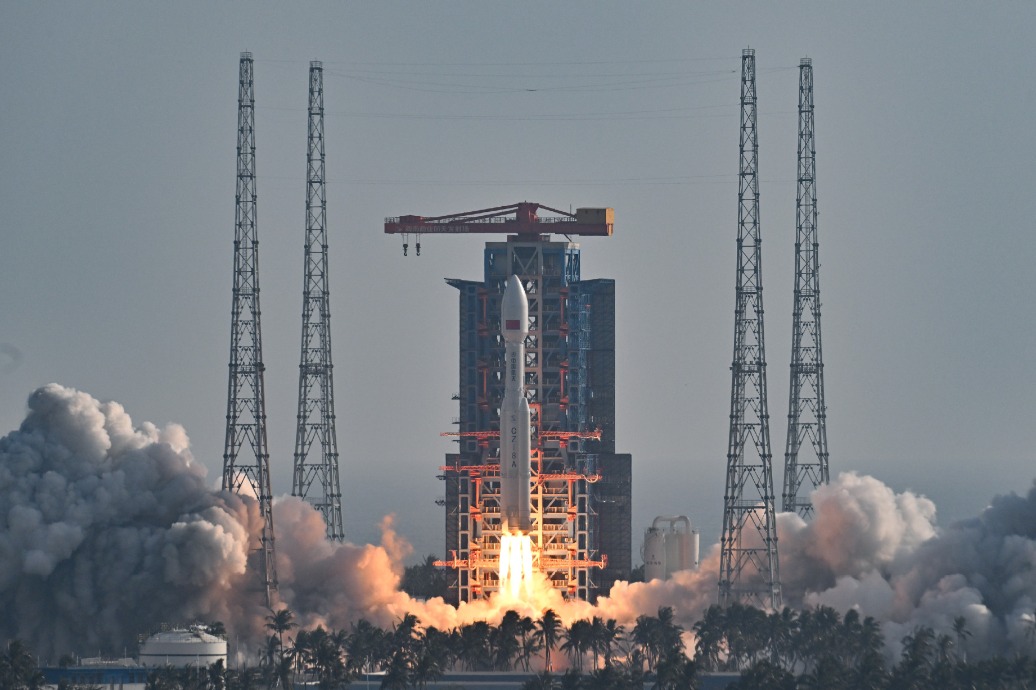
China launched its 14th group of low-orbit internet satellites on Saturday, according to the China Aerospace Science and Technology Corp (CASC). The launch took place at 3:53 PM from Hainan International Commercial Aerospace Launch Center using a Long March 8A carrier rocket. The satellites were developed by the China Academy of Space Technology, a subsidiary of CASC.
This year alone, nearly 100 satellites have been deployed to support the country’s expansive space-based internet initiative, often regarded as the Chinese equivalent of SpaceX’s Starlink. Upon reaching completion, the satellite constellation is set to include approximately 13,000 satellites operating in low-Earth orbit, thereby providing global internet connectivity.
The Long March 8A rocket, designed by the China Academy of Launch Vehicle Technology, stands 50.5 meters tall and has a liftoff weight of 371 metric tons, producing about 480 tons of thrust. This model specializes in deploying satellites into sun-synchronous orbits and can carry payloads of up to 7 metric tons to an altitude of roughly 700 kilometers.
This launch is significant as it marks China’s 80th space mission and the 612th flight in the Long March rocket series. Additionally, it is the fifth occasion that the Long March 8A has been utilized to deploy low-orbit internet satellites, reflecting advancements in China’s capabilities in space technology and satellite deployment.
The content above is a summary. For more details, see the source article.