Key Takeaways
- A new astronomical object, Cloud-9, has been identified as a starless, gas-rich dark-matter cloud, providing insights into early galaxy formation.
- The discovery, confirmed by the Hubble Space Telescope, shows the cloud has a mass of approximately 5 billion solar masses dominated by dark matter.
- Cloud-9 represents potential ‘failed galaxies’ from the Universe’s infancy, aiding the understanding of dark matter and galaxy evolution.
Discovery of a Unique Astronomical Object
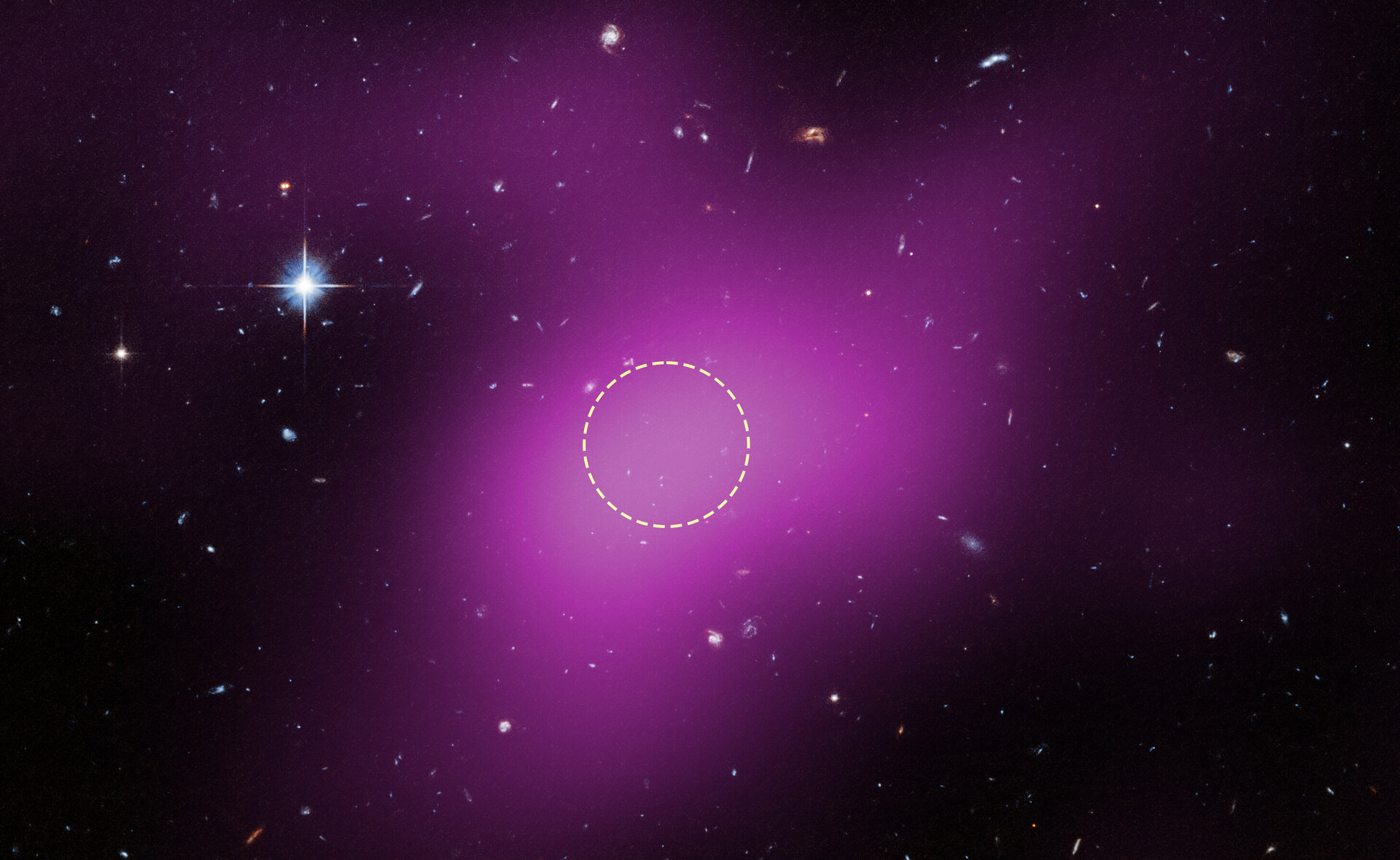
A groundbreaking discovery has emerged from the NASA/ESA Hubble Space Telescope, revealing Cloud-9, a novel type of astronomical object classified as a starless, gas-rich dark-matter cloud. This relic is considered a remnant of the early stages of galaxy formation and is the first confirmed detection of its kind in the Universe.
Principal investigator Alejandro Benitez-Llambay from Milano-Bicocca University described Cloud-9 as a “failed galaxy,” emphasizing that failures in science can often provide more insights than traditional successes. The lack of stars in Cloud-9 supports theories about its primordial status, indicating it is a foundational building block of a galaxy that never fully formed. Team member Andrew Fox from AURA/STScI noted that while dark matter is challenging to detect, Cloud-9 offers a rare glimpse into a cloud dominated by dark matter.
Cloud-9 is scientifically defined as a Reionization-Limited H I Cloud, or ‘RELHIC.’ This term refers to a primordial hydrogen cloud containing neutral hydrogen, representing a fossil remnant from the Universe’s early days that has not developed stars. For years, astronomers have sought evidence of such an object, but only the Hubble telescope provided the sensitivity required to confirm its starless nature.
The discovery of Cloud-9 was unexpected. Rachael Beaton from the Space Telescope Science Institute remarked that among galactic neighbors, there are likely other similar “abandoned houses,” or dark matter clouds that did not gather enough gas to create stars. This finding signifies the potential for numerous other dark-matter-dominated structures within the cosmos.
Cloud-9 is smaller, more compact, and highly spherical compared to other hydrogen clouds previously studied, making it an unusual specimen. Its core consists of neutral hydrogen roughly 4,900 light-years in diameter, with a mass estimated to be around 1 million times that of the Sun. The total mass of the dark matter cloud is believed to be about 5 billion solar masses, indicating a substantial dark matter presence.
Identifying such failed galaxies poses challenges since local luminous objects often outshine them, complicating observational efforts. Additionally, environmental effects like ram-pressure stripping can eliminate gas, further diminishing the expected abundance of these clouds.
Discovered during a radio survey by the Five-hundred-meter Aperture Spherical Telescope in Guizhou, China, Cloud-9 was subsequently verified by the Green Bank Telescope and the Very Large Array in the United States. The designation “Cloud-9” was merely sequential, reflecting its status as the ninth gas cloud identified around the nearby spiral galaxy, Messier 94.
Interestingly, Cloud-9 may still evolve into a galaxy, depending on its mass growth. If its mass increases significantly, it could collapse, form stars, and develop into a conventional galaxy. Conversely, if it were to lose mass, it would likely disperse and not coalesce into a galaxy.
This discovery enriches the comprehension of galaxy formation, the early Universe, and dark matter’s nature. The rarity of such “failed galaxies” opens new avenues for future astronomical surveys, promising further insights into the early stages of the Universe and the physics governing dark matter. The findings have been published in The Astrophysical Journal Letters.
The content above is a summary. For more details, see the source article.