Key Takeaways
- Three startups, Astrome Technologies, Azista Industries, and Dhruva Space, have been awarded ₹5 Cr each to develop indigenous small satellite bus platforms.
- Selected from 15 applicants, these startups aim to enhance India’s domestic satellite manufacturing and launch capabilities.
- Part of the SBaaS initiative, the project will support the integration of multiple hosted payloads for both domestic and global needs.
IN-SPACe Selects Startups for Satellite Bus Development
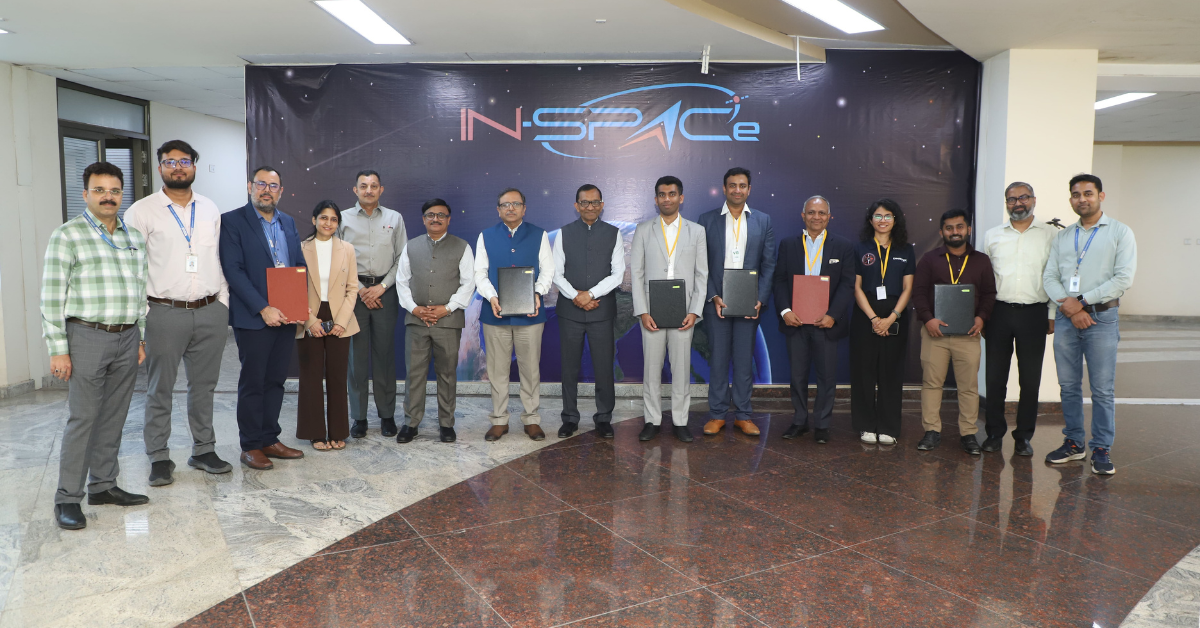
The Indian National Space Promotion and Authorization Centre (IN-SPACe) has announced the selection of three indigenous startups—Astrome Technologies, Azista Industries, and Dhruva Space—to develop small satellite bus platforms. The decision comes after a thorough evaluation of 15 applicants and marks a significant step in promoting private sector capabilities in the Indian space tech sector.
Each selected startup will receive a grant of ₹5 Cr aimed at creating robust, modular, and scalable satellite bus systems. These systems serve a critical role in small satellites by providing essential subsystems such as power, communication, thermal control, and navigation. IN-SPACe Chairman Pawan Goenka emphasized that the initiative aims to position India as a global hub for small satellite manufacturing and launch services.
IN-SPACe’s technical director, Rajeev Jyoti, pointed out that the new satellite bus platforms will help reduce barriers for payload developers while bolstering domestic manufacturing capabilities. The project is part of the Satellite Bus as a Service (SBaaS) initiative, which focuses on building a cost-effective platform that accommodates multiple hosted payloads.
This selection follows a previous initiative in August—when IN-SPACe selected a consortium of four startups to design and operate India’s first fully indigenous commercial Earth Observation satellite system. IN-SPACe plans to provide selected companies access to the Indian Space Research Organisation (ISRO) infrastructure and technical expertise, further facilitating their development efforts.
In addition to the startup grants, the Indian government has taken further steps to strengthen the space sector. A ₹1,600 Cr Antariksh Venture Capital Fund (AVCF) has been operationalized, expected to invest in approximately 35 space tech ventures. The Indian Budget for 2026-27 also allocated ₹13,705.6 Cr for space technology, reflecting a commitment to expanding the sector.
The regulatory changes have come at a crucial time, as funding in the homegrown space tech ecosystem surged by 94% in 2025, reaching $157 million. The significant funding boost illustrates the growing interest and investment in India’s space endeavors, paving the way for a more competitive landscape in space technology and satellite services.
The content above is a summary. For more details, see the source article.