Key Takeaways
- The Einstein Probe spacecraft has made significant discoveries in X-ray astrophysics, including a long-duration burst from 12.5 billion light-years away.
- The X-ray transient EP240315a challenges existing theories about gamma-ray bursts by exhibiting unusual timing and duration properties.
- Collaboration between global research efforts highlights the potential of Einstein Probe to uncover cosmic events from the early Universe.
Groundbreaking Discoveries by Einstein Probe
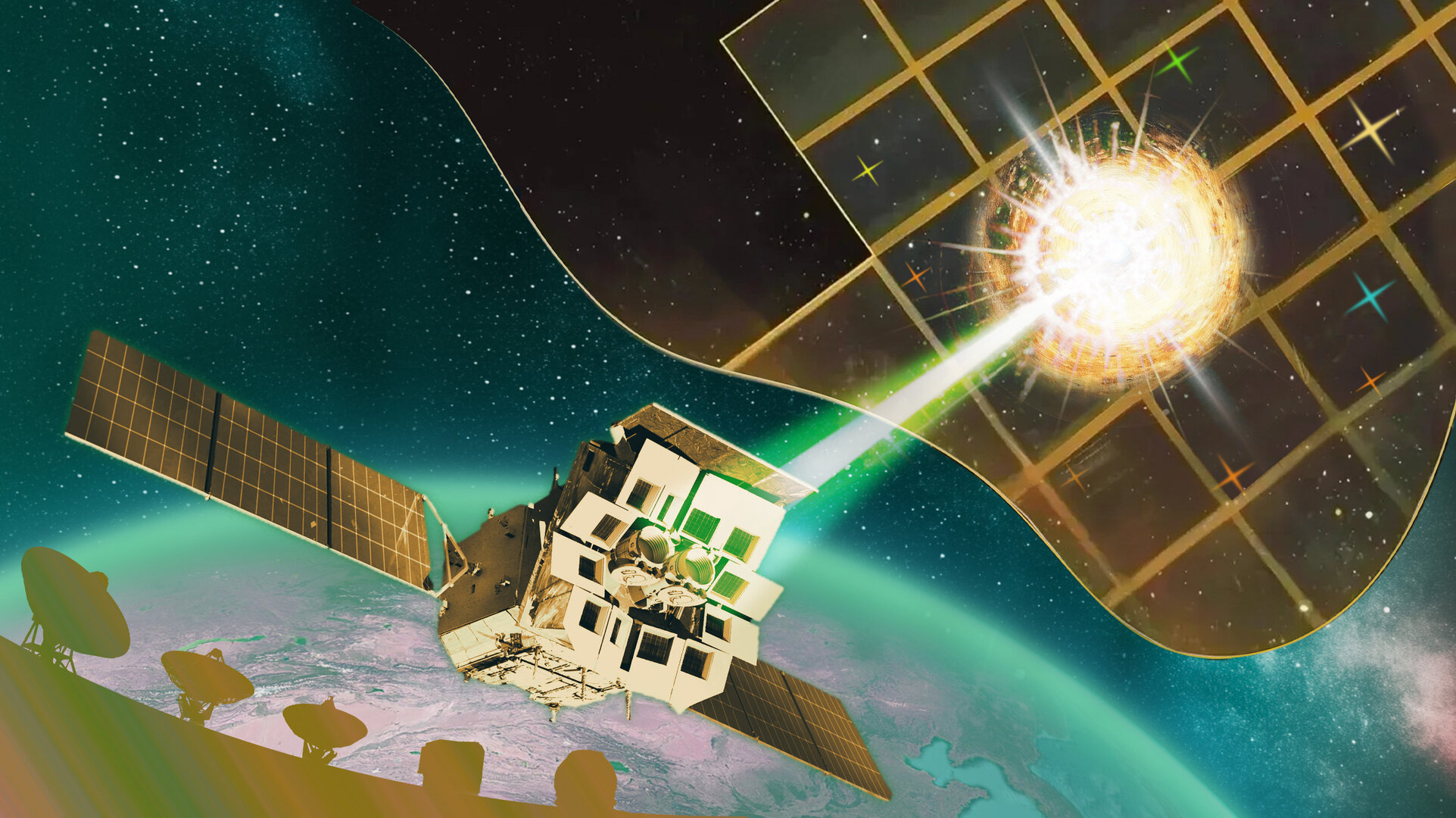
The Einstein Probe spacecraft, launched on January 9, 2024, has opened a new realm of exploration in the X-ray Universe. Just weeks after its launch, it detected a notable burst of low-energy X-rays, designated EP240315a, which lasted over 17 minutes. These X-rays, termed ‘soft’, are still significantly more energetic than visible light and represent a class of transient cosmic events known as fast X-ray transients (FXRTs).
The detection process was particularly special for Yuan Liu of the National Astronomical Observatories of China, as he developed the software for the Wide-field X-ray Telescope (WXT) that made the detection possible. Observations confirmed that about one hour after the initial X-ray detection, telescopes in South Africa recorded visible light from the same event. Further analyses from telescopes in Hawaii and Chile established that the burst arose from a distance of approximately 12.5 billion light-years, dating back to when the Universe was only 10 percent of its current age. This made EP240315a the earliest and longest soft X-ray event detected to date, hinting at the probe’s remarkable capacity to observe ancient cosmic phenomena.
Teams from various institutions, including the University of Rome Tor Vergata, monitored the counterpart at radio wavelengths. They tracked the burst for three months, concluding that the energy output aligned with characteristics typical of gamma-ray bursts (GRBs). GRBs are known for their immense energy releases, typically arising from massive star explosions.
In an intriguing twist, while X-rays are generally known to occur seconds before gamma-ray emissions, EP240315a was identified over six minutes prior to its associated gamma-ray burst, GRB 240315C. This unprecedented delay suggests fundamental discrepancies in current GRB models, leading researchers to rethink their understanding of these explosive events. Hui Sun from the Einstein Probe Science Center cautioned that such findings indicate a deeper complexity in gamma-ray burst mechanics.
The significance of the Einstein Probe extends beyond this individual discovery, showcasing its capability for real-time observations of cosmic transients. The potential for future findings is substantial, as the probe’s advanced instruments can capture a wider range of phenomena from various points in the Universe’s history. Erik Kuulkers, ESA Einstein Probe Project Scientist, emphasized that the probe’s opening discoveries mark only the beginning of its exploration for many more unprecedented observations.
The Einstein Probe itself is a collaboration among several esteemed scientific organizations, including the Chinese Academy of Science, the European Space Agency, and Germany’s Max-Planck Institute for Extraterrestrial Physics. Equipped with two telescopes, the WXT consistently scans the sky for unexpected X-ray events, while the Follow-up X-ray Telescope (FXT) provides more detailed observational capabilities.
Overall, the discoveries facilitated by the Einstein Probe could redefine our understanding of cosmic explosions and early Universe phenomena, promising significant advances in astrophysical research in the near future.
The content above is a summary. For more details, see the source article.