Key Takeaways
- The Artemis II rocket rolled out to the launch pad at Kennedy Space Center for its first crewed moon mission in over 50 years.
- A successful wet dress rehearsal in February preceded the roll-out, though issues with the rocket’s helium system were identified and repaired.
- The mission is targeting launch opportunities between April 2 and April 7, with the European Service Module powering the Orion spacecraft.
NASA Prepares for Artemis II Crew Launch
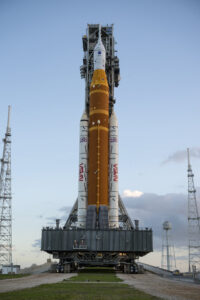
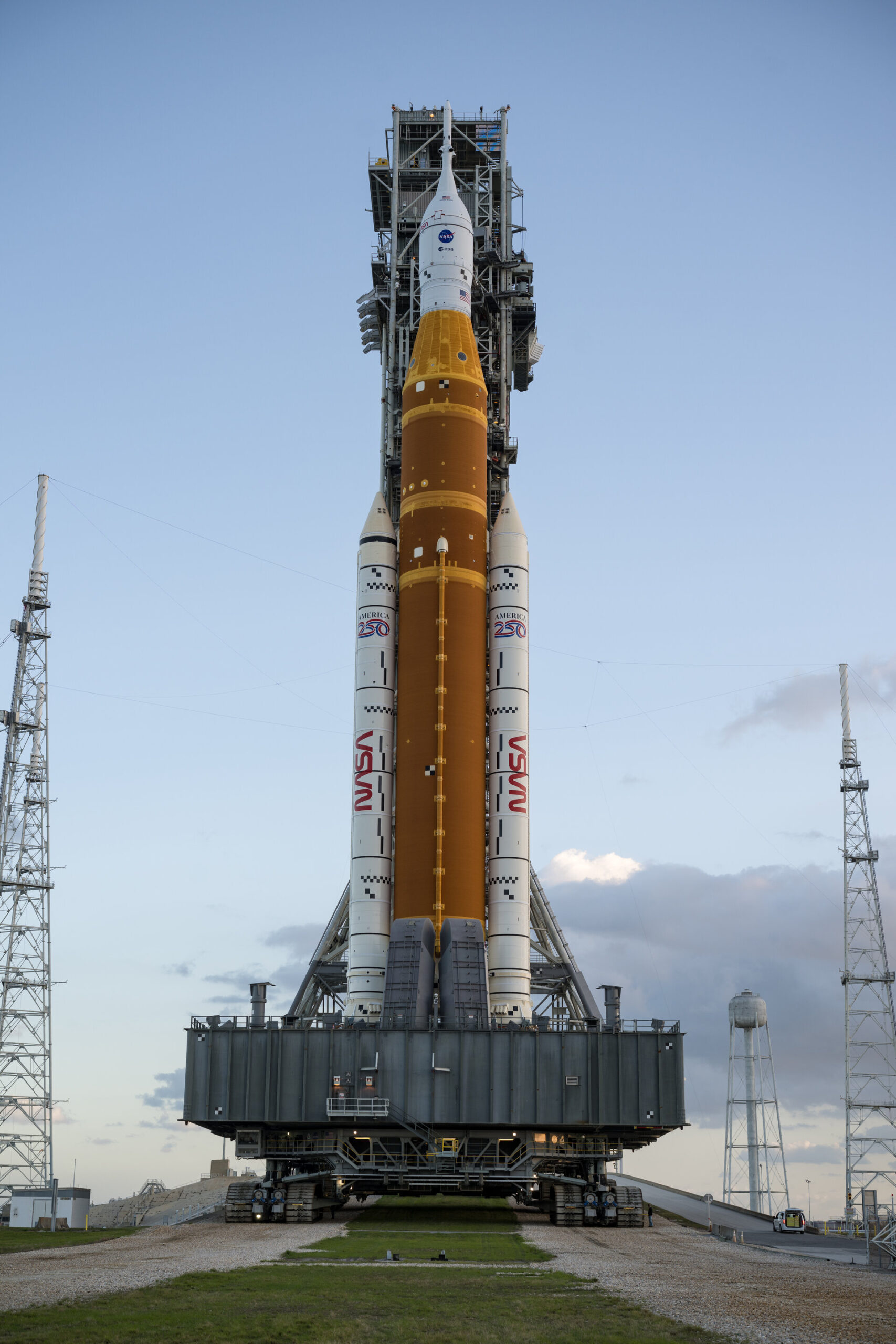
Earlier today, NASA’s Artemis II rocket began its journey from the Vehicle Assembly Building at Kennedy Space Center in Florida to its launch pad, marking a significant milestone as it prepares for its first crewed flight to the Moon since the Apollo program over 50 years ago. The rocket, which includes the Space Launch System (SLS) and Orion spacecraft, covered a distance of 6.5 kilometers at a slow pace, taking approximately 12 hours to reach its destination.
This trip to the launch pad represents the second rollout for the Artemis II rocket, the first having taken place in January. Since that time, NASA teams have engaged in rehearsals for crucial operations such as fueling the rocket and conducting a full countdown to liftoff. A key event was a wet dress rehearsal completed in February where the rocket was fully fueled with cryogenic propellants.
Following the rehearsal, engineers discovered a problem within the upper stage helium system, essential for pressurizing the propellant tanks. Consequently, the rocket was returned to the Vehicle Assembly Building for thorough inspection and repairs. Safety remains the primary focus as engineers diligently ensure that all systems function correctly in preparation for the launch. In the past few weeks, these teams have successfully resolved the issues and conducted additional system checks, including the replacement of batteries in critical components.
In mid-March, NASA verified that all teams were ‘go’ for launch after a flight readiness review involving partners such as the European Space Agency (ESA). The mission is now set to target several launch opportunities in early April:
– April 2, 00:24 CEST (April 1, 18:24 local time)
– April 3, 01:22 CEST (April 2, 19:22 local time)
– April 4, 02:00 CEST (April 3, 20:00 local time)
– April 5, 02:53 CEST (April 4, 20:53 local time)
– April 6, 03:40 CEST (April 5, 21:40 local time)
– April 7, 04:36 CEST (April 6, 22:36 local time)
A vital component of the Orion spacecraft is the European Service Module provided by ESA. This module not only powers and propels Orion through deep space, but it also supplies air, water, and temperature control for the four astronauts aboard. The module has been developed over nearly a decade, with contributions from over 20 companies across 10 ESA Member States, under the leadership of Airbus as the prime contractor.
Throughout the Artemis II mission, European engineers will remain on standby, offering assistance from ESA centers in the Netherlands and Germany, as well as NASA’s Johnson Space Center in Houston. This collaborative effort showcases the international teamwork crucial for the success of deep-space exploration missions like Artemis II.
The content above is a summary. For more details, see the source article.