Key Takeaways
- The multi-Needle Langmuir Probe (m-NLP) is measuring the plasma environment around the International Space Station (ISS).
- This instrument provides high-resolution data on electron density and space weather effects, aiding in understanding solar radiation impacts.
- Future developments may allow m-NLP technology to be used in deep space missions, enhancing our ability to monitor space weather.
Advanced Monitoring of Space Weather with m-NLP
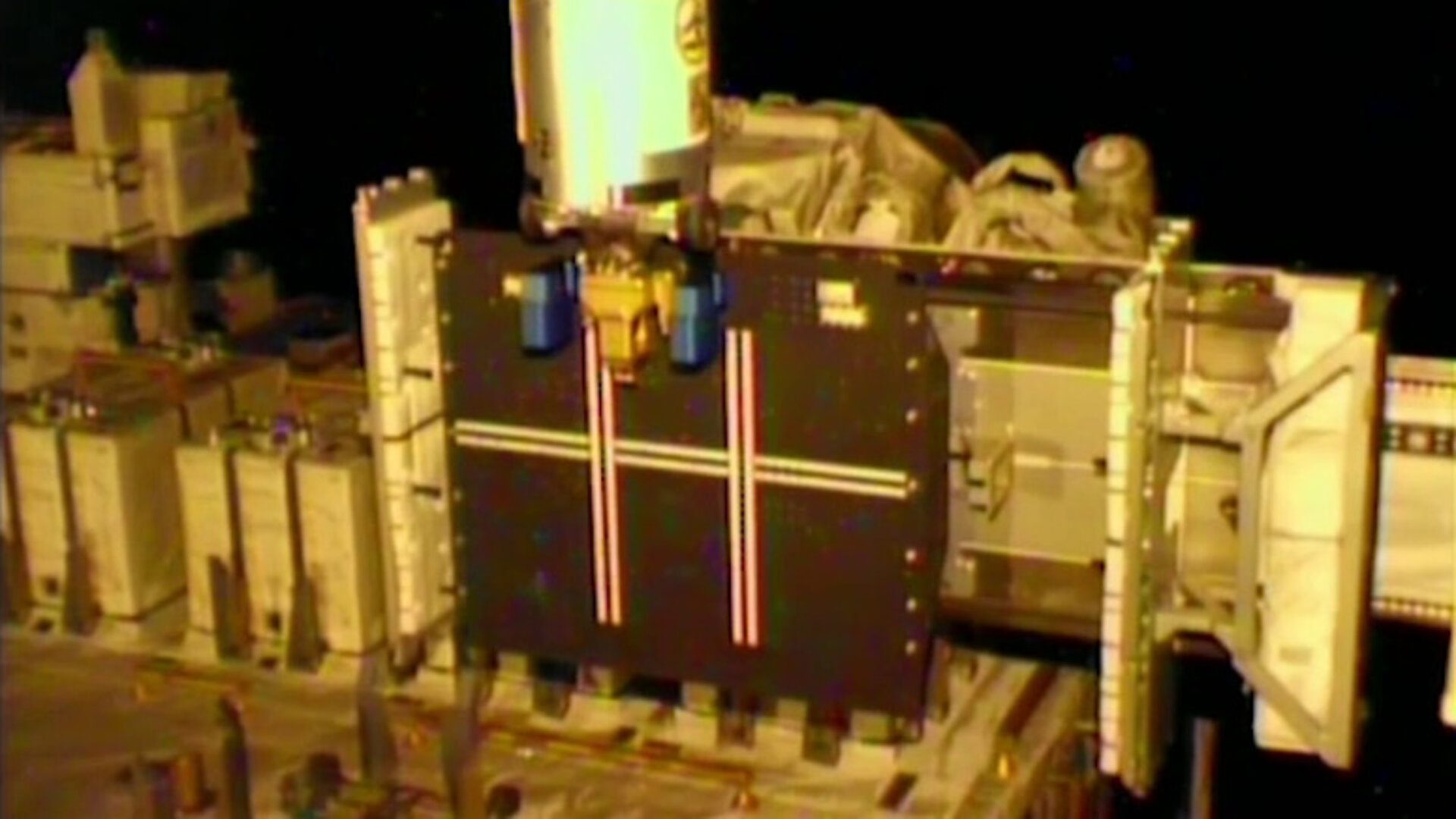
Norway’s multi-Needle Langmuir Probe (m-NLP) has been installed on the Bartolomeo platform, which is part of the International Space Station (ISS), since September 2023. This advanced instrument is designed to sample the plasma environment in space, making thousands of detailed measurements per second. Plasma, often referred to as the fourth state of matter, is composed of electrically charged gas and constitutes the majority of visible matter in space, including elements like sunlight and solar wind.
The solar wind consists of particles emitted by the Sun, which can cause significant space weather phenomena, such as solar flares. According to Fabrice Cipriani of the European Space Agency (ESA), these solar events can generate energetic particles that affect communication signals between satellites and Earth and can alter satellite trajectories. The m-NLP detects electron density around the ISS with remarkable precision, allowing for continuous monitoring of solar impacts on the surrounding environment.
Professor Lasse Clausen from the University of Oslo, who leads the m-NLP project, notes that the instrument has produced extensive data on plasma conditions at mid and low latitudes, providing insights into the physical mechanisms driving space weather effects. Recently, the m-NLP successfully recorded the plasma’s reaction to one of the most significant solar storms observed in recent years.
The m-NLP not only generates valuable standalone data but also serves as a prototype for developing operational space weather monitoring instruments as part of ESA’s Space Situational Awareness program. Atul Deep, an ESA experiment system engineer, mentioned that m-NLP’s installation was crucial in validating various system requirements for the Bartolomeo platform, paving the way for future payloads.
There are ambitious plans for the m-NLP technology, according to Kenza Benamar, a technology research and development engineer at ESA. Modifications to enhance radiation resistance and alternative coatings could enable the deployment of similar instruments beyond low Earth orbit, potentially creating a space weather monitoring constellation or even facilitating deep space missions.
The funding for the m-NLP initiative involves collaboration between ESA’s PRODEX and General Support Technology (GSTP) programs. Eidsvoll Electronics played a key role by designing and building the electronics to connect m-NLP to the Bartolomeo platform, while the University of Oslo developed the m-NLP electronics and the boom systems housing the probes.
The ongoing research and data collection by m-NLP will contribute significantly to our understanding of space weather and its potential impacts on satellites and communication systems, ultimately enhancing our preparedness against space radiation effects.
The content above is a summary. For more details, see the source article.