Key Takeaways
- The Smile spacecraft has entered the Maxwell Test Chamber for essential space environment testing.
- The chamber mimics space conditions, enabling detailed assessments of Smile’s electronic systems and interference.
- Smile is a joint initiative between the European Space Agency and the Chinese Academy of Sciences, aimed at studying solar influences on Earth’s magnetosphere.
Space Environment Testing Begins for Smile Spacecraft
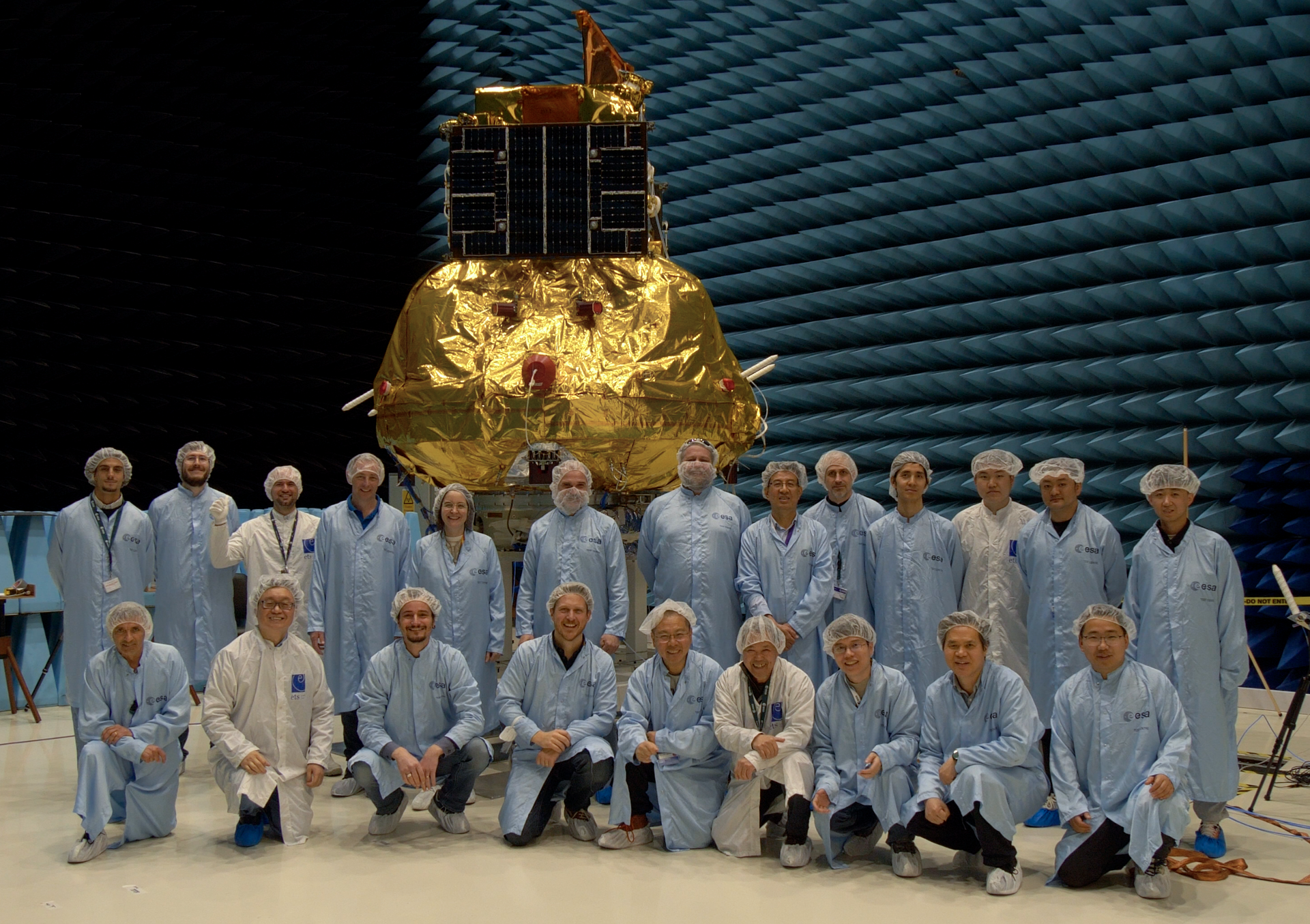
Engineers have advanced the Smile spacecraft toward launch readiness by moving it into the Maxwell Test Chamber at ESTEC, Europe’s largest satellite test facility. Having been fully assembled and tested during winter, Smile now enters a critical phase known as space environment testing.
The first of these tests is conducted in the unique Maxwell Test Chamber, whose 9-meter-high walls are lined with foam spikes designed to absorb signals and sound, effectively simulating the void of space. When the chamber’s main door closes, the metal walls create a ‘Faraday Cage,’ which blocks external electromagnetic signals, ensuring a controlled environment for the spacecraft.
Smile is built to detect very weak magnetic field signals and transmit large amounts of data back to Earth via high-powered antennas, making it particularly sensitive to interference. Engineers will evaluate the spacecraft’s functionality by ensuring all electronic systems operate effectively together without “crosstalk.”
In addition to testing its own systems, the Maxwell Chamber tests also focus on verifying that Smile can safely launch within the Vega-C rocket. Given that both the rocket and its corresponding ground systems also contain various electronics, it is essential to confirm that neither system creates disturbances for the other.
While full analysis of the test data may take some time, initial observations indicate that Smile is likely to pass these assessments successfully. The Solar wind Magnetosphere Ionosphere Link Explorer (Smile) represents a collaborative effort between the European Space Agency (ESA) and the Chinese Academy of Sciences (CAS), aimed at enhancing understanding of how solar activity impacts Earth’s magnetic environment.
The content above is a summary. For more details, see the source article.