Key Takeaways
- Proba-3 consists of two spacecraft: the Coronagraph and the Occulter, which work in tandem.
- The Occulter will continuously face the Sun to block its light, enabling the Coronagraph to observe the solar atmosphere.
- The mission is set to launch from India on December 4, 2023, at 11:38 CET.
Proba-3 Mission Overview
The Proba-3 mission represents a significant advancement in solar observation, utilizing a duo of spacecraft to achieve its scientific goals. The mission comprises the Coronagraph spacecraft, designed to study the Sun’s faint outer atmosphere, and its companion, the Occulter spacecraft, which plays a crucial role in this observational process.
The Occulter spacecraft must continuously face the Sun to effectively block the intense light from the solar disk. This positioning not only facilitates the Coronagraph’s observations but also allows the Occulter to serve as an independent platform for various scientific investigations. By blocking the Sun’s glare, Proba-3 aims to reveal more about the solar corona, enhancing understanding of solar phenomena and their impacts on space weather.
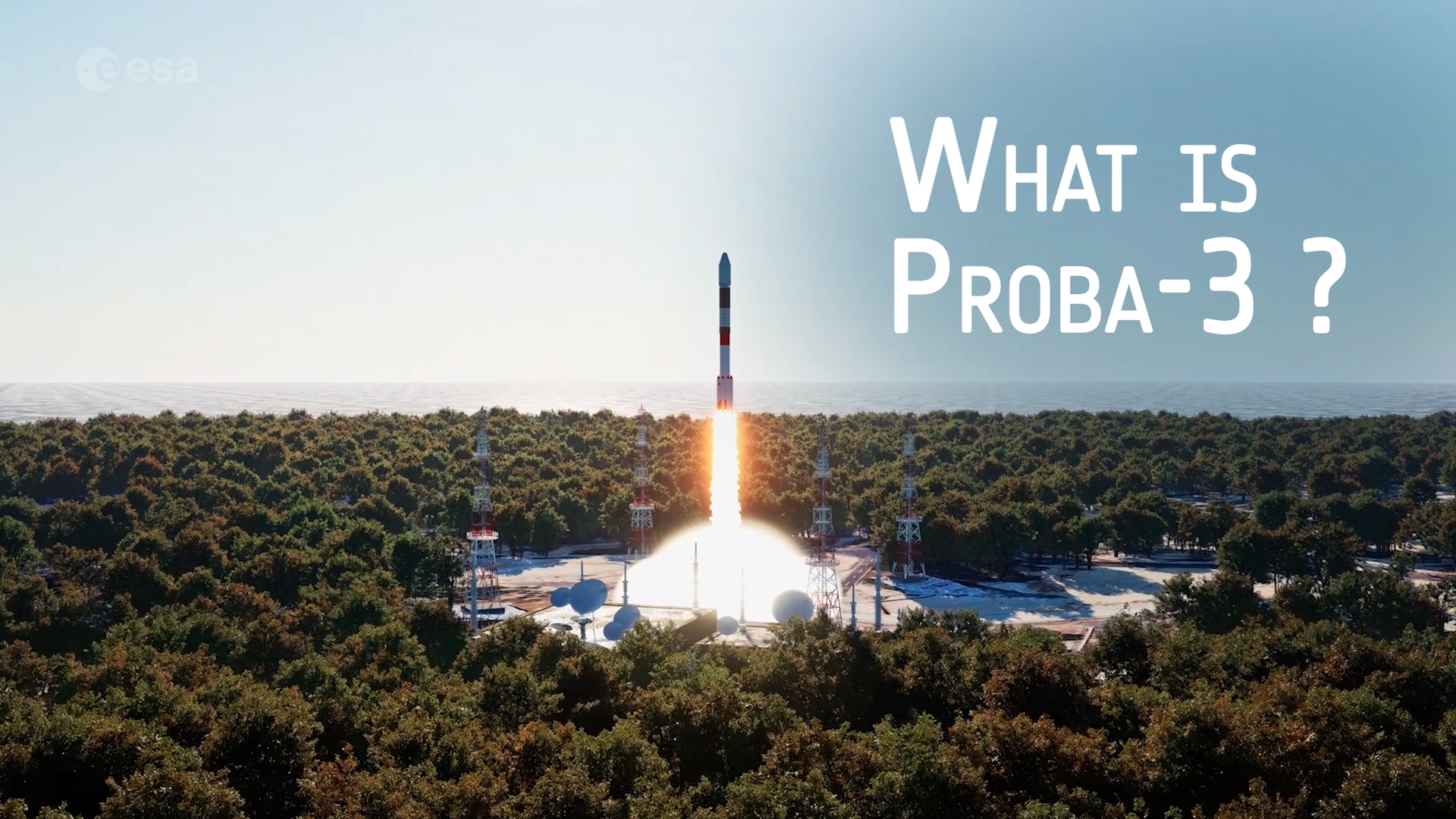
Scheduled for launch on December 4, 2023, at 11:38 CET from the Satish Dhawan Space Centre in Sriharikota, India, the Proba-3 mission will lift off on a PSLV-XL rocket. This launch marks a critical step towards achieving its ambitious objectives, potentially contributing valuable insights into solar activities and their effects on Earth and the wider solar system.
The collaboration between these two spacecraft is notable; it emphasizes the necessity of multiple platforms to conduct complex space observation missions effectively. As the Occulter faces the Sun, it creates conditions that allow the Coronagraph to capture more profound and detailed images of the solar atmosphere, which would otherwise remain obscured.
Overall, Proba-3 symbolizes a modern approach to solar research, setting the stage for future exploration and studies related to our star’s behavior, including solar flares and coronal mass ejections. The mission is expected to contribute greatly to the field of heliophysics and offer essential data that could inform strategies for mitigating the effects of solar activity on technological systems on Earth.
The content above is a summary. For more details, see the source article.