Key Takeaways
- ESA’s Atomic Clock Ensemble in Space (ACES) has arrived at NASA’s Kennedy Space Center for final preparations before launch.
- The ACES experiment aims to measure time from orbit with high precision, testing fundamental physics aboard the ISS.
- ACES is set to launch on April 21, integrated with SpaceX’s Falcon 9 rocket.
ACES Arrives at NASA for Groundbreaking Time Measurement Experiment
ESA’s Atomic Clock Ensemble in Space (ACES) has successfully arrived at NASA’s Kennedy Space Center in Florida. This innovative initiative is part of a European experiment designed to measure time from the International Space Station (ISS) with unprecedented accuracy. The project, which is anticipated to shed light on fundamental physics, emphasizes the critical role of precise time measurement in both scientific research and technological advancement.
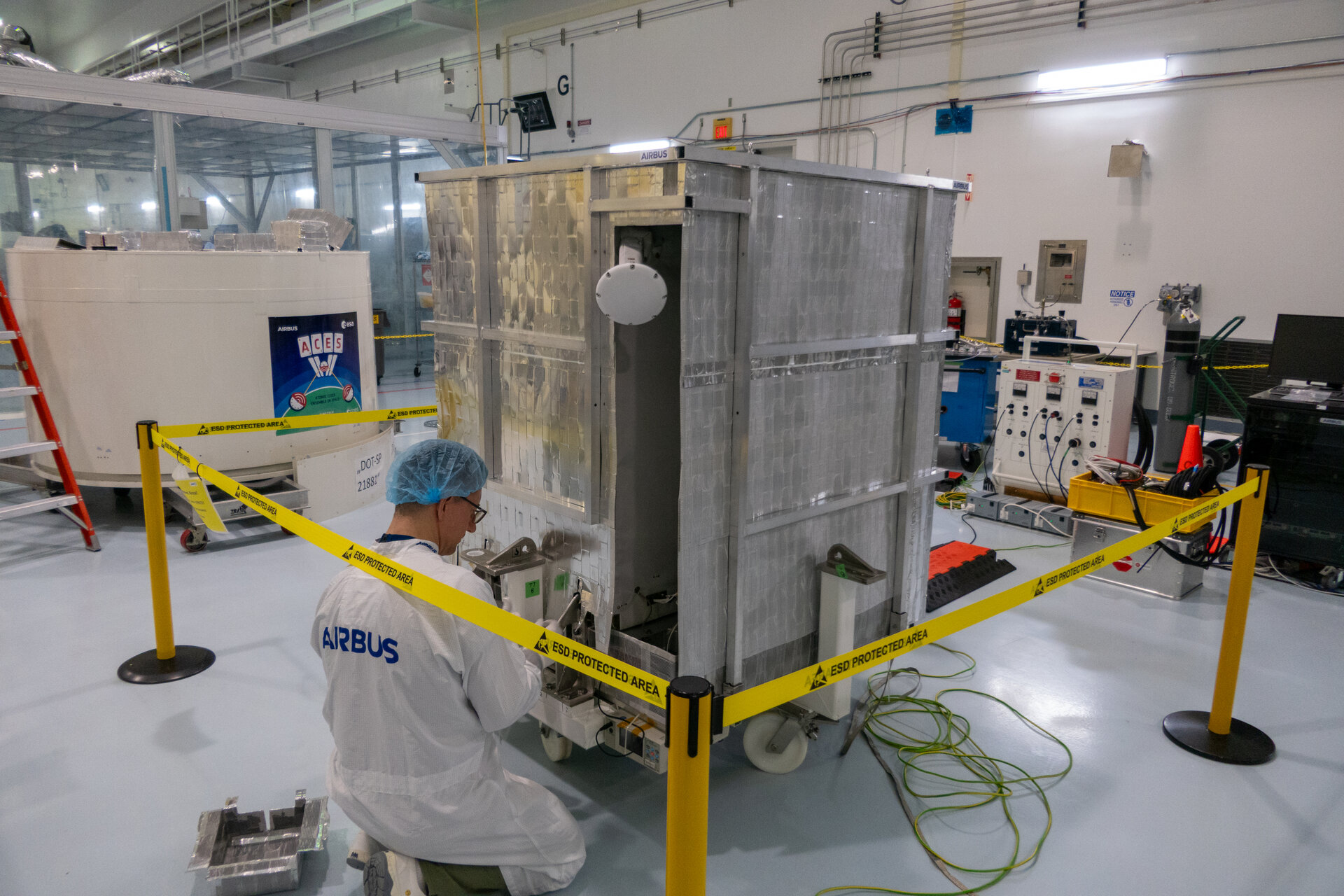
The ACES experiment departed from Europe earlier this month, embarking on a transatlantic flight before reaching the Kennedy Space Center. Once on site, it underwent essential preparations within the cleanroom of the Space Station Processing Facility. Teams from ESA, Airbus, and NASA collaborated to carefully unbox and inspect the payload, ensuring that all systems were functioning properly. Following these detailed checks, engineers securely repackaged ACES, housing it in a specialized magnetic “G-iron” shield. This protective measure is crucial for safeguarding its sensitive atomic clocks as they prepare for their journey into orbit.
The next phase for ACES involves transport to SpaceX for final integration with the Falcon 9 rocket, scheduled for launch on April 21. This timely integration is a vital step to ensure that the experiment is fully prepared for its mission aboard the ISS. Once in orbit, ACES aims to enhance timekeeping methods, which hold significant implications for various scientific fields, including relativity and space exploration.
The project marks a notable collaboration between European and American space agencies, showcasing the international effort towards advancing scientific knowledge. By testing and refining atomic clock technology in space, ACES will contribute to a wider understanding of time, ultimately impacting technologies used on Earth and in future space missions.
In summary, ACES represents a significant leap forward in both space exploration and precision measurement. With its planned launch just weeks away, both scientists and space enthusiasts alike eagerly await the results of this pioneering experiment.
The content above is a summary. For more details, see the source article.