Key Takeaways
- LMT Group is partnering with the European Space Agency to develop a new IoT module that combines cellular and satellite connectivity.
- The initiative aims to provide seamless global coverage, overcoming connectivity dead zones commonly found in remote areas.
- This project is part of Europe’s €2.1 billion investment in satellite communications to enhance secure connectivity and support emerging technologies.
Innovating IoT Connectivity
Latvian tech firm LMT Group has initiated a 12-month project with the European Space Agency (ESA) to create a universal IoT (Internet of Things) module, enhancing connectivity for devices via both mobile and satellite networks. This initiative caters to areas currently lacking reliable coverage, such as oceans, dense forests, and rural lands.
The collaboration between LMT and ESA aims to develop a cost-effective hardware module and software suite that allows IoT devices to autonomously switch between terrestrial cellular networks and Non-Terrestrial Networks (NTNs). This dual-mode system will ensure continuous global connectivity, enabling transitions without user intervention or data loss.
LMT plans to utilize the technology behind its existing IoT Shortcut—a compact mobile data module—to create a dual-mode System-on-Module (SoM) focused on simplifying space-based communication. To support developers, LMT will also provide a Software Development Kit (SDK) that streamlines complex satellite modem controls into straightforward commands. The goal is to elevate the project’s technical readiness from a formulated concept (Technology Readiness Level 2) to a validated proof of concept (TRL 3).
Ingmārs Pūķis, VP of LMT, emphasized the need for more accessible, low-power IoT solutions, which this project addresses. He noted that the initiative could open new opportunities for companies to engage in ESA and EU secure connectivity programs, strengthening LMT’s role in European technological innovation.
This project aligns with Europe’s broader strategy for next-generation connectivity. Recent ESA CM25 decisions are leading to a €2.1 billion investment in satellite communication programs aimed at enhancing secure and resilient connectivity, as well as advancing new satellite-integrated 5G and 6G technologies.
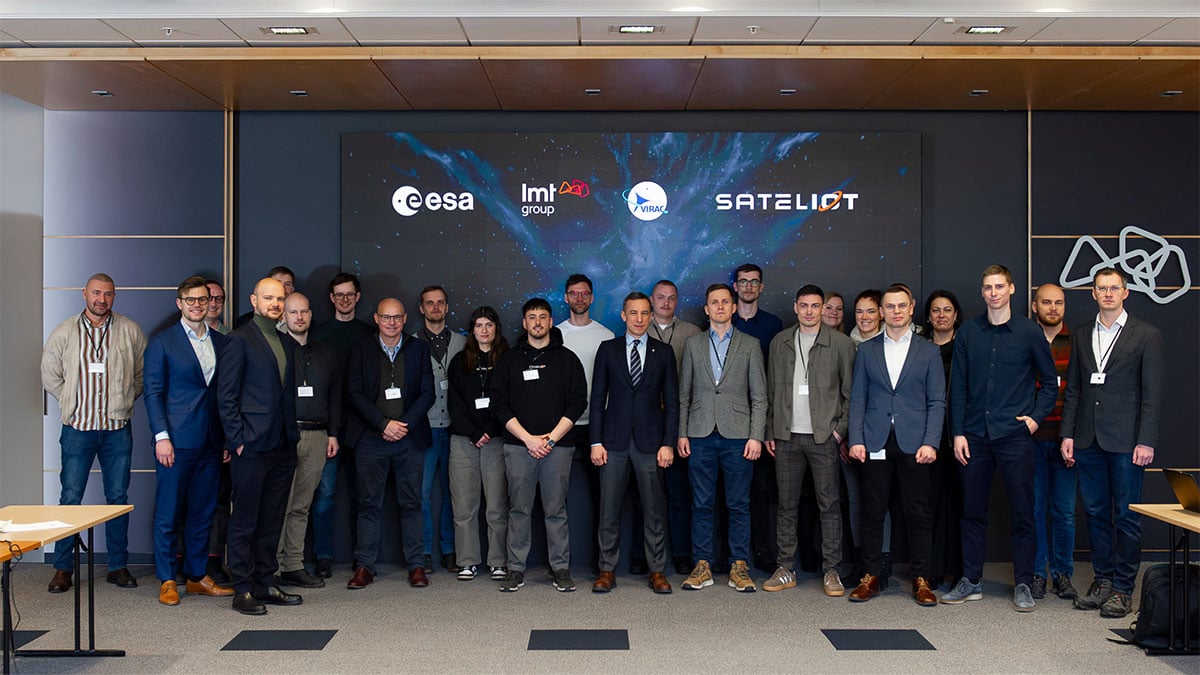
The LMT and ESA partnership will also include collaboration with Spanish company Sateliot, the first operator of low Earth orbit (LEO) satellites offering global NB-IoT connectivity that meets 3GPP standards. This partnership is set to bolster the development of a standardized 3GPP Rel-17 TN-NTN module, integrating terrestrial and satellite technologies.
This initiative will enable LMT to emerge as a global IoT-as-a-Service provider, reducing barriers to satellite technology and broadening availability across the digital landscape. Latvia’s involvement in this ESA project is backed by the Ministry of Education and Science, further positioning local companies and research institutions to innovate within the space technology sector.
The content above is a summary. For more details, see the source article.