Key Takeaways
- Nasa’s CryoFILL project aims to reduce fuel requirements for space missions by producing and liquefying oxygen on the Moon and Mars.
- This initiative supports the Artemis program, focusing on sustained lunar exploration and preparing for crewed missions to Mars.
- Nasa engineers are testing cryogenic technology to improve oxygen condensation efficiency and gather data for future applications.
Innovative Solutions for Space Fuel Challenges
A key challenge in long-duration space exploration is the significant mass of propellant required for extended missions. As the objectives shift toward more distant targets, the fuel demands increase, creating a cycle where heavier spacecraft require even more propellant for launch from Earth. NASA’s Glenn Research Center is addressing this issue with the CryoFILL (Cryogenic Fluid In-Situ Liquefaction for Landers) project, which aims to revolutionize how fuel is supplied for future explorations.
Evan Racine, the CryoFILL project manager, stresses the considerable amount of fuel necessary for missions like a round trip to Mars. He emphasizes the project’s potential benefits: by producing and liquefying oxygen on the Moon or Mars, missions can reduce the amount of propellant needed to launch from Earth.
This initiative directly contributes to NASA’s Artemis program, which intends to send astronauts on more complex lunar missions. The goal is to deepen scientific understanding and drive economic advantage, ultimately setting the stage for crewed expeditions to Mars. A vital aspect of this plan is utilizing lunar resources to produce essential products, including propellants. Oxygen required for rocket fuel can be extracted from water ice found in the Moon’s permanently shadowed regions.
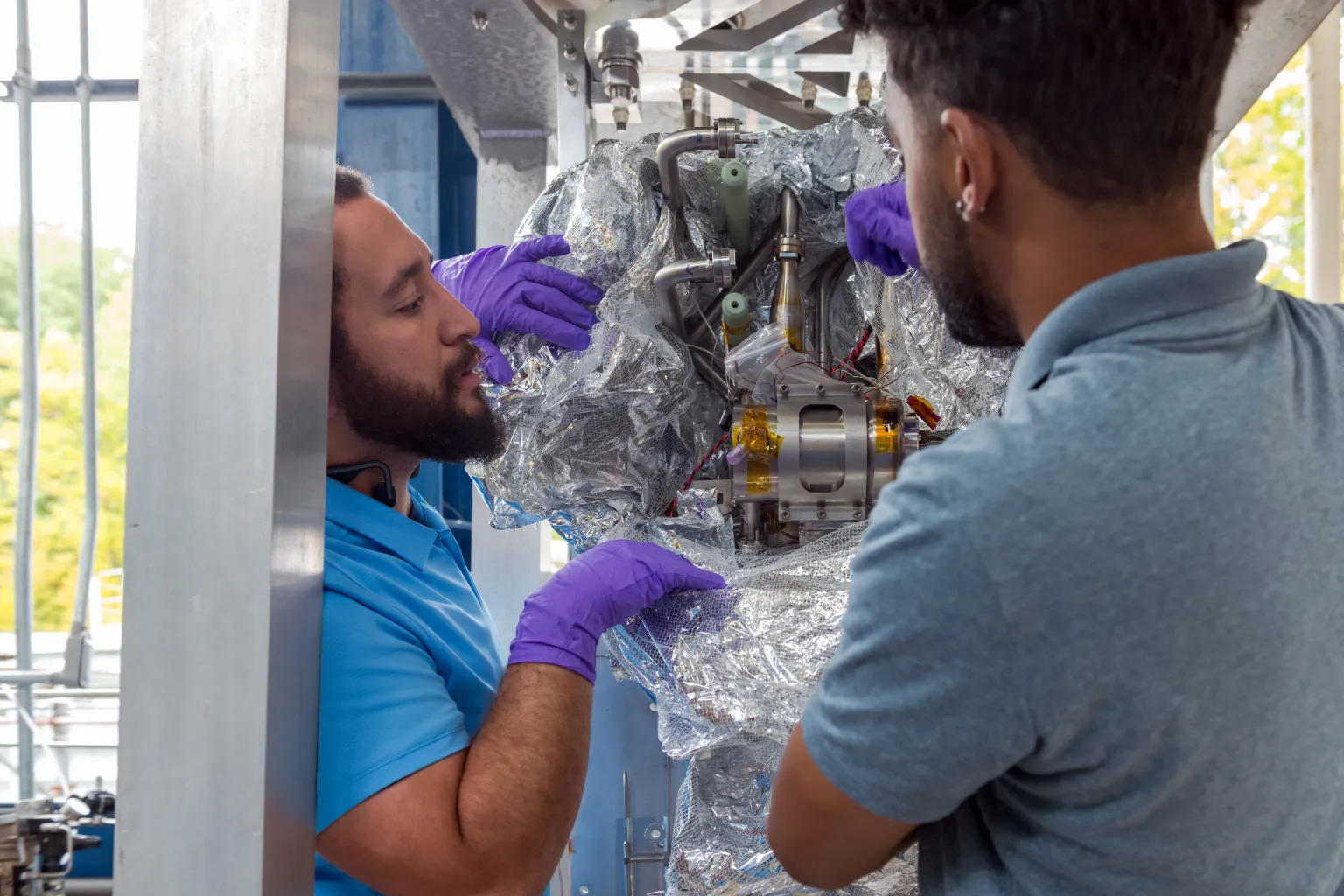
To achieve this, NASA Glenn engineers are employing a flight-like cryocooler, developed by Creare LLC under NASA’s Small Business Innovation Research program. This technology effectively removes heat from the oxygen extraction system, enabling the oxygen to condense into a stable liquid form at extremely low temperatures, below minus 300 degrees Fahrenheit. Wesley Johnson, the CryoFILL lead engineer, highlights the ongoing testing with flight-like hardware to understand oxygen liquefaction and system responses under various scenarios.
In the upcoming months, NASA engineers will closely monitor the condensation of oxygen under diverse conditions. The data collected will be essential for validating temperature computer models and demonstrating the scalability of this technology for larger applications on the Moon, Mars, or other planetary bodies.
Furthermore, the Cryogenic Fluid Management Portfolio Project, a collaboration between NASA’s Glenn and Marshall Space Flight Centers, aims to advance cryogenic fluid management across over twenty distinct technology development activities. This initiative shows a dedicated commitment to advancing the capabilities necessary for future space missions.
The content above is a summary. For more details, see the source article.