Key Takeaways
- A testing replica of the James Webb Space Telescope and a full-scale model of the Parker Solar Probe are permanently displayed at the Smithsonian’s National Air and Space Museum.
- The James Webb Optical Telescope Element Pathfinder is the largest mirror support structure, crucial for ensuring the telescope’s operational success.
- The Parker Solar Probe replica demonstrates technology designed to withstand extreme solar conditions, showcasing NASA’s commitment to space exploration.
NASA’s Innovations on Display
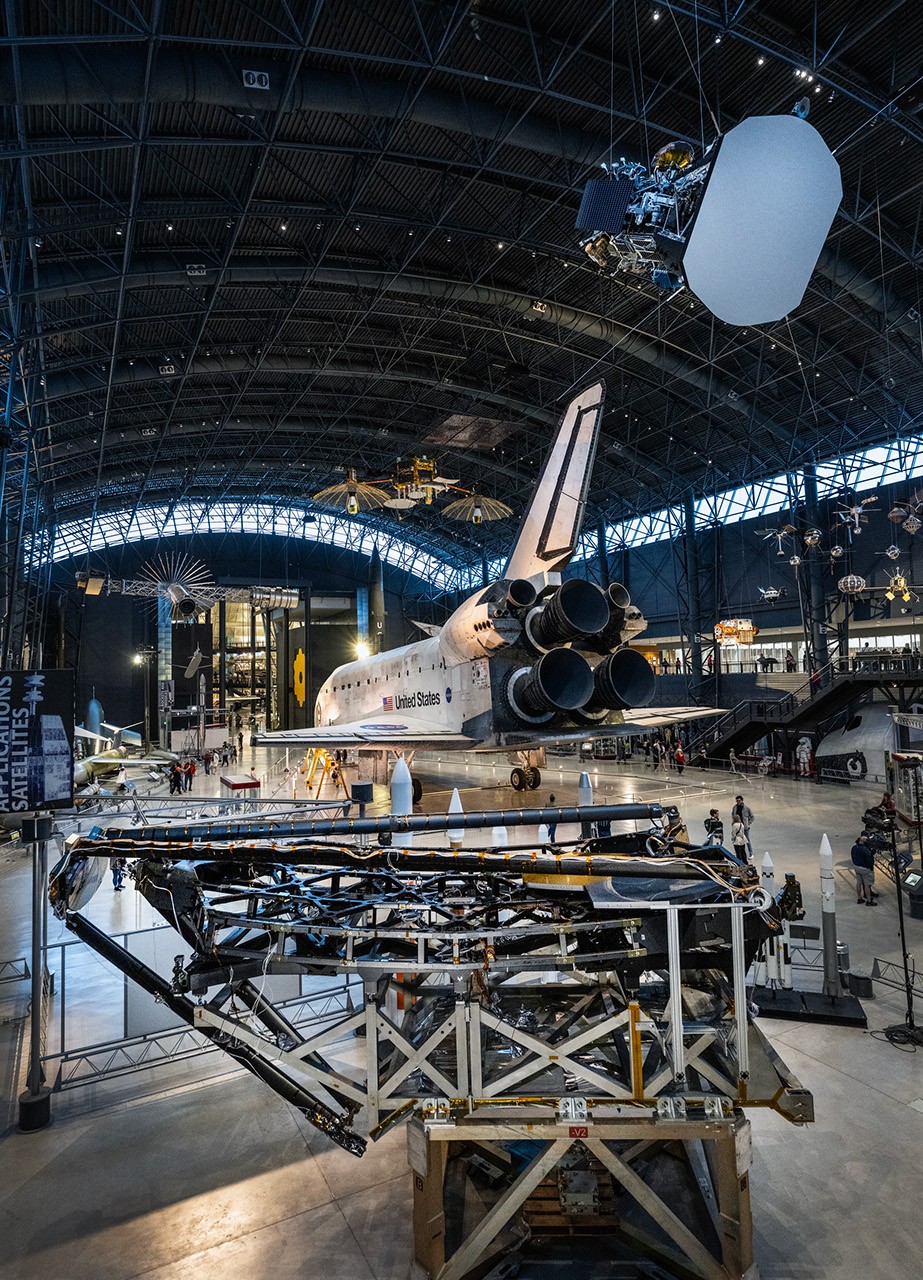
A testing replica of NASA’s James Webb Space Telescope and a full-scale model of the Parker Solar Probe are now featured at the Smithsonian’s National Air and Space Museum, located at the Steven F. Udvar-Hazy Center in Chantilly, Virginia. Nicky Fox, associate administrator of NASA’s Science Mission Directorate, emphasized the significance of these missions, noting how they exemplify human achievement through innovative science.
The James Webb Optical Telescope Element Pathfinder, which is on display, is recognized as the largest intact mirror support structure of its kind, standing over 21 feet tall. This vital piece facilitated rigorous testing to validate the intricate optical system of the telescope, ensuring its success post-launch. It features exotic lightweight materials, enabling engineers to design a testing program for a mission of unprecedented complexity intended to unlock the secrets of the universe.
Mike Davis, Webb project’s manager at NASA, said, “This remarkable test structure helped engineers prepare the largest space telescope ever built.” He highlighted how the scale of Webb represented not only scientific aspiration but also human ingenuity.
Joining the Webb pathfinder is a highly detailed replica of the Parker Solar Probe, constructed and operated by the Johns Hopkins Applied Physics Laboratory. Over seven years into its mission, Parker Solar Probe has made historic close encounters with the Sun, reaching distances as close as 3.8 million miles while traveling at unprecedented speeds of 430,000 mph. Despite extreme temperatures and radiation, it has completed 27 close approaches, gathering invaluable data on the Sun’s atmosphere.
The Parker replica, standing at 10 feet high and 21.5 feet long, is equipped with components similar to those used in the actual spacecraft, including a heat shield capable of withstanding temperatures nearing 2,000 Fahrenheit and the WISPR camera, designed to record solar activities. Adam Szabo, the mission scientist for Parker Solar Probe, stated that the probe provides crucial insights into solar phenomena that impact Earth and enhance our understanding of space weather.
NASA’s James Webb Space Telescope is the world’s leading space science observatory, addressing fundamental questions about our solar system and the broader universe. This mission is a collaboration involving NASA, the European Space Agency (ESA), and the Canadian Space Agency (CSA).
Parker Solar Probe, on the other hand, is part of NASA’s Living With a Star program, aimed at studying solar influences that directly affect life on Earth. Managed by the Goddard Space Flight Center in Maryland, it highlights the agency’s ongoing commitment to exploratory science.
For more information about NASA’s groundbreaking science missions, visit their official site.
The content above is a summary. For more details, see the source article.