Key Takeaways
- Union Minister Dr. Jitendra Singh visited IIT Madras’ ITEL Foundation, showcasing innovative urban mobility and advanced research projects.
- The HASHTIC initiative aims to alleviate traffic congestion using AI-driven electric transport on elevated tracks, enhancing urban commuting efficiency.
- Collaborative efforts between academia, industry, and government are critical for developing indigenous technologies that meet citizen needs.
Urban Mobility Innovations and Research Progress at IIT Madras
Union Minister of State Dr. Jitendra Singh visited the Immersive Technology and Entrepreneurship Labs (ITEL) Foundation at IIT Madras, where he reviewed projects focusing on urban mobility, space technology, medical devices, and brain research. He commended the consortium-driven innovation model utilized by IIT Research Park, which has encouraged collaboration between academic institutions and industry leaders for technology commercialization.
Established in July 2024, the ITEL Foundation aims to position India as a global technology leader by fostering deep-tech startups and facilitating collaborations among academic institutions, industry, and investors. During his visit, Dr. Singh engaged with researchers and startup founders, emphasizing that involving industry from the development stage aligns innovations with real-world requirements.
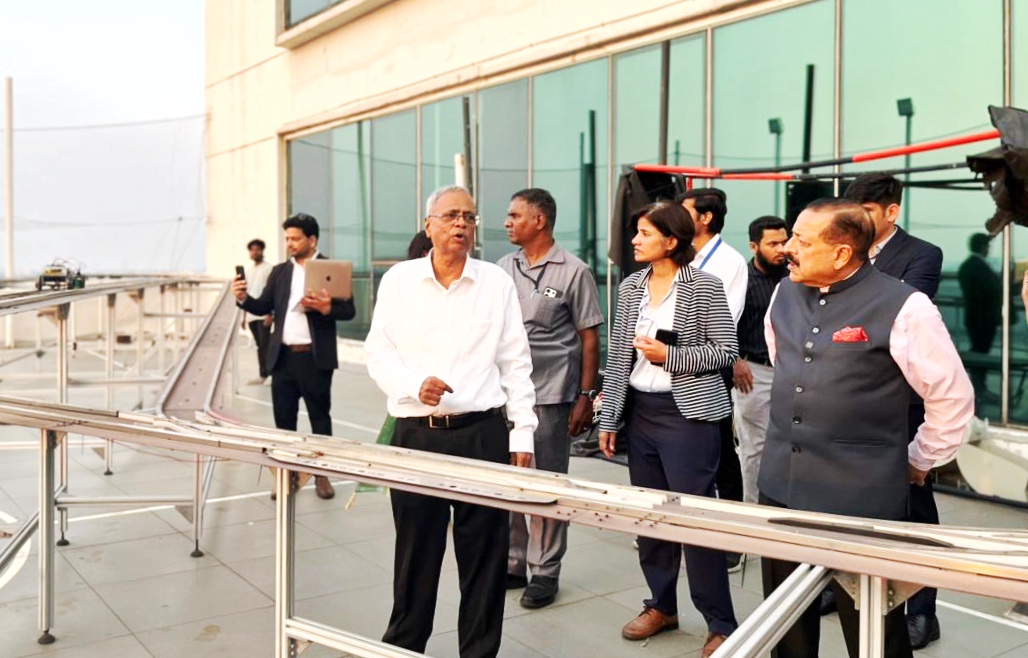
One significant initiative highlighted was the HASHTIC mobility project. It proposes an AI-enabled urban commute system using small electric vehicles on elevated tracks to tackle traffic congestion in Indian cities. The project aims to facilitate 15-kilometre journeys in just 20 minutes, focusing on affordability and sustainability tailored for Indian urban conditions.
Dr. Singh also explored the work of Agnikul Cosmo, a space technology startup developing launch vehicles for flexible satellite launches. After a successful initial mission in 2024, Agnikul is preparing for a commercial reusable rocket mission later this year, illustrating the growing involvement of private enterprises in India’s space industry.
The IIT Madras Incubation Cell, which has nurtured over 500 startups across various sectors, was also part of the visit. It offers mentorship, funding, and laboratory access, assisting startups in progressing from prototypes to market-ready products.
At the Healthcare Technology Innovation Centre (HTIC), the minister learned about the development of affordable, indigenous medical devices. Collaborating with around 40 medical institutions, HTIC has produced 12 commercially successful products since its inception, addressing unmet clinical needs in India and beyond.
Moreover, at the Sudha Gopalakrishnan Brain Centre, researchers are creating high-resolution 3D images of human brains, marking a milestone in brain mapping in India. Their current project, the “DHARANI” human fetal brain atlas, is advancing collaborations with leading international institutions.
Dr. Singh highlighted that these initiatives showcase how coordinated efforts among academia, industry, and government can spur technology advancements, directly benefiting citizens. He stressed the importance of integrating research with industry needs to strengthen India’s innovation ecosystem and advance indigenous technologies that align with national priorities. The visit concluded with discussions on how to replicate these collaborative models across other institutions.
The content above is a summary. For more details, see the source article.