Key Takeaways
- YosysHQ, in collaboration with ESA, is developing an open-source toolchain for the NG-Ultra radiation-hardened FPGA used in space missions.
- The new tool enhances reliability and adaptability for space applications, offering significant advantages over proprietary solutions.
- This initiative marks a significant advancement in the open-source FPGA ecosystem, facilitating community collaboration and innovation.
Innovative Open-Source FPGA Development for Space Missions
Space missions increasingly rely on advanced computing solutions that can withstand extreme conditions while remaining flexible and efficient. YosysHQ, with funding from the European Space Agency (ESA), is spearheading a project to create an open-source toolchain designed for the NG-Ultra, a radiation-hardened Field-Programmable Gate Array (FPGA). This initiative is crucial for ensuring the adaptability and reliability of space-grade electronics, which are increasingly necessary as space missions grow more complex and data-oriented.
FPGAs play a pivotal role in modern aerospace applications, allowing for real-time reconfiguration after launch. This capability enables spacecraft to adapt to changing mission parameters, correct errors, and optimize performance in the field. Traditional electronics often struggle with the harsh conditions of space, where cosmic radiation and temperature variations can jeopardize mission success. Thus, the development of radiation-hardened FPGAs represents a significant advancement in reliable space technology.
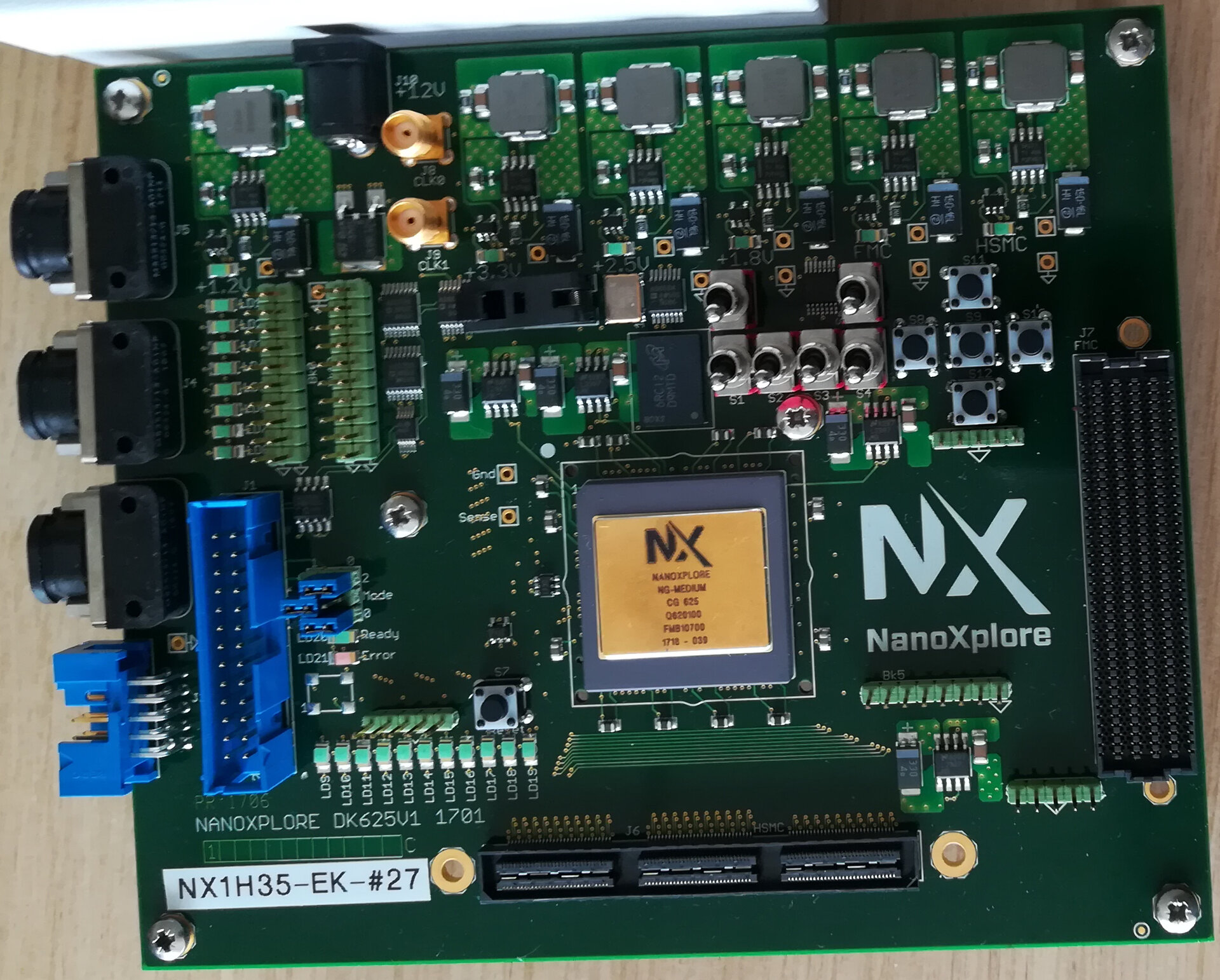
YosysHQ’s project enhances the existing NanoXplore NG-Ultra FPGA platform, supported by ESA and the French space agency CNES, by integrating an open-source place-and-route tool known as nextpnr. This alternative to the proprietary Impulse tool empowers developers with the ability to verify and refine their designs using multiple independent resources. The introduction of nextpnr allows users to customize the tool for specific applications, while also facilitating community-driven enhancements and bug fixes.
The initiative has garnered particular attention due to its novel approach. Previously, open-source place-and-route solutions relied on hypothetical architectures or reverse-engineered models. In contrast, YosysHQ’s work leverages official architectural details provided by the vendor, leading to independent strategies designed to work within the FPGA’s constraints. “The NG-Ultra is the largest device implemented in nextpnr, allowing us to push the tool’s limits at scale,” explains Matt Venn, Chief Sales Officer at YosysHQ.
Future developments will focus on more complex design elements, building on the foundational reliability established through prior testing. The results so far indicate that the open-source tool is well-equipped to handle large FPGAs, setting the stage for further innovations and collaboration within both the developer community and academic partnerships.
The project is a critical step in expanding the open-source FPGA development landscape. According to Filomena Decuzzi, ESA Technical Officer for the initiative, it has explored advanced algorithms for place-and-route processes and highlighted the potential for comprehensive support for large-scale FPGAs. Decuzzi emphasized that the opening of architecture data invites innovation and participation from beyond established vendors, enhancing the broader FPGA ecosystem.
ESA’s Discovery & Preparation funding has been pivotal in demonstrating the feasibility of open-source toolchains for large FPGAs, identifying key areas for improvement, and highlighting pathways for future developments. This collaborative effort not only benefits developers but also encourages FPGA vendors to participate more actively in research and optimization initiatives.
In summary, YosysHQ’s project is poised to contribute significantly to the evolution of space-grade FPGA technology, fostering a more adaptable and reliable landscape for future space explorations.
The content above is a summary. For more details, see the source article.