Key Takeaways
- AI technologies are significantly improving industrial manufacturing processes in space transportation.
- MT Aerospace is applying AI in shot peen forming, friction stir welding, and carbon fiber placement for Ariane 6 rocket components.
- The European Space Agency’s Future Launchers Preparatory Programme is supporting these innovations to enhance future space transportation systems.
Innovating Space Manufacturing with AI
Artificial Intelligence (AI) is revolutionizing industrial manufacturing, particularly in the field of rocketry. The European Space Agency (ESA) is leveraging AI through its Future Launchers Preparatory Programme (FLPP) to enhance manufacturing processes and material designs for future rockets and spacecraft. A key partner in this endeavor, MT Aerospace in Germany, is implementing advanced AI techniques to streamline material processing across various applications.
One of the key methods benefiting from AI is shot peen forming, a process where metal is shaped by high-speed impacts from small balls without heating the material. This maintains the metal’s strength and fatigue resistance, crucial for components like the fuel tank domes of the Ariane 6 rocket. By utilizing machine learning, engineers at MT Aerospace can now predict the deformation of metals more accurately, achieving desired shapes with an impressive tolerance of just two millimeters.
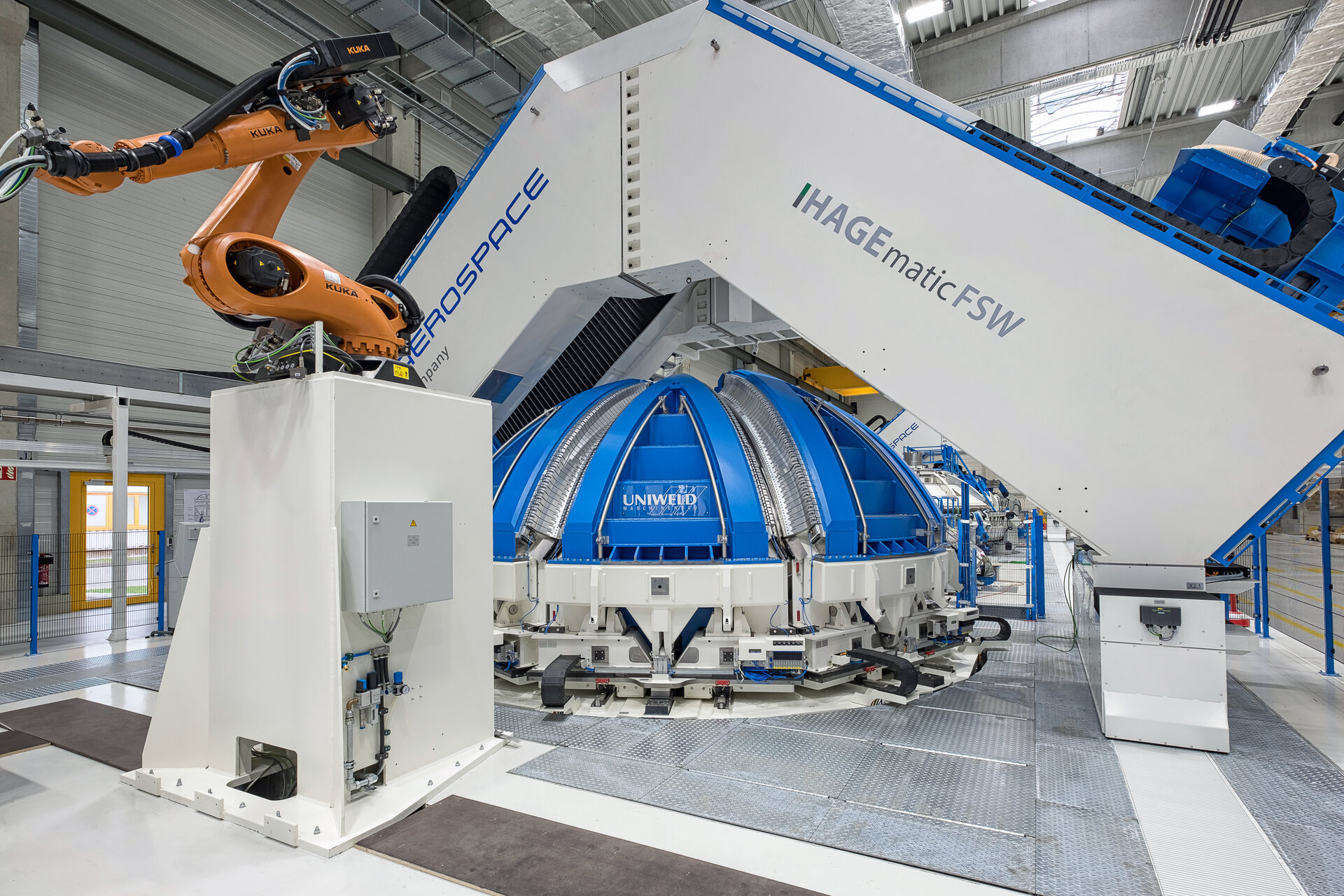
Another area of innovation is friction stir welding, which is increasingly replacing traditional arc welding in the aerospace sector. This technique joins metal parts by rotating a pin at high speeds to generate enough frictional heat to fuse materials. The introduction of digital monitoring technologies allows for rapid setup and real-time evaluations of weld seams, leading to a remarkable 95% reduction in analysis time compared to conventional methods. This efficiency is particularly beneficial for critical components, such as the Ariane 6 tanks.
MT Aerospace is also exploring carbon-fiber reinforced plastics for lighter, stronger structures, as demonstrated in the Phoebus project. AI-driven laser sensor technology enables real-time detection and classification of defects during the automated layer-by-layer construction of carbon-fiber tanks. This integration not only boosts production efficiency but also minimizes delays that typically arise from quality checks.
Daniel Chipping, ESA’s project manager for software-centric and digitalization activities within the FLPP, noted the transformative impact of AI and digital technologies in launcher manufacturing. By automating complex analyses and minimizing disruptions in machine operations, the benefits of these innovations are becoming increasingly evident across all material processes.
The FLPP’s strategic focus on developing cutting-edge technologies aims to mitigate the risks associated with untested projects in the realm of space transportation. By investing in solutions that do not yet exist, the program aspires to pave the way for future advancements in the industry.
The integration of AI in these various manufacturing processes is expected to have lasting implications for the future of space exploration, enhancing not only efficiency and quality but also the feasibility of ambitious space missions. As ESA and its partners continue to innovate, the landscape of aerospace manufacturing will undoubtedly evolve, making space travel more efficient and accessible.
The content above is a summary. For more details, see the source article.