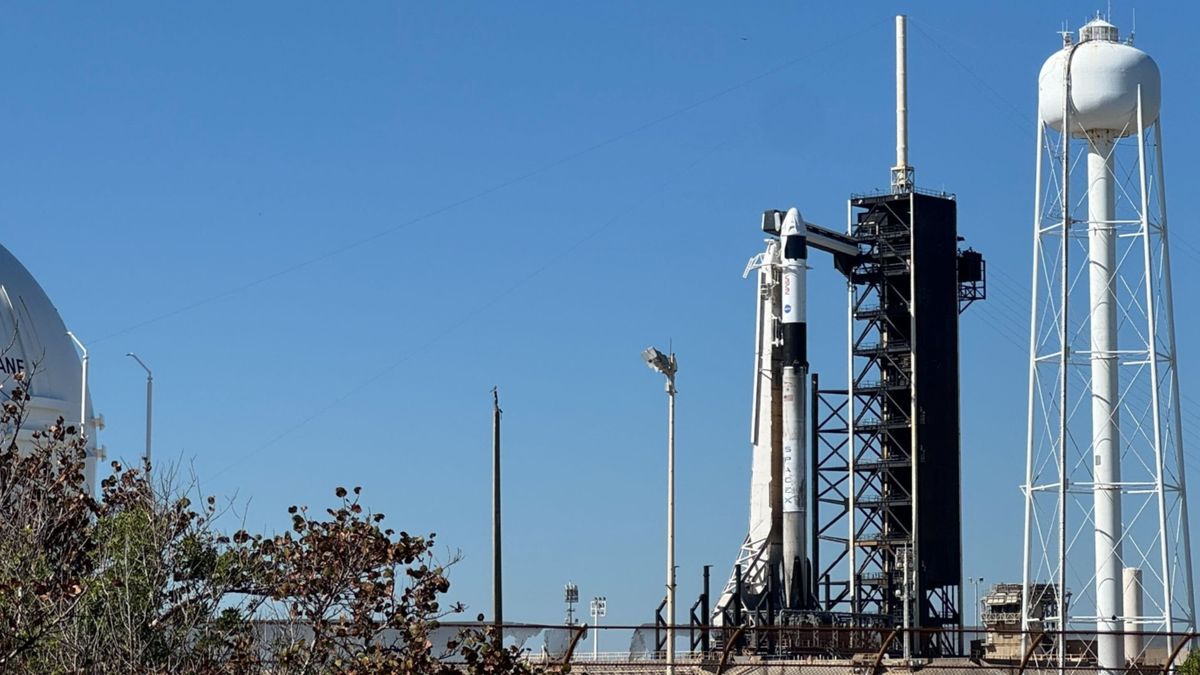
Key Takeaways
- SpaceX has postponed its Crew-10 mission to the International Space Station due to a hydraulics issue.
- The next launch attempt is scheduled for March 14 at 7:03 p.m. EDT.
- The Crew-10 mission features four astronauts, including Anne McClain and Nichole Ayers from NASA, Takuya Onishi from Japan, and Kirill Peskov from Russia.
Launch Postponed Due to Technical Issues
SpaceX has delayed its Crew-10 astronaut mission originally planned for launch on March 12, citing technical difficulties. The mission was set to launch at 7:48 p.m. EDT from Kennedy Space Center in Florida but was scrubbed approximately 45 minutes before liftoff due to a hydraulics problem with the transporter-erector, the structure that supports the Falcon 9 rocket during its journey to the launch pad.
NASA officials explained that the issue was related to a clamp arm on the transporter-erector, which is crucial for securing the vehicle at the time of launch. Mike Ravenscroft, manager of the launch vehicle office with NASA’s Commercial Crew Program, indicated that while the Falcon 9 rocket and Crew Dragon capsule, named Endurance, were functioning properly, ensuring the vehicle’s stability during release is paramount.
Following the scrub, Crew-10 commander Anne McClain expressed appreciation for the team’s efforts, stating they would be ready once the equipment was operational. SpaceX did not provide a definitive timeline for the subsequent attempt, but later confirmed a new launch date set for March 14 at 7:03 p.m. EDT.
The Crew-10 mission includes a diverse team of astronauts: Anne McClain and Nichole Ayers representing NASA, Takuya Onishi from JAXA (Japan), and Kirill Peskov from Russia’s Roscosmos agency. They are slated to spend approximately six months aboard the International Space Station (ISS), relieving the current crew members: NASA astronauts Nick Hague, Suni Williams, and Butch Wilmore, along with Russian cosmonaut Aleksandr Gorbunov.
Notably, Williams and Wilmore initially planned to return to Earth after a brief stay on the ISS. Their return was complicated by issues with Boeing’s Starliner spacecraft, which resulted in delays that extended their mission. NASA ultimately opted for an uncrewed return of the Starliner, facilitating a ride home for Williams and Wilmore aboard SpaceX’s Crew-9 capsule instead.
As the Crew-10 astronauts prepare for their journey, the team remains hopeful for a successful launch on the rescheduled date. The upcoming mission is a critical part of NASA’s ongoing collaboration with SpaceX to transport astronauts to and from the ISS, marking another chapter in the partnership between private industry and government space agencies.
The content above is a summary. For more details, see the source article.