

Key Takeaways
- L3Harris demonstrated an advanced electronic warfare capability integrated with the T7 robot at Vanguard 2024, effectively countering small uncrewed aircraft systems.
- The innovative use of robots enabled remote electronic warfare operations, enhancing safety for ground troops by detecting threats from a distance.
- The experiment showcased potential future applications for robots, including drone recovery and additional mission capabilities, reinforcing the role of technology in modern warfare.
Innovative Integration of Robotics and Electronic Warfare
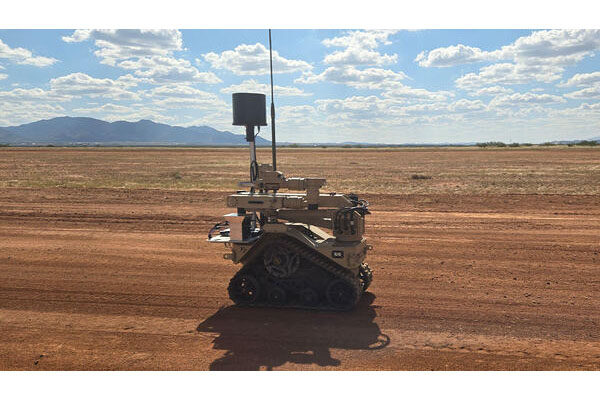
L3Harris recently showcased a groundbreaking application of technology by integrating a multirole electronic warfare (EW) capability with its T7 robot. This demonstration occurred at Vanguard 2024, an annual U.S. Army event at Fort Huachuca, Arizona. The combination was effective in detecting and defeating small uncrewed aircraft systems (sUAS) through the CORVUS-RAVEN system and was capable of sensing, monitoring, and decoding electronic signals with the Individual CORVUS Node.
The Vanguard event provided an interactive platform for L3Harris and other companies to present cutting-edge technologies and concepts for future warfare to U.S. Army personnel. The recent conflict in Ukraine underscored the importance of enhancing methods to protect mobile operations from targeted artillery, making the demonstration relevant and timely.
Dr. Paul Bosscher, Robotics Chief Engineer at L3Harris, emphasized the rapid development of this technology, which was completed in just six weeks. The integration allows unmanned ground vehicles (UGVs) like the T7 and T4 to deliver EW effects from a safe distance, scanning for threats kilometers ahead of troops. This capability minimizes risk by keeping personnel out of the line of fire while the robots operate.
The robust design of the T7 and T4 robots includes aerospace-grade shielding that protects them from electromagnetic interference, allowing them to deploy the CORVUS system effectively. The ability to remotely manage the EW capabilities provides tactical advantages, such as disabling emitted signals to evade counterfire and repositioning robots swiftly.
The demonstration also inspired additional operational concepts, including the potential for UGVs to recover downed drones during missions and using robotic arms as launching platforms for drones, further expanding their utility on the battlefield.
Overall, the Vanguard 2024 experiment highlighted the T7 and T4 robots’ capabilities beyond traditional roles like explosive ordnance disposal. The successful integration of CORVUS demonstrated a forward-looking roadmap for these robots, showcasing their adaptability and the potential for future technological innovations. With expertise in EW and robotics, L3Harris is poised to assist military customers in navigating and dominating evolving mission scenarios, from counter-sUAS strategies to advanced spectrum sensing capabilities.
The content above is a summary. For more details, see the source article.