


Key Takeaways
- U.S. Defense Secretary Lloyd Austin affirmed the U.S.-Japan alliance amid regional threats from China and North Korea.
- Concerns over the safety of Osprey military aircraft led to operations being grounded in both the U.S. and Japan.
- Trilateral cooperation between the U.S., Japan, and South Korea is deemed crucial for regional stability despite political turmoil in South Korea.
Strengthening Alliances Amid Growing Threats
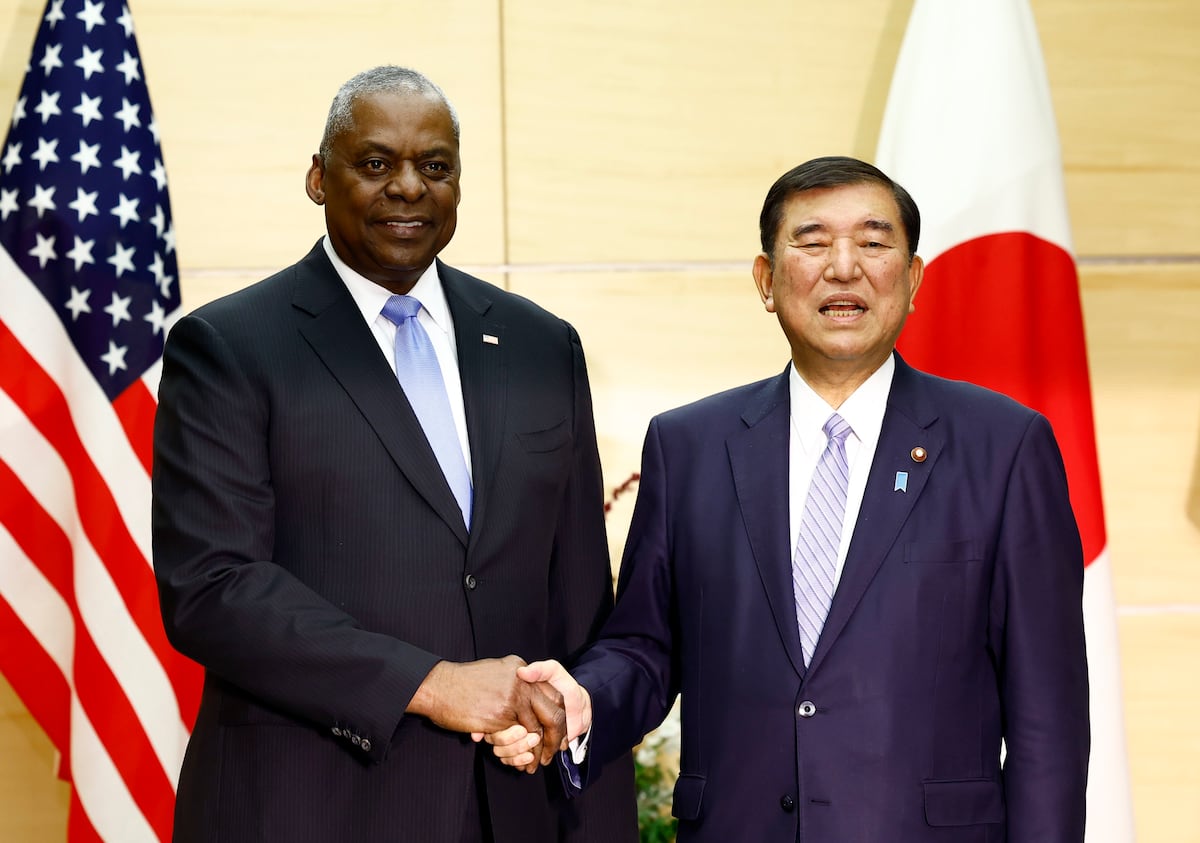
U.S. Defense Secretary Lloyd Austin’s recent visit to Japan highlighted the importance of the U.S.-Japan alliance in addressing rising threats from China and North Korea. During his meeting with Japanese leaders, Austin emphasized that trilateral cooperation with Japan and South Korea is essential for maintaining regional stability. This comes at a time when South Korea is facing political turmoil following President Yoon Suk Yeol’s brief declaration of martial law.
Austin’s visit coincided with increasing safety concerns regarding Osprey military aircraft, which have been grounded in both the U.S. and Japan after incidents revealing structural vulnerabilities. Following a near-crash in New Mexico caused by weakened metal components, Japan’s Ground Self-Defense Force announced the suspension of operations of its 17 Ospreys, except for disaster relief missions.
In discussions with Japanese Prime Minister Shigeru Ishiba, both leaders reflected on the fragility of global political dynamics. Ishiba noted that the world can change significantly within a week, a sentiment echoed by Austin concerning the shifting landscapes of South Korea and Syria. Austin recognized the established Japan-U.S. alliance during “very dynamic times,” praising improvements in command and control, force posture, and deterrence capabilities.
Further discussions included the challenges posed by China’s escalating assertiveness in the East and South China Seas and North Korea’s support for Russia amidst its invasion of Ukraine. Austin reaffirmed the U.S.’s commitment to “extended deterrence,” including its nuclear umbrella, for Japan and South Korea, signaling that the U.S. will maintain a robust presence in the region.
The trilateral partnership between the U.S., Japan, and South Korea has gained strength under President Joe Biden’s administration, but it now faces uncertainties due to recent political developments in South Korea, including the absence of Austin’s planned trip to the country. During his visit to Japan, he also interacted with crew members of the George Washington, a nuclear-powered aircraft carrier, underscoring the significance of U.S. cooperation with regional allies.
Austin identified China as the only nation capable of altering the rules-based international order in the Indo-Pacific region and stressed the need for collective efforts to ensure freedom of navigation and adherence to international airways. Additionally, the carrier, currently undergoing maintenance in Yokosuka, will host an advanced F-35C stealth combat aircraft squadron, reinforcing the operational capability of U.S. maritime forces in the area.
Mayuko Ono contributed to this report.
The content above is a summary. For more details, see the source article.









