


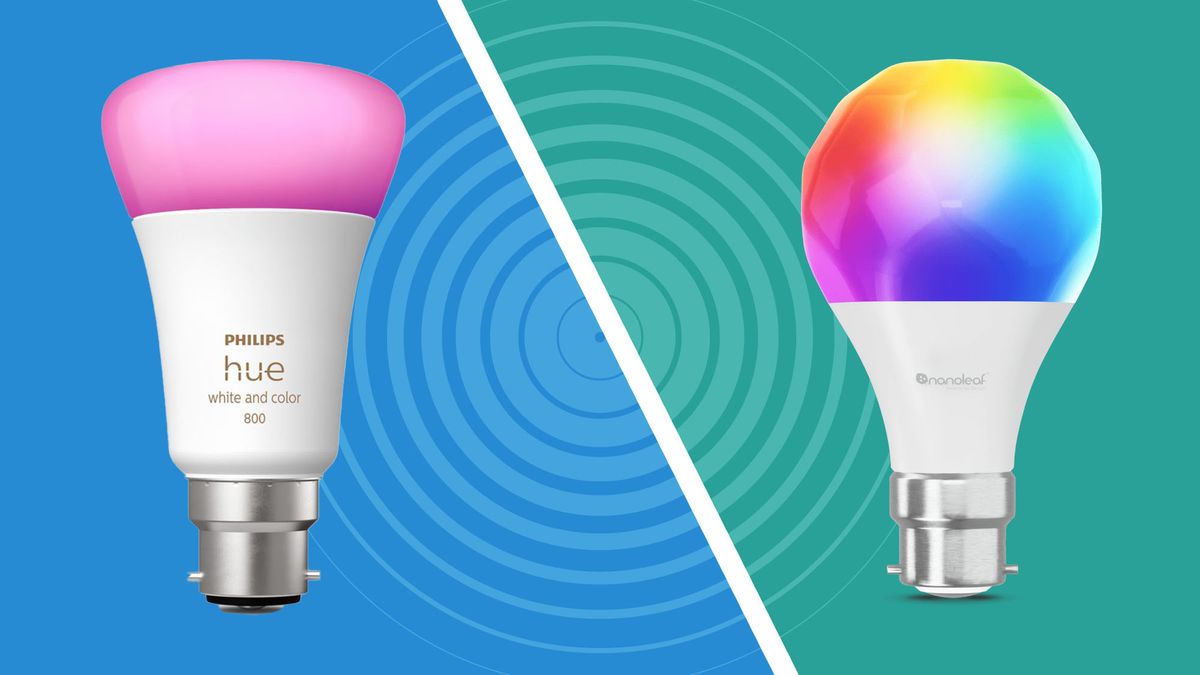
Key Takeaways
- Nanoleaf lights are generally cheaper and focus on creative designs, whereas Philips Hue offers a wider range of practical lighting options.
- Philips Hue provides better integration with smart home systems, while Nanoleaf’s products excel in unique, customizable features.
- Both brands support the Matter standard, allowing users to combine devices for a more versatile smart home setup.
Lighting Options Comparison
Philips Hue and Nanoleaf have established themselves as leaders in the smart lighting market, offering distinctive features that cater to different consumer preferences. While both brands are compatible with the Matter standard for smart home integration, choosing one system can enhance user experience and functionality.
Nanoleaf is reputed for its affordability and playful designs. The brand’s offerings include playful wall-mounted LED panels and display shelves, which can be synchronized with other devices for a more immersive experience. The Nanoleaf Matter Essentials Smart Bulbs retail around $19.99, significantly cheaper than Philips Hue’s equivalent bulbs, which start at $54.99. Nanoleaf’s focus on fun and creativity is highlighted in products like the Shapes LED panels, offering interactive and customizable lighting experiences.
In contrast, Philips Hue is designed to serve as a direct substitute for conventional lighting. Its product range covers essential fixtures throughout the home, including specialized lights for kitchens and outdoor spaces. The Hue ecosystem encompasses a broader selection, featuring options like security cameras, motion sensors, and an advanced smart switch system that integrates seamlessly into a home environment. Philips Hue products support features such as remote control and automation, which require a Philips Hue Bridge to unlock full capabilities.
When it comes to controlling the lights, Nanoleaf products can connect directly to Wi-Fi, with options for Bluetooth control and compatibility with smart home hubs. The Nanoleaf app, available on various platforms, allows users to synchronize lights with music and innovative gameplay setups. Philips Hue also permits Bluetooth control for simple functions, but for more extensive management and automation, a Hue Bridge is essential, enabling control over numerous devices and integration with third-party platforms such as Google Home and Apple HomeKit.
Both brands offer string lights and LED strips, with Philips Hue equipping advanced systems like the Hue Play HDMI Sync Box to interact with TVs, outperforming Nanoleaf’s camera-based setup in color precision.
Ultimately, the choice between Nanoleaf and Philips Hue depends on user priorities—be it functionality and practical replacements for existing lighting (Philips Hue) or creative, customizable designs that stand out (Nanoleaf). For those looking to mix features from both systems, Matter compatibility can provide a flexible solution, making smart home lighting more versatile.
In summary, while Nanoleaf appeals with its imaginative approach and lower price point, Philips Hue delivers a more comprehensive and practical lighting experience, making it a preferred choice for those looking for a robust smart lighting system.
The content above is a summary. For more details, see the source article.









